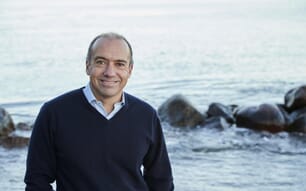
Dr Claude Kaplan, IP expert and director at Hatch Innovation Services*, discusses some of the issues and opportunities relating to patents in land-based salmon farming.
Jon Parker, development lead for Aquaculture Industry Wales (AIW), explains how the organisation - which is backed by a growing number of startups - aims to improve the industry’s reputation among the public and politicians, in order to generate much needed gr…
As Project Sea Dragon comes one step closer to lift-off, The Fish Site assesses the potential impacts – both positive and negative – that it’s likely to have on the social, economic and environmental fabric of two remote regions of Australia.
According to Jeff Cheng, recirculating aquaculture systems (RAS) don’t need to be used for high value species or purely by large corporations, but are well within the grasp of relatively small aquaculture players, producing a wide range of species.
Carlos Diaz, CEO of BioMar, explains the logic behind the company’s ambitious new 2030 sustainability goals and muses on how the company – and the wider aquaculture industry – is likely to grow in the coming decades.
Andreas von Scholten, CEO of Barramundi Group, talks about the future of aquaculture, the importance of vaccines and building the company’s ground-breaking operations in Brunei.
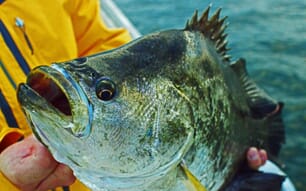
The aquaculture industry could be progressing towards commercial tripletail production after wild-caught specimens were able to spawn and larvae grew to maturity in a recirculating aquaculture system (RAS).
The Mexican peninsula of Baja California has huge potential to grow its burgeoning shellfish aquaculture sector, thanks to ideal coastal conditions and a growing demand for a variety of species – including mussels, oysters and abalone.
Integrated multi-trophic aquaculture (IMTA) is proving its worth in Sungo Bay in China, with numerous studies to support its environmental and economic benefits.
Reliable figures on the carbon footprints of different aquaculture species are hard to find – not least due to the variety of production systems they come from – but all suggest that aquaculture holds its own against other forms of animal protein production.
Benchmark Genetics is one of the main suppliers of salmon ova for land-based production facilities – both RAS and flow-through – around the world. This has given them a unique insight into how the sector is developing, as members of their team explain to The F…
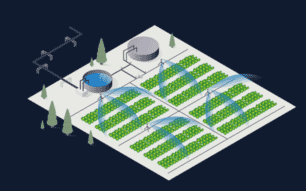
Columbi Salmon aims to harvest 12,000 tonnes of salmon and 4,000 tonnes of salad leaves a year by 2025, at a site in the Belgian port of Ostend. Kolbjørn Giskeødegård, CFO of the startup, explains their unique production system, why he thinks the time is right…