

© Bremner
Colin and Annemarie Bremner are a husband and wife. The two are the co-founders of Kleinskuur Boerdery Aquaponics farm in South Africa that produces Nile tilapia. The farm is preparing to export fish to Zimbabwe and herbs to European countries. Currently, they export aquaponics systems to some neighbouring countries.
Annemarie began her career as a television and radio news journalist, and while presenting an agricultural programme, she developed a deep interest in food production and agricultural innovation. She later became group editor of a leading agricultural media group in South Africa. However, in 2024, the journalist transitioned fully into aquaponics, as a commercial farmer and technology developer, combining her communication background with practical agricultural entrepreneurship.
“My husband Colin initiated our journey into aquaponics after being diagnosed with cancer. We began searching for a natural, chemical-free way to produce nutrient-dense food for our family. Today he is a healthy, active 60-year-old, and our system has grown into both a livelihood and a mission,” she says.
© Bremner
She adds that she was drawn to aquaponics because it works with natural biological systems rather than against them. “Instead of constantly correcting problems caused by artificial inputs, we focus on creating balance within a living ecosystem. We operate from a two-hectare smallholding farm in South Africa, where we currently run three aquaponics systems of varying sizes. On the same property, we also have a workshop where we manufacture aquaponics systems for clients, as well as a pecan orchard and additional agricultural activities,” says the journalist-turned farmer.
She adds that if they develop the entire available footprint using their commercial Kleinskuur systems (KSBA1000), they could install three commercial units, two KSBA96 hatcheries, and additional wicking beds for rooting crops.
Albeit she didn’t reveal the current tonnage produced at the farm, she says that at full capacity, this would allow them to produce approximately 36 tonnes of Nile tilapia per year, 140 tonnes of fruiting vegetables (such as tomatoes) annually, and nearly 670,000 heads of lettuce per year.
She adds: “This makes our model one of the highest-yielding food production systems per square metre in the region. The hatcheries would supply all the fingerlings required to stock the systems. We use our own aquaponics design, developed specifically for African conditions. It is robust, modular and easy to manage. Most of the innovation is embedded in the design itself, allowing people with basic technical skills to operate the system successfully.
© Bremner
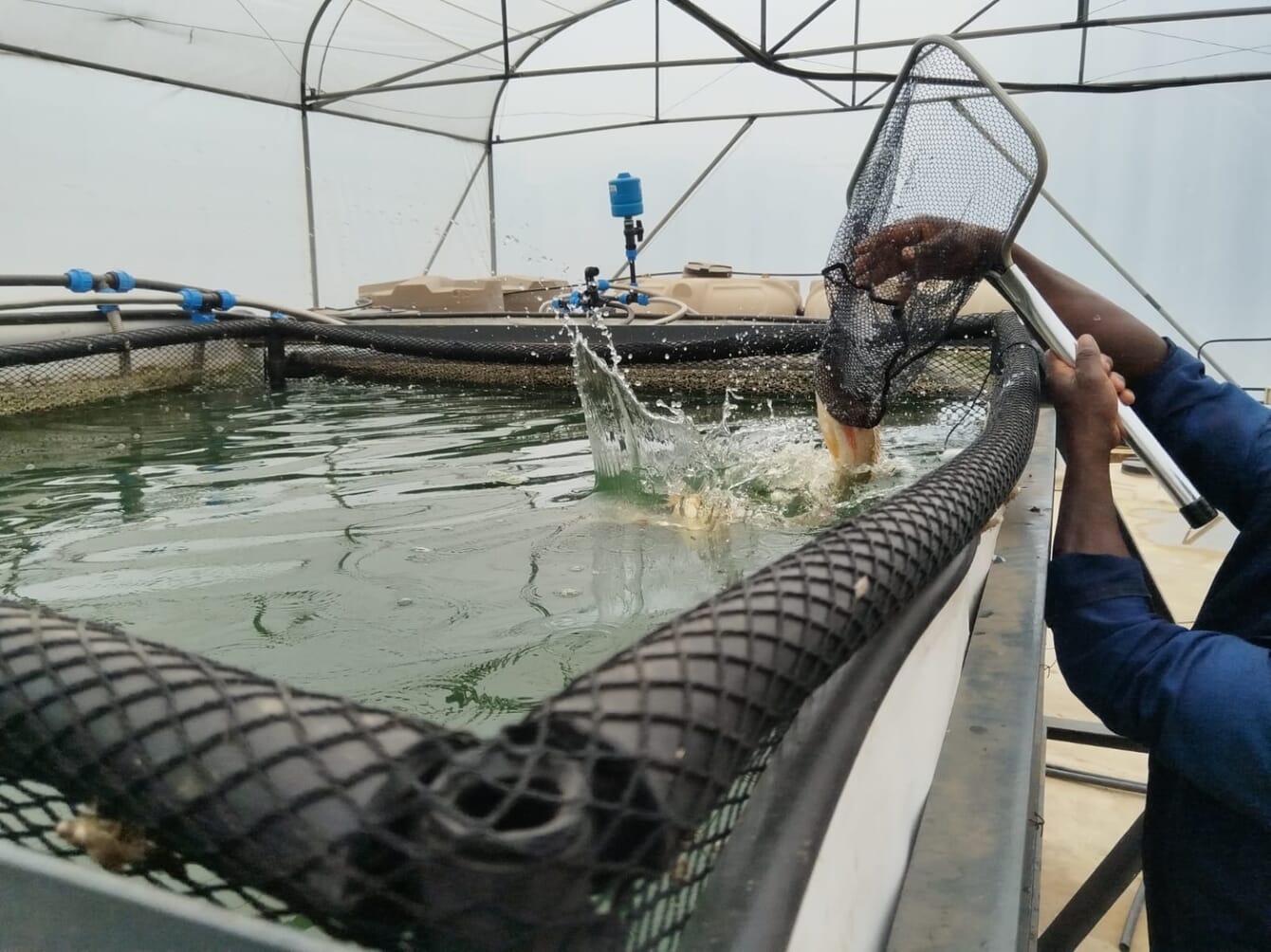
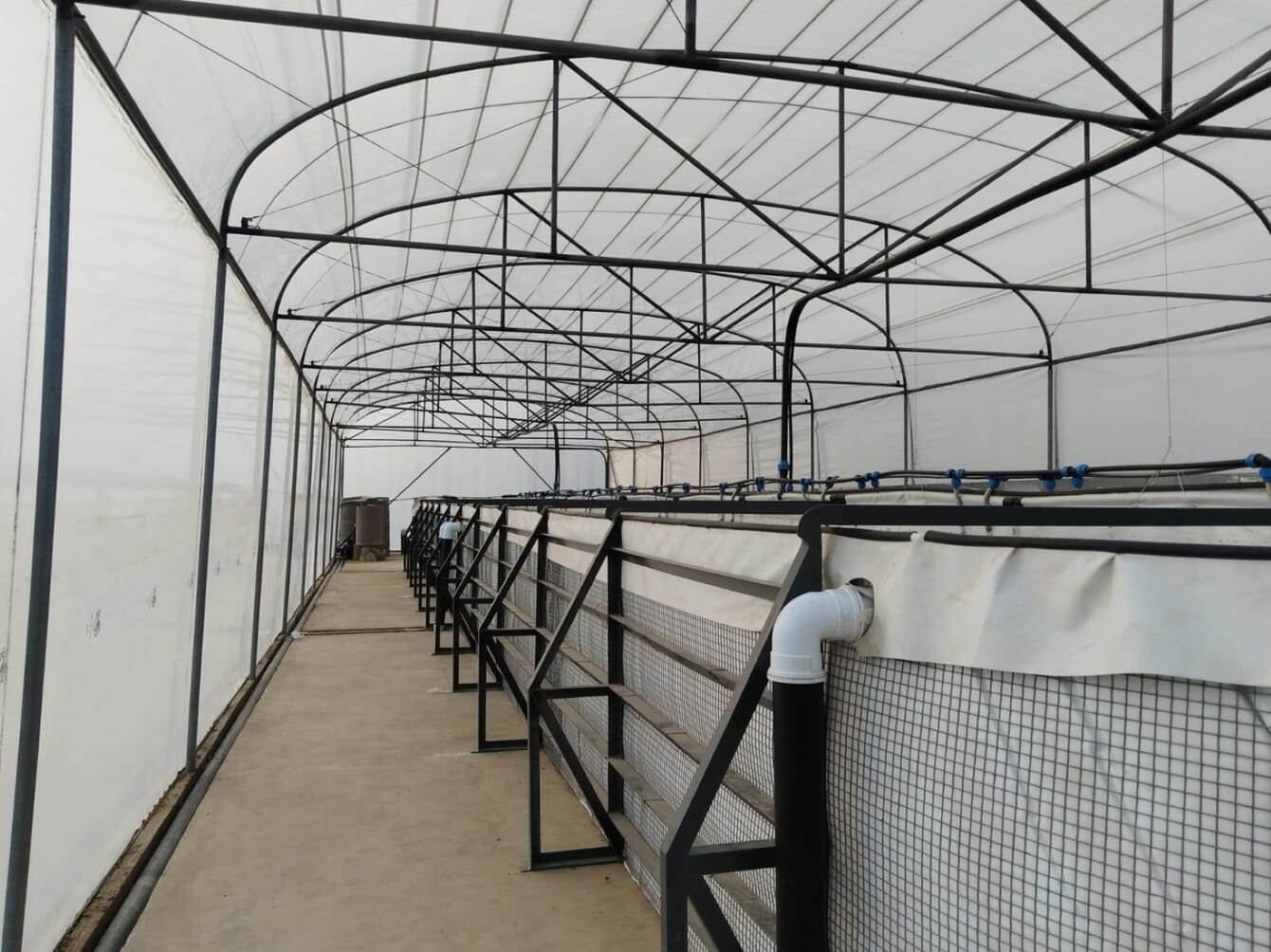
The farmer reveals that their above-ground raceway dams with net cages allow efficient fish grading and easy harvesting, and that they maximise production per square metre and are designed to be largely self-cleaning.
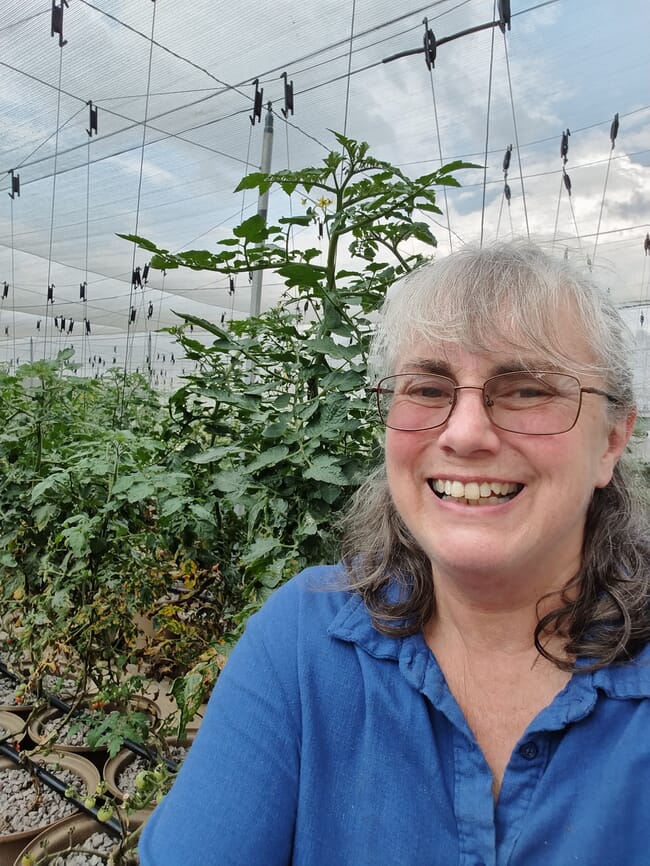
“For fruiting crops, we patented our Gravel Barrel Auto Syphon system. It is a single-plant pot design that avoids many of the anaerobic challenges associated with large media beds or Dutch bucket systems in aquaponics. The barrels are UV-resistant, stackable, and sized for vine crops while remaining easy to handle. The auto syphons have no moving parts and ensure complete drainage before refilling,” she says, adding that their Deep Water Culture (DWC) section uses steel frames and PVC liners, simplifying transport and on-site construction.
Their farm is among the first commercial aquaponic operations in Africa to integrate geothermal heating and cooling to stabilise water temperatures and optimise fish growth.
“In addition, we are working with a technology partner in Slovakia to develop an online monitoring and control system specifically for aquaponics, called the Aquaponics Whisperer. It will enable remote monitoring of parameters such as temperature, dissolved oxygen, pH and nutrient levels, helping to make large-scale aquaponics more predictable and bankable.
The farmer says that, where possible, they source inputs locally within South Africa. “We use a high-quality, locally formulated fish feed and continuously evaluate sustainable feed alternatives. At present, our fingerlings come from a hatchery near Brits, but we are preparing to produce our own fingerlings through our hatchery units. Seeds, polystyrene boards, net pots and foam holders are sourced locally, often from companies with international affiliations. We buy in bulk and repackage smaller quantities to supply clients and other farmers.”
© Bremner
The venture, she says, is very much a husband-and-wife enterprise, whereby Colin leads much of the technical development, while she focuses on strategy, communication and commercial expansion. “We collaborate with accredited training institutions and have trained hundreds of people in aquaponics principles. Over the years, we have built a network of growers, suppliers and technical partners who support our expansion,” she adds.
She says that the costs for running aquaponics farm depend on scale. Capital expenditure is significant, but operational costs are comparatively low relative to traditional farming.
“Our commercial unit (KSBA1000) costs approximately R3 million to establish (approximately €155k) , including terrain preparation and a three-month starter pack. Annual operating costs are roughly R900,000 (approximately €46k), with projected gross income of approximately R1.9 million per year (approximately €98k). Depending on market access and management efficiency, the system has the potential to reach positive cash flow within a competitive timeframe compared to conventional farming operations,” reveals Annemarie.
The farmer says that for direct customers, they gut, scale, vacuum-pack and seal each fish individually, and for bulk sales to resellers, they blast-freeze the fish in containers to maintain quality and shelf life.
They primarily rear Nile tilapia in their commercial systems, and Mozambique tilapia in smaller systems. According to her, tilapia are hardy, adaptable to African climates, relatively easy to manage, and widely accepted in African markets.
Annmarie reveals that they built their customer base over the years through farmers’ markets and direct sales. Their retail sales average around R100/kg (€5.18/kg). For bulk wholesale clients, including larger resellers, pricing ranges around R55/kg(€2.85/kg), depending on volume and market conditions.
She says that aquaponics is not a hobby scaled up - it is a biological production system that requires planning, discipline and strong market alignment.
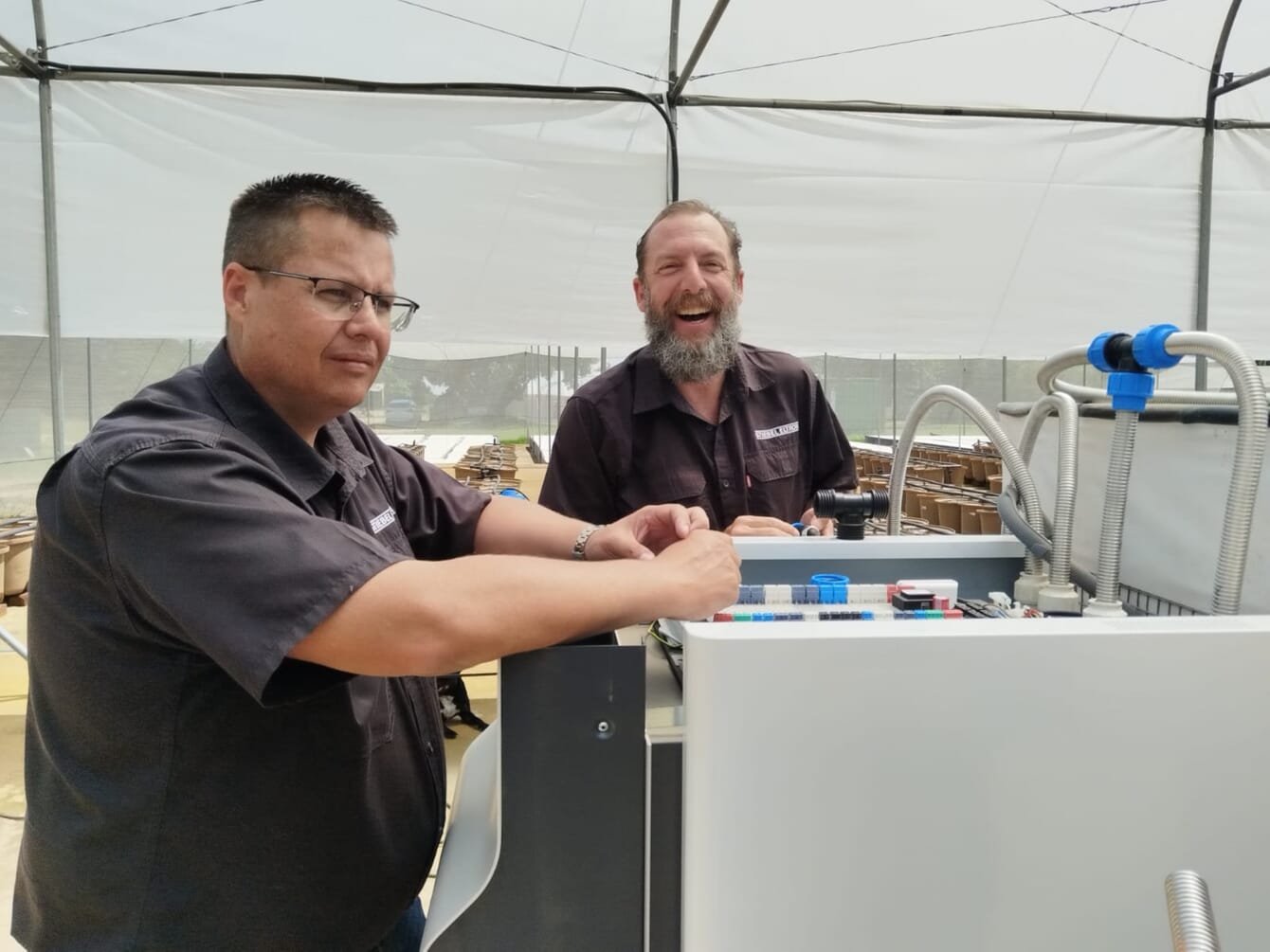
© Bremner
“Scale matters. Producing 100 heads of lettuce per week will not sustain a commercial enterprise. You need sufficient volume to supply pack houses or retail consistently. Even the highest-quality produce will not secure contracts without reliable supply. Work with your climate. For example, vertical towers may work in northern latitudes where sunlight angles are low, but in Africa’s intense overhead sun, they often create shading and nutrient distribution challenges. If your system design is sound, nature often restores balance. Overreacting can create bigger problems,” advises the farmer.
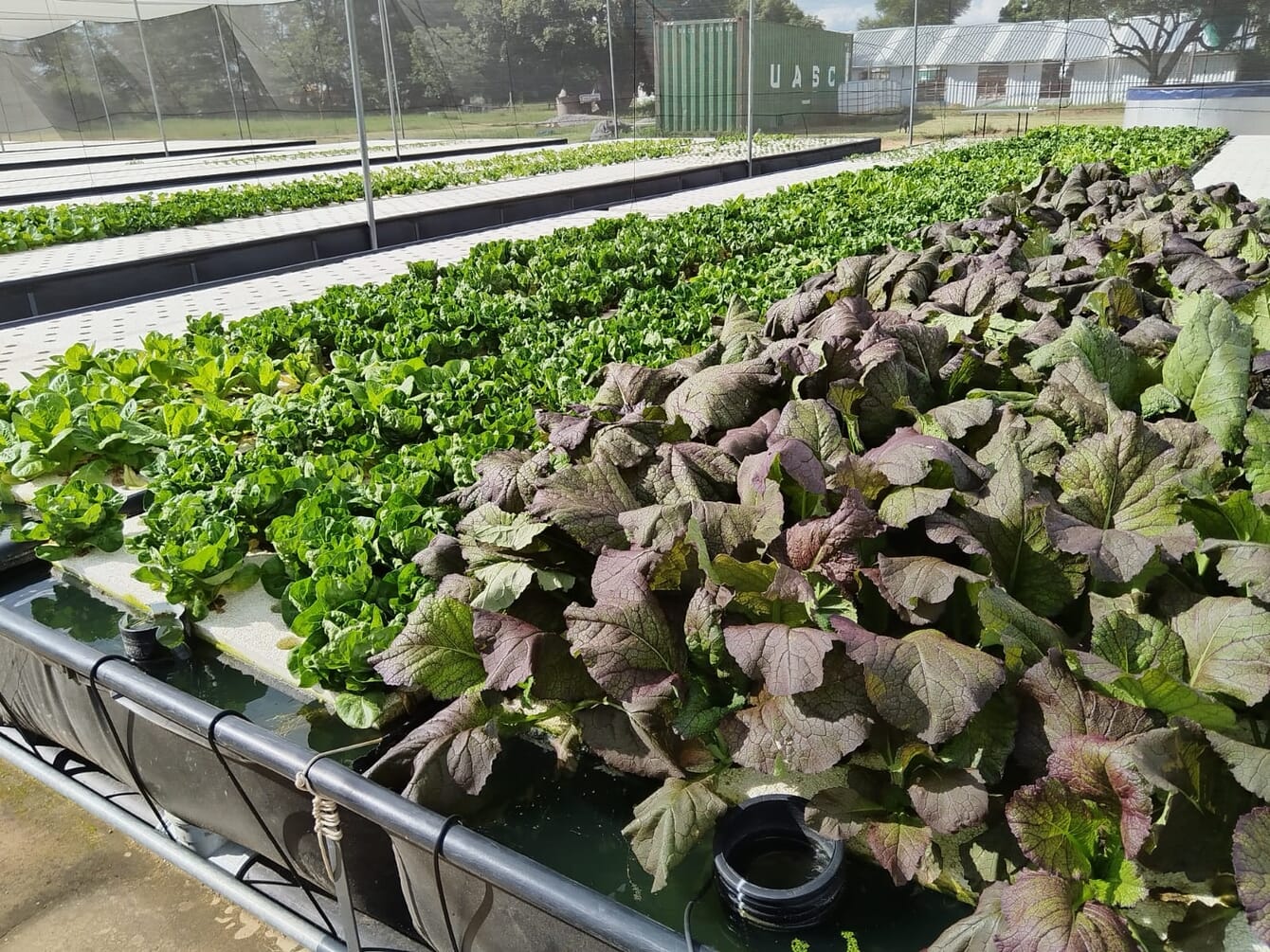
The farmer says that in their newly completed KSBA1000, they grow pak choi, baby gem and baby romaine lettuce, and wild rocket in the DWC section for a pack house. In the Gravel Barrel section, they produce baby marrows, cucumbers, cherry tomatoes and baby brinjals for both pack houses and direct sales. They also supplement lettuce production from their original system, supplying local restaurants, venues and grocery stores.
She says that the main challenge is educating funding institutions and policymakers about the commercial viability and scalability of aquaponics in Africa. She adds that large commercial systems need to be demonstrated at scale to unlock broader investment and accelerate adoption.
Annemarie says that they are preparing for regional fish exports to Zimbabwe and exploring herb exports to European markets once full production stabilises. Currently, they export aquaponics systems to Botswana, Namibia, Zimbabwe, Lesotho, Eswatini and Zambia.
“In the early years, we were largely self-funded, with some support from friends and family. Revenue from system design and construction, combined with produce sales, sustained the business but did not allow rapid scaling. In 2019, we received a grant from the Technology Innovation Agency (Department of Science and Innovation, South Africa) to secure our patent. Approximately 18 months ago, we received a soft loan to commercialise our KSBA1000 unit - a significant milestone in validating our technology. We are open to additional strategic funding to accelerate growth.”
She says that their physical farm is limited to two hectares, but their vision extends far beyond that footprint. She adds that they aim to position their modular aquaponic systems as scalable food-production solutions for water-scarce and climate-challenged regions globally.
“Aquaponics is often perceived as niche or experimental. However, with increasing water scarcity, rising fertiliser costs and climate volatility, integrated systems like ours may become central to future food security strategies - particularly in Africa,” concludes Annmarie.


