
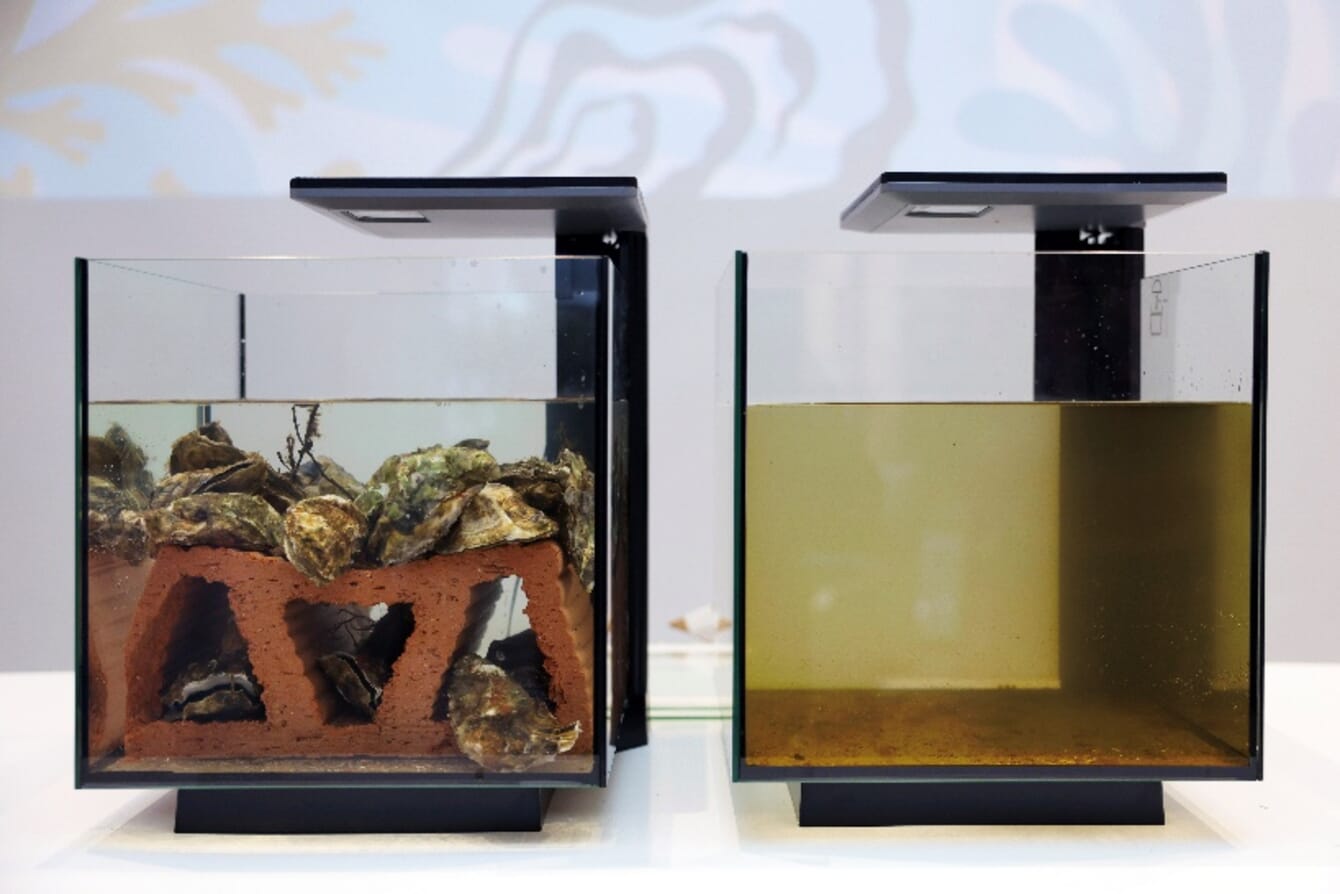
European flat oyster (Ostrea edulis) at the demonstration © Purina
Rather than serving oysters to eat, the space demonstrated how they work in the wild - filtering sea water. Hundreds of visitors attended to see live sea water-filtration demos and hear from marine experts at Oyster Heaven about the success of large-scale reef restoration work as part of the collaboration with Purina in the Netherlands and the work underway in the UK. This includes plans to deploy four million oysters off the Norfolk coast as part of efforts to support biodiversity and improve water quality.
In partnership with marine conservation organisation, Oyster Heaven, Purina is supporting the restoration of native oyster reefs - a species once widespread in UK waters but now largely absent.
Native European oysters were once abundant along the UK coastline, but with the near disappearance of the species from UK waters in the past century, this ecosystem function has been lost. The reintroduction of four million oysters over the next couple of years, through building reefs is expected to significantly restore water clarity along the Norfolk Coast, while also boosting biodiversity.
a single oyster can filter and clean up to 200 litres of seawater per day. As water clarity improves, sunlight can penetrate deeper, allowing seagrass to grow. This in turn encourages the return of marine life and the recovery of entire habitats. Cleaner waters ultimately support healthier ecosystems and stronger fish stocks.
Beyond the Norfolk initiative, Purina is supporting projects to restore kelp forests and seagrass meadows across Europe via its wider Ocean Restoration Programme. The pet food manufacturer uses marine ingredients sourced from fish by-products and claims an economic interest in safeguarding marine environments.
Claire Robinson-Davies, corporate affairs and sustainability director at Purina UK, stated that the company aims to support the environments its ingredients are sourced from.
“Through our work with Oyster Heaven, we’re proud to support the restoration of native oyster reefs off the Norfolk coast, ” Robinson-Davies said in a press release. “It was fantastic to bring the natural filtration power of oysters to life in central London and give people a rare, up-close view of the role they play beneath the surface of the sea - something most of us never get to see.”
Leodie Kruidhof, marine biologist at Oyster Heaven, added: “What really stood out from the event was just how engaged people were. Visitors were genuinely curious about how oysters work and why restoring them matters.
That level of interest is incredibly important. Projects like this rely not just on science and long-term investment from partners like Purina, but on public understanding and support. The more people connect with what’s happening beneath the surface, the more momentum we can build behind restoring these habitats over time.”

