

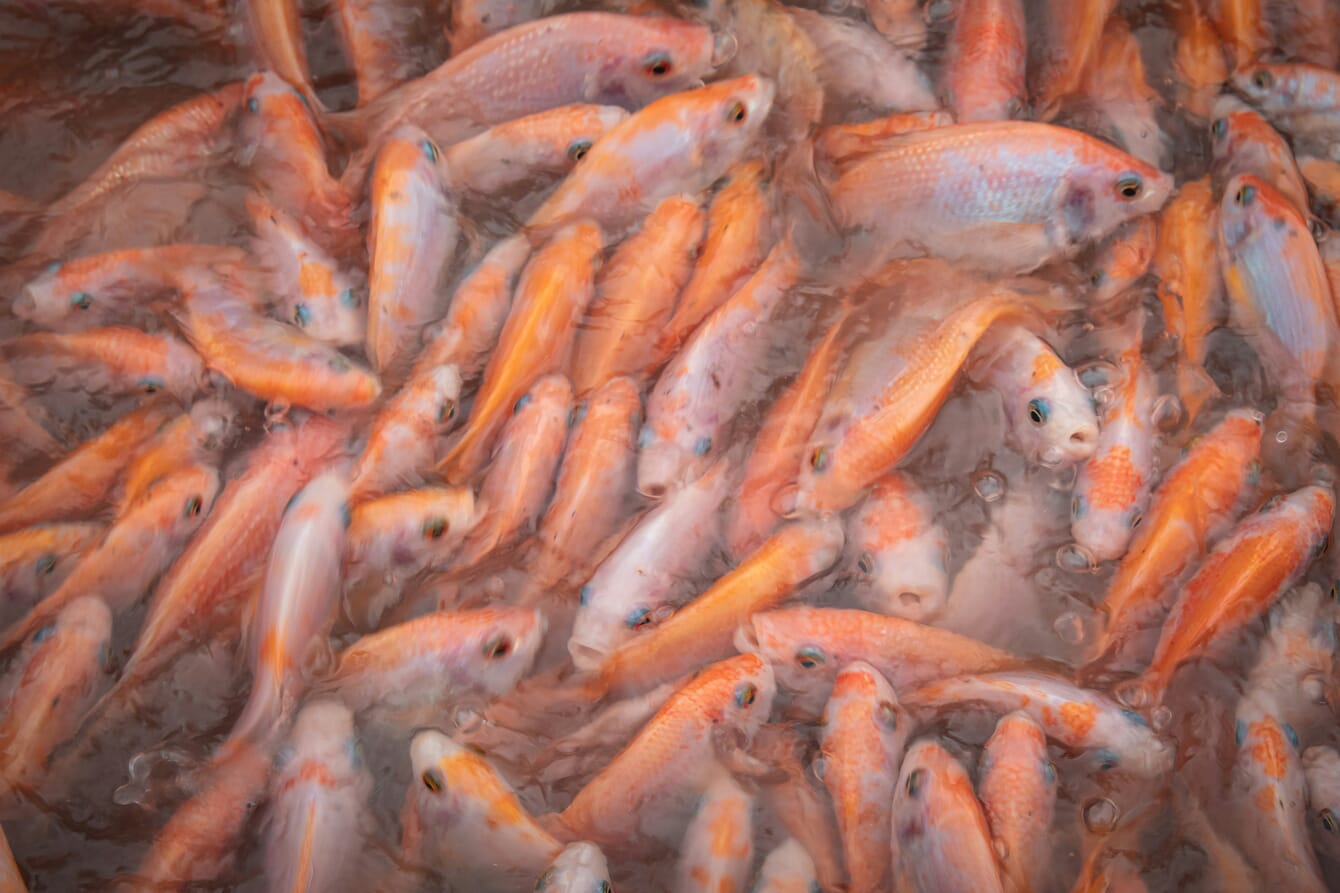
© Milo Weiler
Selenium is an essential micronutrient in tilapia fish farming. When levels fall short, the effects may be gradual but costly. Poor growth and rising mortality rates can erode margins. Fortunately, a new feed coating approach is gaining attention as a more efficient and cost-effective solution for selenium supplementation.
How Selenium Deficiency Impacts Tilapia
Nile tilapia (Oreochromis niloticus) is one of the world’s most widely farmed freshwater species because of its rapid growth, adaptability and efficient feed conversion. However, disease is a major constraint in intensive systems, and selenium deficiency in fish is one contributing factor.
There are several ways selenium supports core biological functions in fish. It’s essential for antioxidant defence, as it helps control oxidative stress at the cellular level. The mineral contributes to the immune response, aids normal growth and supports intestinal health. When dietary levels are sufficient, fish are better able to cope with environmental and production-related stress. In tilapia, adequate selenium has been linked to reduced gill damage and improved stress response.
Selenium deficiency in fish can slow growth rates and reduce feed conversion efficiency, increasing the cost per kilogram of gain. In addition, it can weaken immune response, making fish more susceptible to disease and raising mortality rates. Reproductive performance may also decline and reduce hatchery output. All of these effects can eventually affect production and result in measurable financial losses.
The Challenge with Traditional Supplementation
Traditional selenium supplementation in tilapia feeds presents several limitations. Inorganic forms, such as sodium selenite, are still widely used, but they’re not always efficiently absorbed or utilised by fish. Research shows that while sodium selenite can support basic immune function, it doesn’t consistently improve growth performance or feed conversion. This limits its value in intensive production systems.
One issue with sodium selenite is its low bioavailability. A portion of the selenium added to feed is not effectively used by the fish, so results can be inconsistent. To compensate, aquaculture feed producers may increase inclusion levels, but this raises feed costs without guaranteeing better outcomes. Moreover, there’s a risk of excessive selenium. At higher doses, selenium can become toxic, leading to reduced growth, poor survival and deformities.
Farmers may also use selenium nanoparticles, which can improve bioavailability. However, these particles are prone to clumping and oxidation, making them less stable in feed. As a result, traditional supplementation doesn’t always deliver consistent performance benefits.
Since selenium has a narrow margin between requirement and toxicity, careful control of source, formulation and inclusion rate is important. While selenium itself is not routinely monitored in pond water, accurate water-quality data management helps inform feeding strategies and nutrient use. Feed analysis and fish tissue testing, where available, offer a more reliable picture of selenium uptake than formulation data alone.
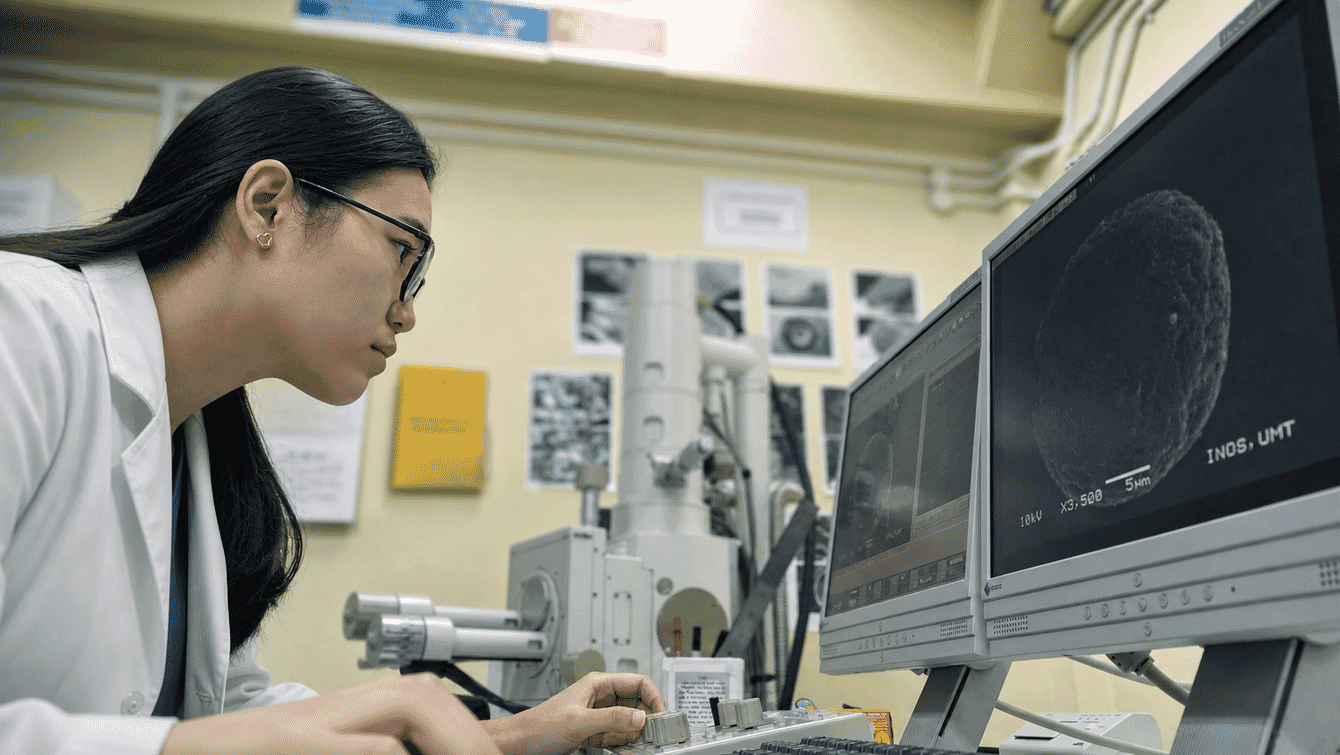
© Dr Tan Suet May
Dr Amelia Tan Suet May is a postdoctoral researcher at Chang Gung University, Taiwan, specialised in marine sustainability and the development of polyhydroxyalkanoate (PHA) bioplastics and biomicroplastics. Her work with biopolymer-based materials gives her a useful perspective on feed-coating systems, where the goal is to protect sensitive compounds, control release and reduce nutrient loss before they reach the fish.
"Selenium deficiency in fish is really a delivery problem, not just a formulation problem," says Dr Tan Suet May. This perspective suggests that improving how selenium reaches fish tissues may be more effective than simply increasing dosage.
The Coated Feed Solution
Feed coating offers a more controlled way to deliver selenium, particularly for unstable forms such as nanoparticles. Research on Nile tilapia found that materials such as chitosan, a natural compound derived from shellfish, can be used to coat selenium particles. This helps prevent common problems, such as clumping and oxidation, while keeping nutrients evenly distributed in the feed. According to Dr Tan Suet May, "a good biopolymer coating can function as a structural barrier and mild slow-release" that minimises nutrient loss to water while improving bioavailability.
A study in Animal Nutrition supports these benefits. Findings from an eight-week trial involving 450 fish indicated that sodium selenite covered in carboxymethyl cellulose significantly improved muscle growth, antioxidant activity and selenium levels in tissues. These effects may support better protein synthesis and mitochondrial function.
Compared with sodium selenite, coated forms elicited distinct biological responses, suggesting improved efficiency in selenium use. Although this trial was conducted in grass carp (Ctenopharyngodon idella), it could have implications for other aquaculture species such as tilapia.
Implementing This Solution in Farms
As production systems become more intensive, small inefficiencies carry greater cost. Dr Tan Suet May notes that effective coating systems "improve dose precision and bioavailability while minimising loss to water," which can translate to measurable improvements in growth, immune function and gut microbiota health. For producers, this means more consistent performance and fewer avoidable losses as farms scale up.
However, coated selenium should not be seen as a simple plug-in replacement for existing supplementation strategies. Inclusion rates, selenium source, coating material, pellet stability and species-specific requirements all need to be considered before new formulations are adopted at farm level. While studies in other aquaculture species show promising results, more tilapia-specific trials are needed to confirm how coated selenium performs under commercial conditions.
For tilapia farmers and feed manufacturers, the next step is not necessarily to add more selenium, but to ask whether the selenium already being added is reaching the fish efficiently. If coating technologies can improve stability, uptake and dose precision, they could help turn a small micronutrient into a more reliable tool for supporting fish health and farm performance.


