
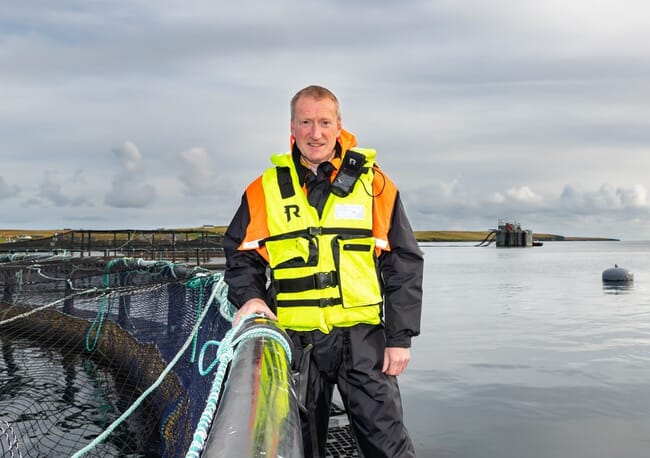
© Salmon Scotland
New figures released by Salmon Scotland show that survival reached 99.1 percent in March 2026, the best performance for that month since reporting began in 2018. This marks an improvement on the previous record in March 2025 when survival stood at 98.98 percent, and continues recent gains.
Survival across the first quarter of the year also reached a record high, averaging 99.03 percent between January and March, the strongest start to a year. The record start to 2026 follows a strong 2025, when monthly survival averaged around 98.3 percent across the year.
“These figures are a testament to our members’ hard work and commitment to fish health and welfare, and to responsible farming,” said Tavish Scott, chief executive of Salmon Scotland in a press release. “Record survival rates are encouraging and reflect the dedication of farmers across Scotland’s coastal communities. They also show the impact of sustained investment in fish health, technology, and farm management.”
The sector attributes these gains to a sustained investment of more than £1 billion over the last eight years. This funding has targeted innovation in veterinary care, technology, and stock management to strengthen herd resilience. Industry representatives state that higher survival rates will increase the supply of high-protein, low-carbon food to consumers, boosting food security and supporting economic growth.
Scottish salmon is the UK’s top food export and remains the country’s most popular fish, with international sales reaching £828 million in 2025 and domestic sales worth £1.5 billion. The sector contributes almost £1 billion to the economy each year and supports 11,000 jobs across Scotland, with many in rural and coastal communities.


