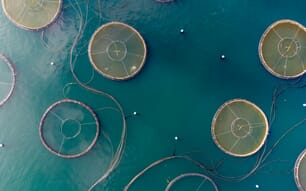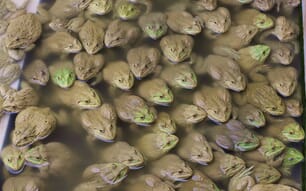
According to a study by Robin des Bois and Pro Wildlife, the annual EU imports are equivalent to 80-200 million frogs, with the vast majority sourced from wild populations © Grenouille de France
France has a long culinary relationship with frogs and its citizens currently consume approximately 8,000 tonnes (whole-frog equivalent) each year. Most of these come frozen from Asia, while Türkiye supplies the bulk of the fresh products.
However, there are still a handful of French producers, including Grenouilles de France – a small, greenhouse-based farm in the Drôme region in the southeast of the country. It was founded 16 years ago by Patrice François, the second generation of his family to have an interest in frogs.
“I spent the beginning of my career as a fishmonger… My parents were fish farmers working with trout; they also handled frogs, but imported frogs,” he says.
It was his frustration with the import-dominated market that inspired him to think about farming frogs himself.
“The French market is 8,000 tonnes per year, so there’s really something to be done with frog farming. There’s a huge market to develop,” he stresses.
While his farm is still small, he says the demand is unmistakable.
“We’re really a very small company. This year, we’ll have between 6 and 10 tonnes of live frogs and we turn down about two to three customers [restaurants] a week,” he reflects.
The “domestic” frog that made farming possible
In France, commercial breeding, transport and sale of wild marsh frogs (Rana ridibunda) has historically been restricted – which makes raniculture difficult. François, however, has worked with a domesticated strain of the species, called Rivan 92. It was developed by André Neveu at INRA in Rennes (now INRAE) and created two major benefits: it can be farmed, transported and sold legally as a “domestic” line in France; and it is one of the first strains to accept inert feed. This was a significant step for cultivation, biosecurity and practicality, and it opened the door to more standardised farming.
François has built a vertically integrated operation, with every step from breeding through to processing done on site. He says he started the farm with 2,000 frogs and has kept that line going ever since. A full production cycle takes about 12 to 14 months. Breeding and spawning run from January to July; eggs take about a week to incubate and hatch into tadpoles, which begin feeding on larval diets. This stage lasts around four months, after which the frogs undergo metamorphosis, growing four legs and reabsorbing their tail. François says the change happens when the tadpoles weigh around 1.5 grams – very small compared with Asian lines, which metamorphose at around 30 to 40 grams.
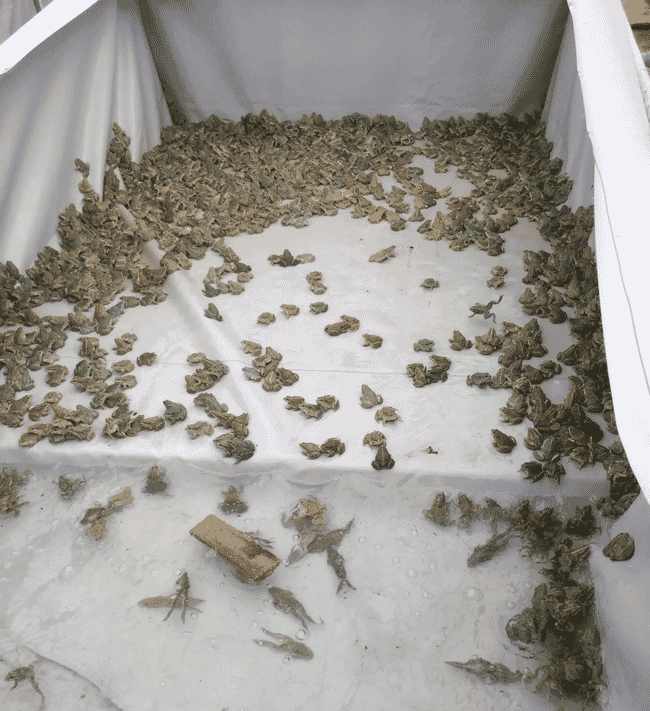
© Patrice François
“My goal, ideally, would be to have a fully insulated building. Then we could control the temperature much more optimally, and I think we could reduce the whole cycle to between 10 to 12 months,” says François.
French frogs command higher prices than imports – frozen frogs from Asia are priced at around €20 per kg, and fresh frogs from Türkiye two to three times that, although prices fluctuate widely.
“With Türkiye, the problem is that in summer, when there are a lot of frogs, prices can be quite low, and in winter, when the frogs are hibernating in the marshes there, prices can shoot up,” explains François, who is able to provide a constant, year-round supply of fresh frogs from his greenhouse.
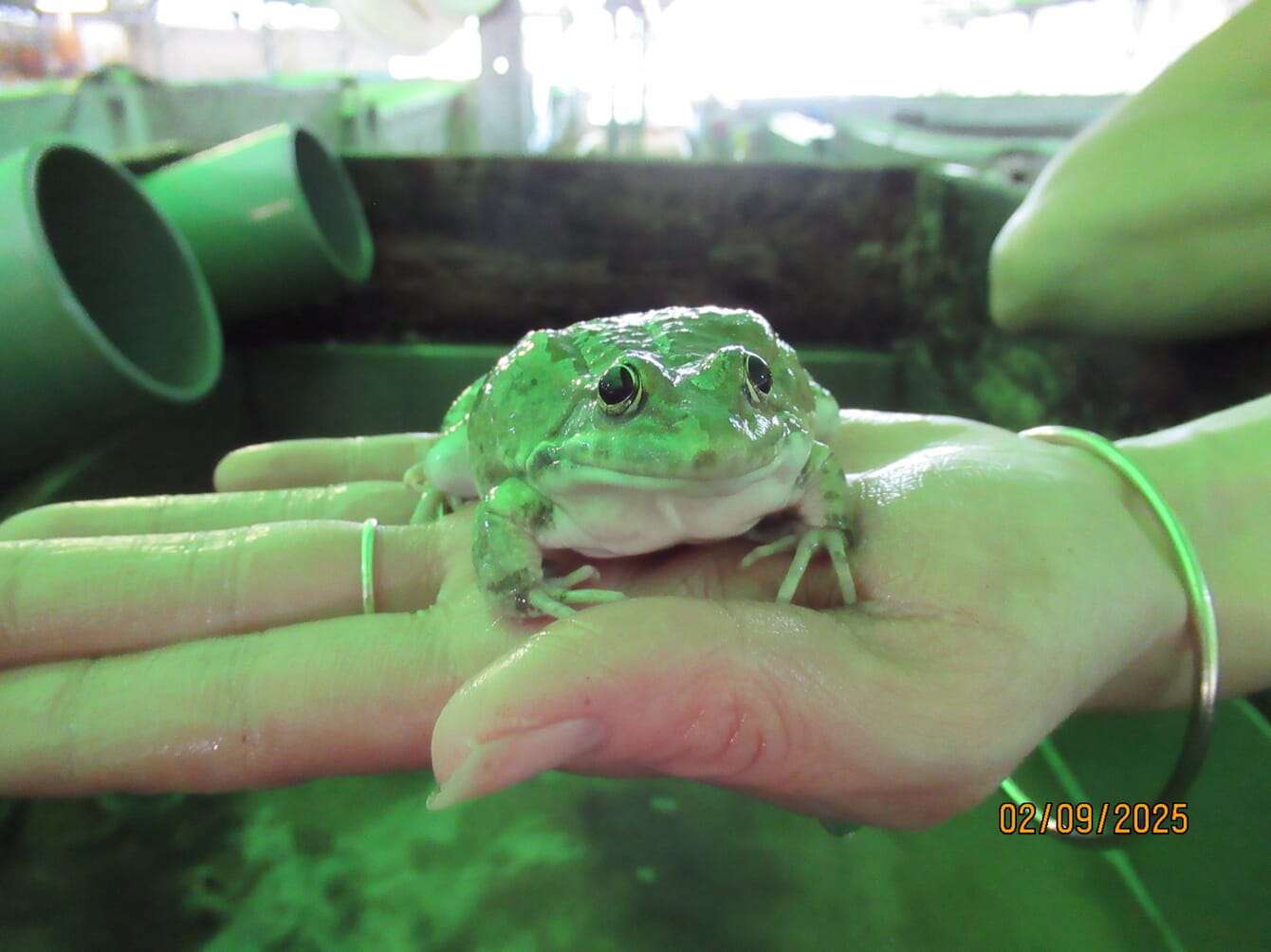
The farm uses recirculating aquaculture systems (RAS) inside an enclosed greenhouse, drawing on recovered heat from a local cogeneration plant that supplies nearby greenhouses and other facilities – including a nearby crocodile farm. The 120 tanks are simple but purpose-built for frogs combining lined units of roughly 8 m² each, with walls about a metre high to prevent escapes. Remarkably, no vaccines or treatments are required.
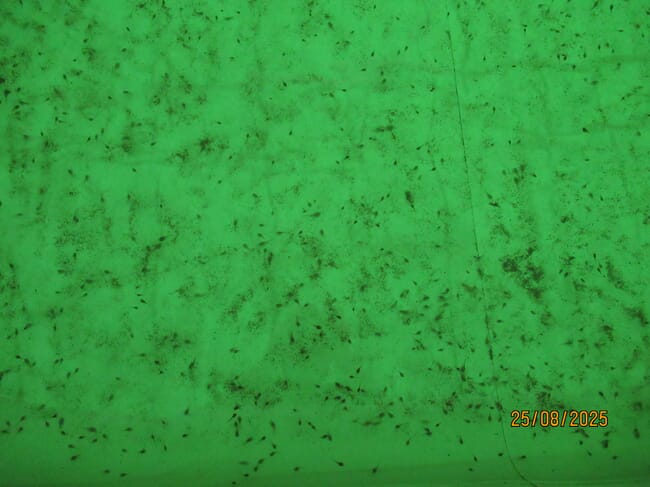
© Grenouille de France
Unconventional challenges
The farm is not as high-tech as intensive finfish RAS operations, but it follows the same logic of robust filtration and automatic feeders. Dealing with amphibians, however, changes the job. Tasks that are routine with finfish can become complicated with four-legged jumpers. Grading is the obvious example, as fish graders do not work on frogs. Yet keeping animals of similar size together is essential, because size differences can quickly lead to cannibalism.
“Frogs eat anything that moves, so they tend to want to eat each other a bit,” says François. “As soon as one is about 50 percent bigger than its little friend beside it, it starts to get dangerous. And what happens with cannibalism is that the bigger one always tries to eat the smaller one. Sometimes it tries and can’t swallow it, but the small one dies anyway and sometimes the big one dies too, because it chokes trying to swallow the smaller one.”
While he has learned a lot about frog behaviour over the years, his amphibians remain enigmatic.
“We’re still learning every day. We had someone come work with us who had a lot of experience in aquaculture (fish). When he arrived, he said, ‘In three months I’ll be gone, we’ll have solved all the problems.’ He left five years later saying, ‘We still haven’t figured it all out,” François recalls.
Once the frogs reach market size, of around 50 to 60 grammes, they are chilled to 2°C, to ensure they are fully asleep before slaughter – a positive point from a welfare perspective.
The farm sells two broad grades, described as 20–30 or 30–40 – meaning 20 to 30, or 30 to 40 pieces per kilo.
“Some very gastronomic clients – three-star, two-star restaurants – generally only use the legs, not the body. Those clients tend to want larger frogs. So, that’s why we have two size grades,” says François.
He explains that frog butchery typically involves three different cuts – the Lyonnaise, the Parisian and the yoga. The latter is mostly found in frozen products with just the hind legs and a small piece of the back. Pierrelatte sits in the Lyon region, so the Lyonnaise cut dominates locally. François says it is usually easy to tell fresh product from frozen when buying, as fresh frogs are typically sold with the front legs still attached.
For François, the simplest way to cook them is also the best.
“You take them, pat them dry, dust them lightly with flour, put them in a pan with lots of butter, a bit of oil so it doesn’t burn, a little garlic, a little parsley, and that’s it, you’re done. Frozen ones don’t have much flavour, but fresh ones taste good. They have a nice flavour, so you don’t want to overdo it. For me, the simpler the better,” he explains.
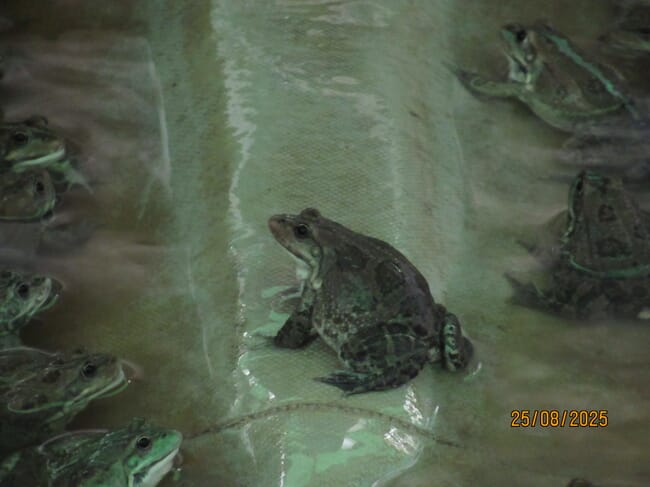
© Grenouille de France
Expanding to meet demand
Margins for frog farming in France are tight, not least because of its heavy energy requirements, and two out of the country’s four farms have closed in recent years. François, however, is not planning to give up the skills he has built. He sees a large potential market, and says the quality of a farmed French product beats imports – something he measures in returning high-end customers and in the orders he has to refuse each week.
As a result he’s looking to upgrade his facilities.
“From the moment we manage to build facilities that are completely insulated, when we manage to optimise the feeding system and everything that goes with it, we should be able to make a bit of money,” he notes.
So far, the project has been self-financed, year by year. Now the aim is to secure external funding to modernise the greenhouse and expand production. Not far away, the Dombes region – often cited as one of France’s strongest frog markets – consumes around 250 tonnes a year, demand which François sees as largely untapped.
“If tomorrow we manage to produce more frogs, more cheaply that will allow us to sell at slightly more reasonable prices,” explains François. “We have a clear road ahead of us.”