
© Annelise Chapman
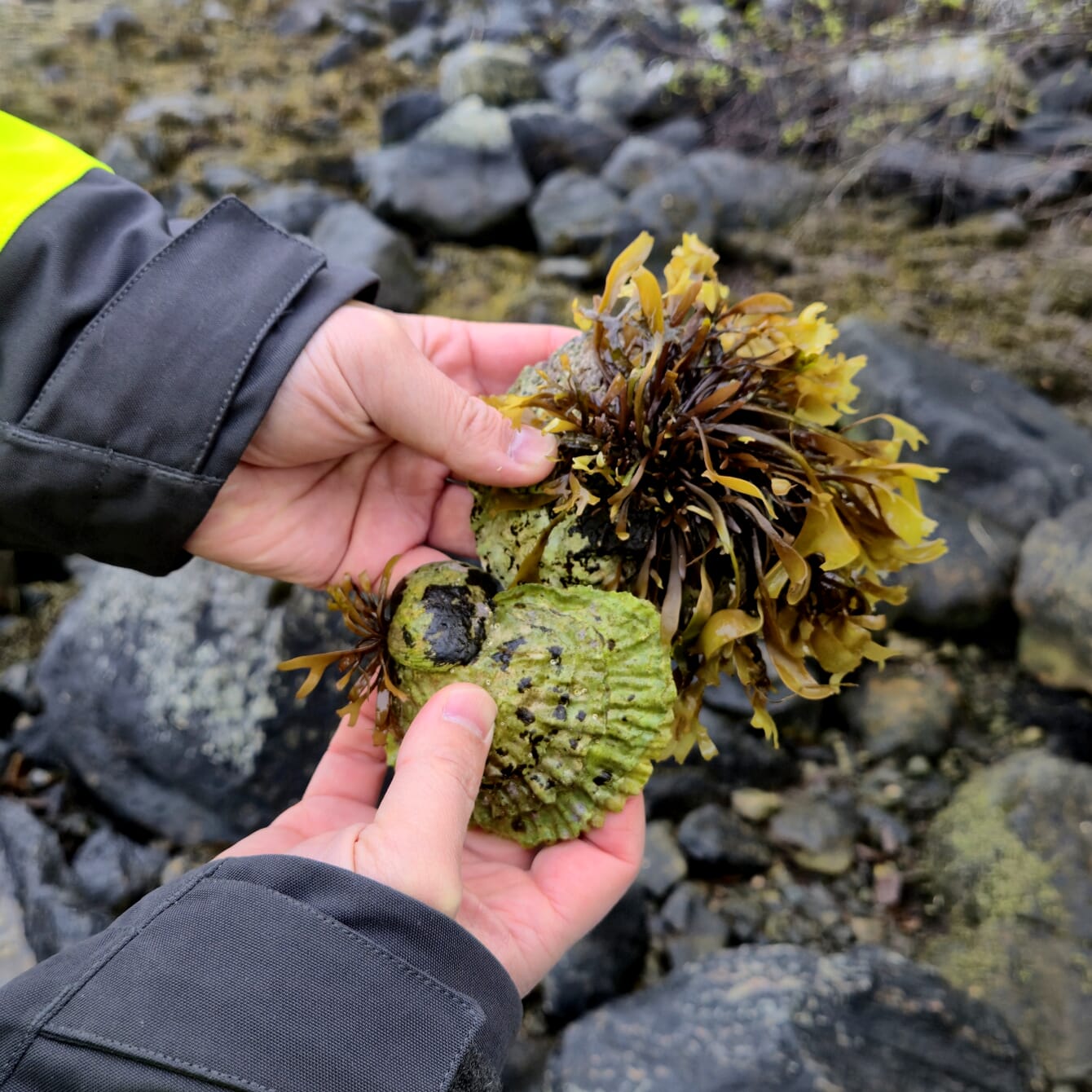
Historically, the native European oyster formed vast reef systems stretching from the North Sea to the Mediterranean. These oyster reefs once supported rich marine biodiversity, improved water quality, and stabilised coastal ecosystems. However, centuries of overharvesting, devastating disease outbreaks, and invasive pacific oysters have driven the species to near collapse. Today, the native European oyster is considered functionally extinct across most of its historic range.
In response, restoration initiatives have emerged throughout Europe to rebuild native oyster populations. Yet these efforts face challenges: producing enough juvenile oysters and producing enough live feed to sustain them until release. Hatching and raising oysters to a size suitable for ocean deployment remains costly and technically demanding, particularly during the earliest stages of life when survival rates can be low.
To help address this bottleneck, Restorae AS has partnered with Nosan Corporation to make their novel, juvenile bivalve feed technology designed to improve hatchery performance by enabling faster growth and higher survivability, available to mission aligned partners outside of Japan.
The novel juvenile bivalve feed, called SpatCare, is a nutrient-rich supplement to live feed. Its shelf-stable, 15-micron formulation contains the nutritional equivalent of an estimated 30 billion diatoms per gram, allowing even bivalve spat as small as 2 mm to begin using the feed to support growth. The feed has been used in Japan for 20 years and may generate similar benefits to native European oyster restoration initiatives.
Over the next three months, Restorae and Nosan Corporation will establish partnerships with mission-aligned commercial, scientific, governmental and NGO partners to validate the feed’s effectiveness with native European oysters. Once validated, the partnership will help introduce the technology to restoration initiatives across Europe.
“The feed’s nutrient profile and particle size makes it an ideal ‘baby formula’ for juvenile bivalves. If the feed works for bivalves in Europe as it has for Japan, this could be game-changing for oyster restoration efforts around the world,” said Pia Ve Dahlen, marine biologist at Restorae, in a press release.
“When Restorae pitched the case for native European oyster restoration to us, we saw an opportunity to meaningfully contribute to an important movement. We look forward to playing our part to restore Europe’s ocean,” said a representative of Nosan Corporation.
By combining Nosan’s hatchery nutrition innovation with Restorae’s restoration-focused ecosystem partnerships, the collaboration aims to strengthen one of the most critical bottlenecks in rebuilding Europe’s native oyster reefs.


