

© SSFI
For thousands of India’s smallholder shrimp farmers, the accumulation of sludge at the bottom of their ponds is gradually undermining animal welfare, water quality and financial stability.
Left unmanaged, this mixture of shrimp faeces, shed shells, uneaten feed and dead shrimp produces toxic gases, disease outbreaks and mass mortalities that can push already vulnerable farmers to the brink.
This is the problem that Sustainable Shrimp Farming in India (SSFI) has set out to address, armed with nothing more sophisticated than industrial pumps, excavators and the testaments of an ever-growing number of farmers who have benefitted from the organisation’s simple interventions.
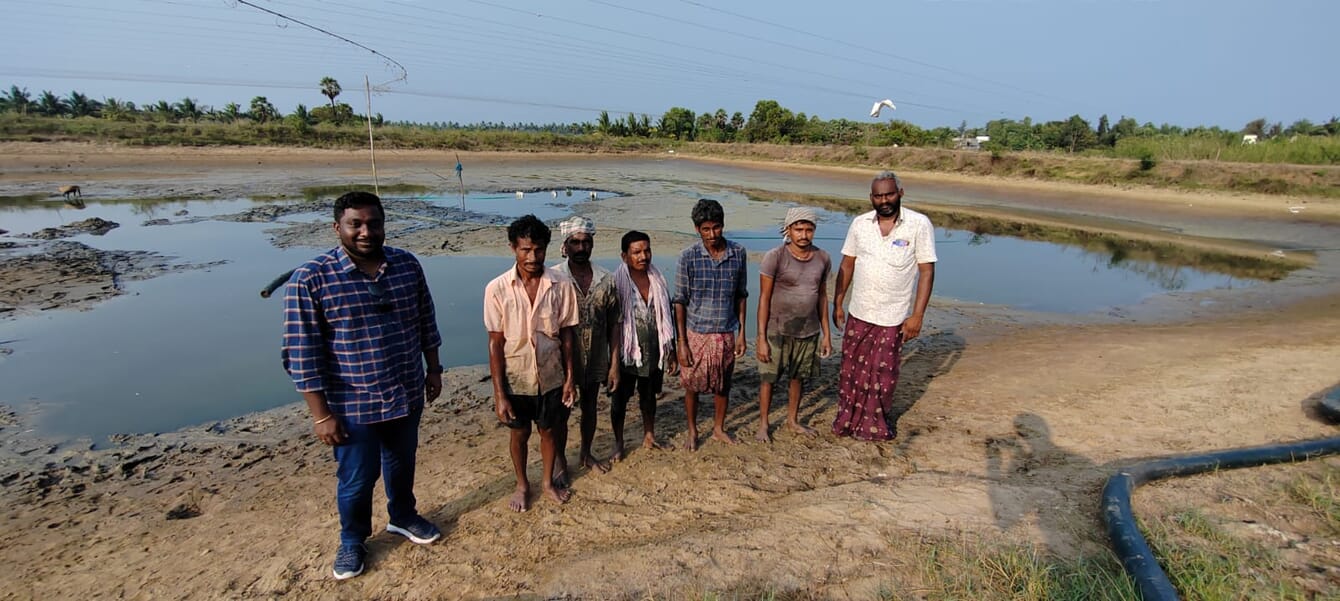
Formed as a key component of non-profit Shrimp Welfare Project (SWP), SSFI works directly with smallholders in the vicinity of Serepalem village to improve shrimp welfare while stabilising livelihoods. Its flagship initiative – subsidised sludge removal – is already delivering measurable improvements in pond conditions, shrimp survival and farmer confidence.
“Our intervention is primarily focused on smallholder farmers,” explains Srirang Kavali, SSFI’s director of India operations. “When we say smallholders, we mean farmers with less than two hectares [five acres], and very often they don’t even own the ponds – they lease them.”
Why is sludge a problem?
Sludge is an unavoidable by-product of shrimp farming. While in well-managed systems it is periodically removed, in many parts of coastal India, where finance is tight and many farmers have nowhere to deposit this waste, ponds are restocked for multiple cycles without being cleaned.
“In some farms, shrimp have been cultured in the same pond for five, six, even seven years,” Kavali explains. “In a pond that’s six feet deep, the bottom three feet can be pure sludge.”
As the organic load builds up, oxygen demand rises and anaerobic conditions take hold. Hydrogen sulphide (H₂S) and ammonia levels spike, creating an environment that is acutely stressful – and often lethal – for shrimp.
“When we first tested these areas, they ranked very high for hydrogen sulphide and ammonia,” says Kavali. “Farmers were reporting mass mortalities very frequently.”
The consequences are severe. As Kavali notes, some farmers were attempting as many as six or seven crops per year, due to repeated mass mortality events – a situation that a welfare-focused non-profit like SSFI was desperate to avoid.
Practical, farmer-first intervention
Rather than asking farmers to invest in expensive infrastructure for ponds that they will never be able to own, the organisation covers all or part of the cost of sludge removal.
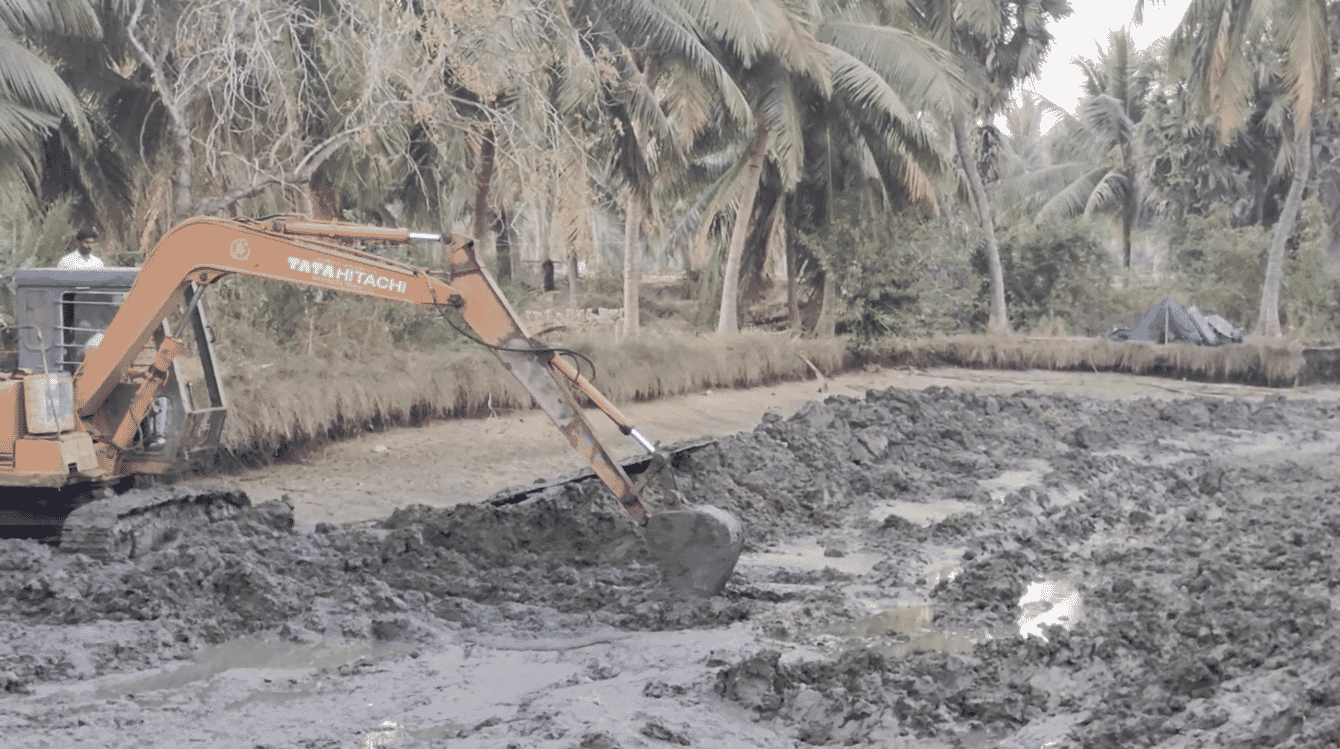
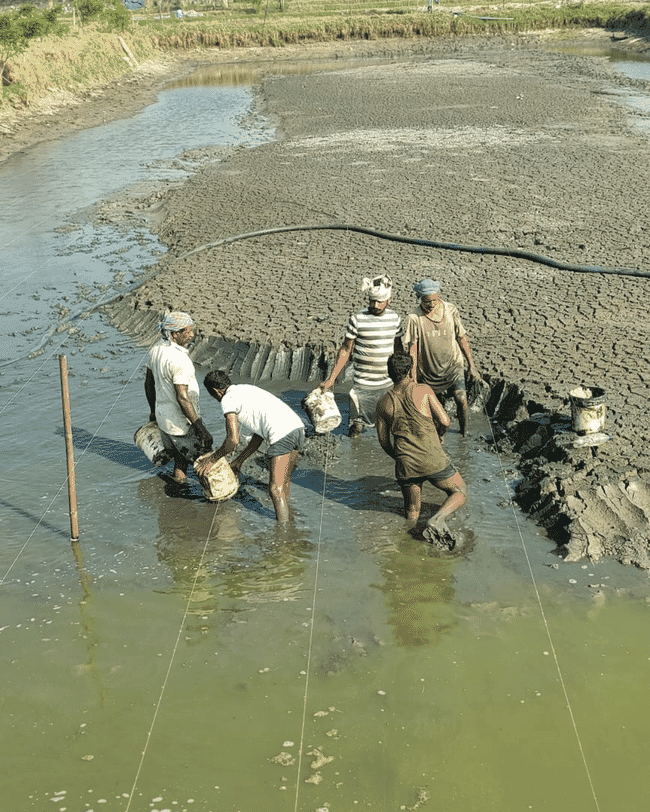
“There are two methods,” Kavali explains. “Wet de-sludging uses industrial pumps, and we can clean about one acre in three days with workers. Dry de-sludging involves drying the pond and using an excavator – in those cases we often cover the machinery costs fully or partially. We also ensure that sludge is removed and disposed of responsibly, preventing contamination of canals, neighbouring ponds and surrounding ecosystems.”
© SSFI
Priority is given to the most at-risk farms: those with high hydrogen sulphide levels, repeated crop failures and limited financial resilience. Since launching the programme, SSFI has worked with around 70 farmers across nearly 200 acres, with demand sometimes outstripping capacity.
“At the beginning we were in push mode – convincing farmers that desludging mattered,” reflects Kavali. “Now we get daily calls. We’ve moved from push to pull.”
It’s not all been plain sailing, however, with the punitive US tariffs on Indian shrimp imports making some farmers less willing to stock their ponds with fresh post-larvae, while the extended and severe nature of the last monsoon season meant that there were fewer opportunities for SSFI’s team to carry out sludge removal.
“The target that we have set for ourselves for this year is close to 250 acres. Last year it was 300, but because of the Trump tariff and the monsoon for about seven months in India, that impacted our operations very negatively,” Kavali reflects.
© SSFI
Welfare gains and farmer resilience
Despite these setbacks, early indicators of the organisation’s impact are encouraging. Indeed, according to Kavali, in ponds that they have de-sludged, hydrogen sulphide levels have typically dropped from dangerously high thresholds (around 0.05 ppm and above) to near zero, while farmers consistently report improved survival and fewer catastrophic losses.
“Anecdotally, survivability has increased significantly,” Kavali says. “And importantly, the number of [attempted] crops has come down – from six or seven a year to a more regular three.”
The reversion to longer grow-out cycles suggests fewer crop failures, less chronic stress for shrimp and reduced financial risk for farmers operating on margins made even thinner by the impact of US tariffs.
“Even a five-rupee drop in price can mean a huge loss for the crop,” Kavali notes. “These farmers live on the edge.”
Going beyond sludge
While de-sludging remains SSFI’s core intervention, the organisation is actively testing better approaches that could further improve shrimp welfare, as well as diversify farmer incomes.
One area of focus is improved aeration, particularly during the early-morning hours when dissolved oxygen levels are lowest.
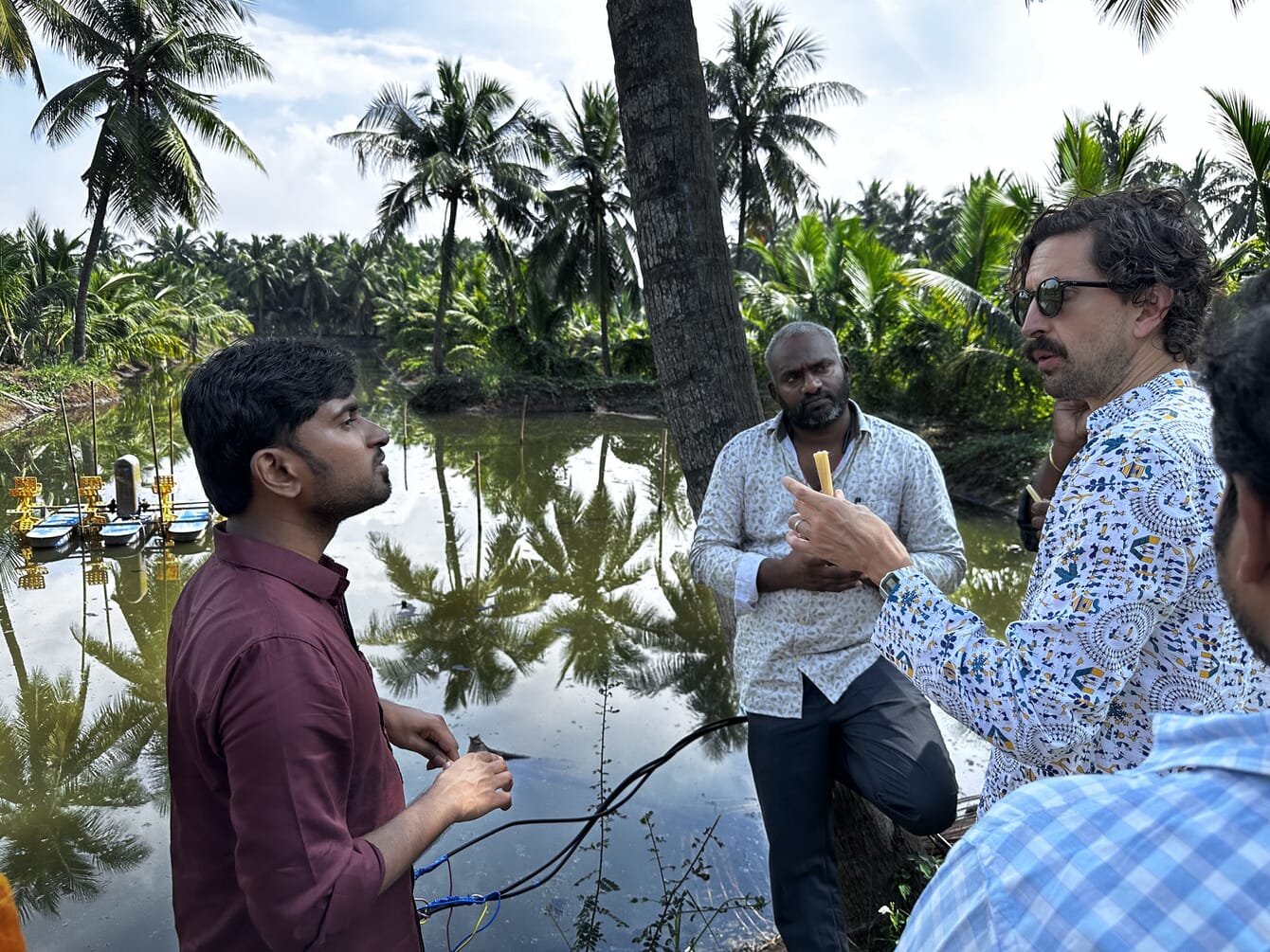
“We’re exploring whether better aeration between 1 am to 5 am – using venturi or surface aerators – can reduce stress during critical periods,” Kavali says.
SSFI is also piloting duckweed and seaweed cultivation as alternative or supplementary income streams, to help buffer farmers against the volatility of the shrimp market.
“In our trial ponds, duckweed or seaweed can generate around US$1,500 per acre per year,” Kavali explains. “That’s less than shrimp, but it’s predictable. It gives farmers something to fall back on.”
Duckweed, with protein levels approaching 40 percent in some species, has potential as both animal feed and human food. Seaweed species such as Gracilaria and Kappaphycus have value when exported for carrageenan production.
There is also potential for a degree of bioremediation, as duckweed and seaweed can both absorb nutrients from sludge-rich water, potentially creating a circular system that improves water quality, while also generating income.
“We’re even exploring whether sludge itself could be used as fertiliser for these crops,” Kavali adds.
© SSFI
Going solo
Since its spin-out from Shrimp Welfare Project in January, SSFI now operates independently on the ground, while maintaining a close relationship with its parent organisation for strategic support, oversight and shared learning – aligning with Shrimp Welfare Project’s broader mission to improve shrimp welfare globally. And Kavali hopes that SSFI’s emergence as a standalone entity will allow for greater operational freedom and scalability.
“Spinning out was a necessity,” he reflects. “It gives us more freedom, but also more responsibility.”
In 2026, SSFI aims to scale its de-sludging programme to 250 acres of ponds, while developing its pilot projects on aeration, alternative crops and humane slaughter practices such as chill killing, although Kavali describes the latter as a longer-term, multi-stakeholder challenge.
For now, the organisation remains focused on improving pond environments – both to ensure better shrimp welfare outcomes, and to create financial stability for the smallholder farmers of Andhra Pradesh.


