© Barbier
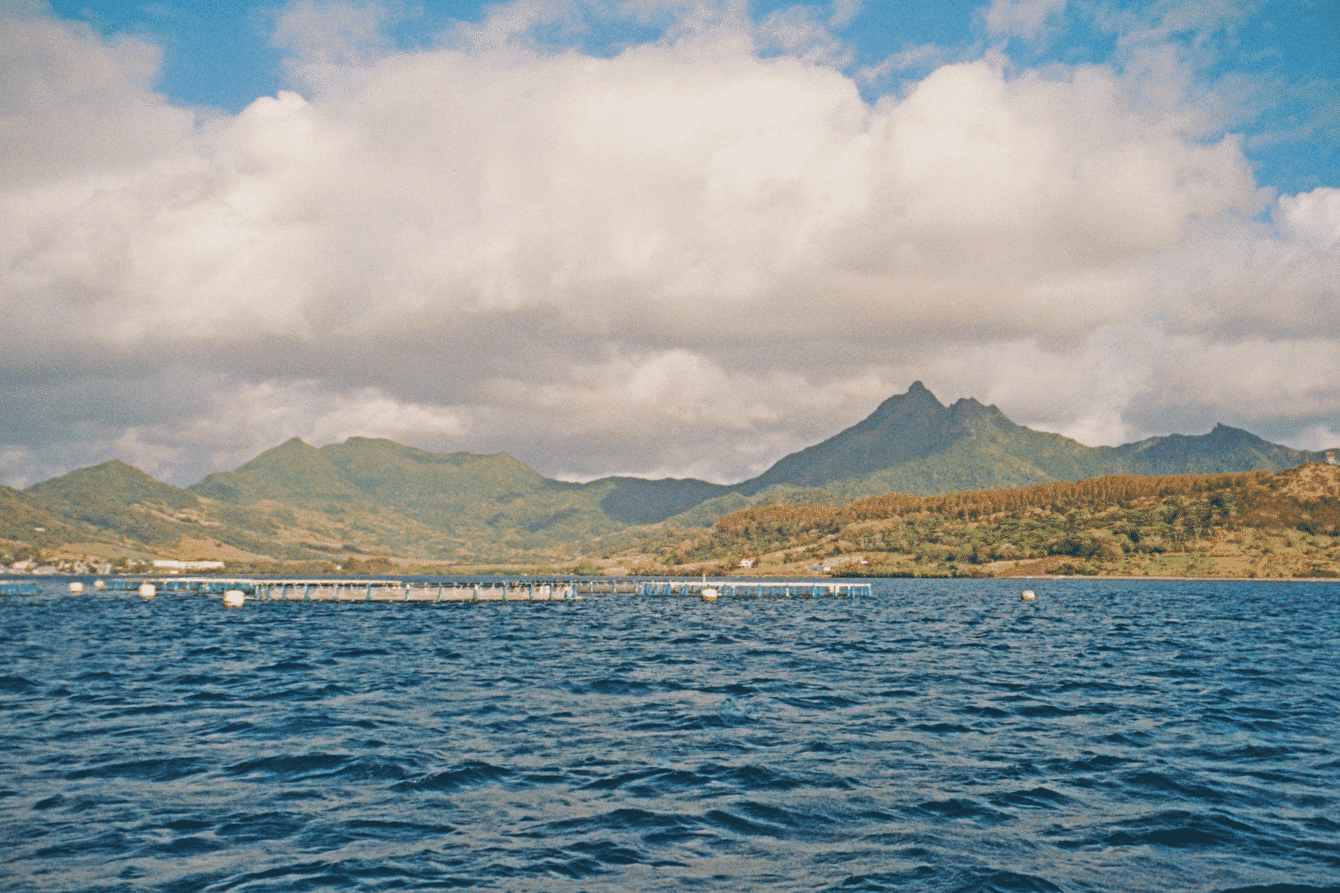
Mauritius, a tropical island in the southern Indian Ocean, is well known for its pristine beaches and the ill-fated dodo, but less for its aquaculture industry. The island’s only marine fish farm, which is nestled within the turquoise-blue waters of a lagoon, produces an impressive 2,500 tonnes of red drum (Sciaenops ocellatus) annually.
Historically valued more for its agriculture than for its aquaculture, Mauritius has changed hands between empires and now stands at a multicultural crossroads linking Europe, Africa and Asia – a diversity reflected in the farm’s workforce of 150 employees, who originate from Mauritius, France, Tunisia, Italy, Madagascar, Morocco, Belgium and beyond.
Fish farming in a sugar cane nation
In 2002, as the Mauritian government began to develop the country’s blue economy, three Mauritians began to consider setting up an aquaculture business. Working in collaboration with France’s national marine research institute, Ifremer, they selected red drum – a species already established in Central American aquaculture and renowned for its adaptability to tropical waters. After securing the necessary permits, the first fish were stocked in cages on the east coast in 2005.
“Aquaculture is a business that relies heavily on capital,” explains FMM site director Pierre-Yves Semaesse. “The founders realised they needed constant financing, so each year they sought new shareholders to raise funds. They did this for almost 10 years, resulting in losses until 2014-2015.”
By then, the founders faced a stark choice: scaling up to reach the break-even point of 1,500 tonnes per year or shutting down entirely. One partner, the Compagnie Mauricienne de Textile (CMT), was able to inject new capital and became the majority shareholder and by 2017, FMM had achieved critical mass.
Buoyed by their success, they set an ambitious goal to double production to 3,000 tonnes by 2019. But then, the covid crisis hit and the island went from having 115 flights a week to almost none, a cruel blow for a company that exported 90 percent of its fish by airfreight.
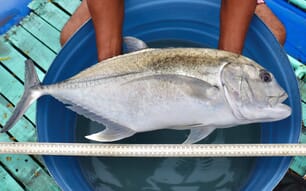
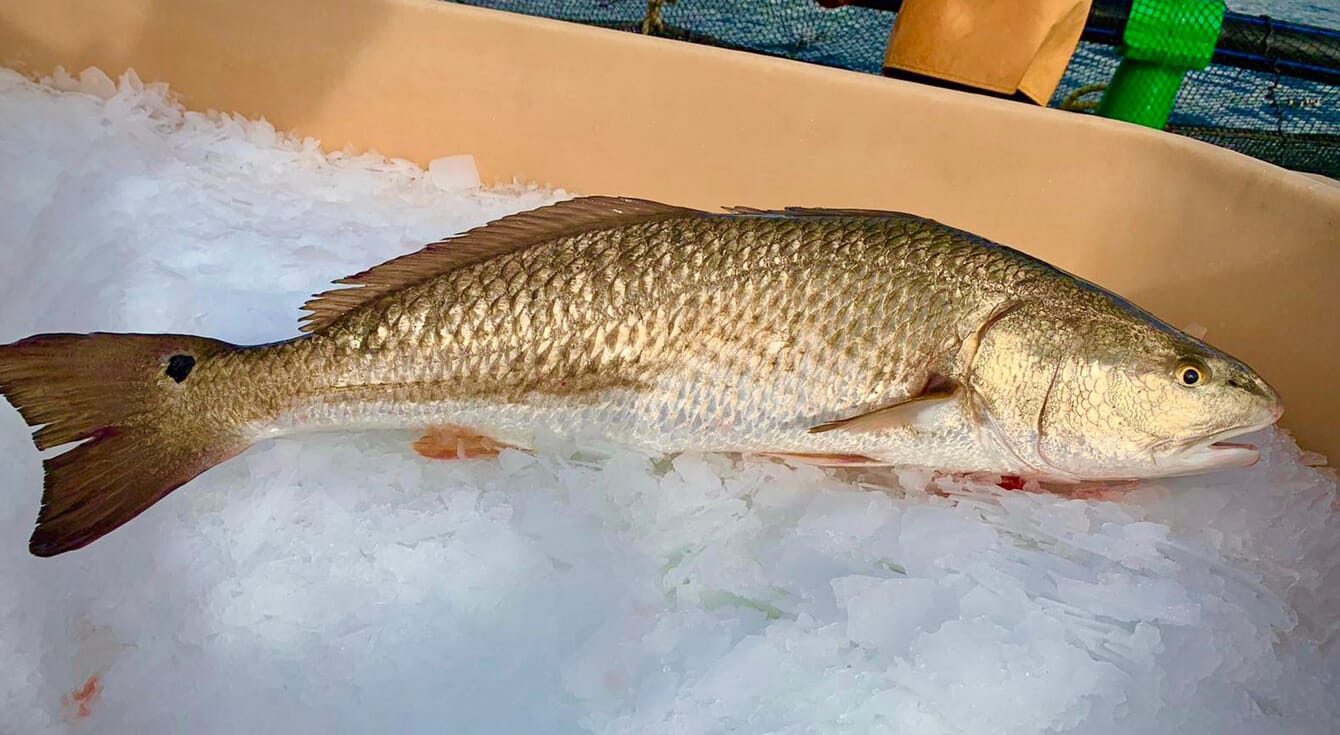
Red drum have a black spot near their tail, which scientists believe helps fool predators into attacking the red drum's tail instead of their head, allowing the red drum to escape © Barbier
“When covid started, we must have had about 1,600 tonnes at sea. When Covid ended, we were at a peak of 4,500 tonnes at sea. That is to say, the fish – they were tuna,” jokes Semaesse, who was forced to keep feeding and growing the drum, while they waited for their markets to reopen, a costly process due to their exceptionally high feed conversion ratios (FCRs).
During covid, the company had to bring in a sub-contractor to handle harvesting and processing, as the volumes were far beyond its capacity, eventually selling them on the local market at significantly reduced margins – leaving FMM €3 million in debt.
Just as they began to recover from covid a 3,800-tonne oil tanker MV Wakashio ran aground on the reef roughly 10 km from its cages. FMM’s site lay outside the oil plume, but a precautionary government ban on the consumption of lagoon fish temporarily wiped out the local market.
Despite this series of crises, FMM is once again exporting fish. Production is capped at 2,500 tonnes, and the company’s strategy is to expand not within existing markets but into new ones, particularly in the Middle East and Asia. Currently, 40 percent of exports are destined for the United States, 30 percent for Europe and the remainder for Asia and the Middle East.
Inside the lagoon cages
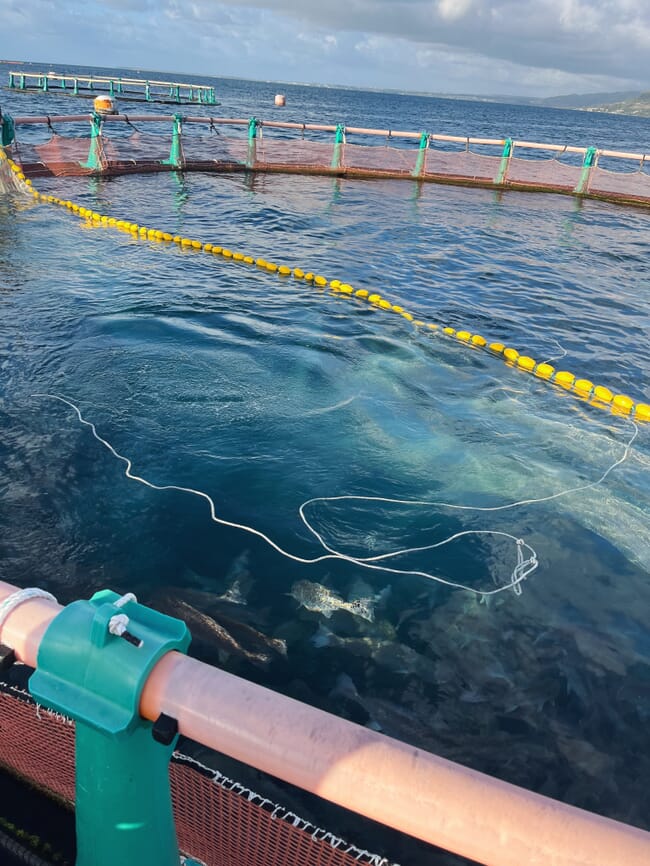
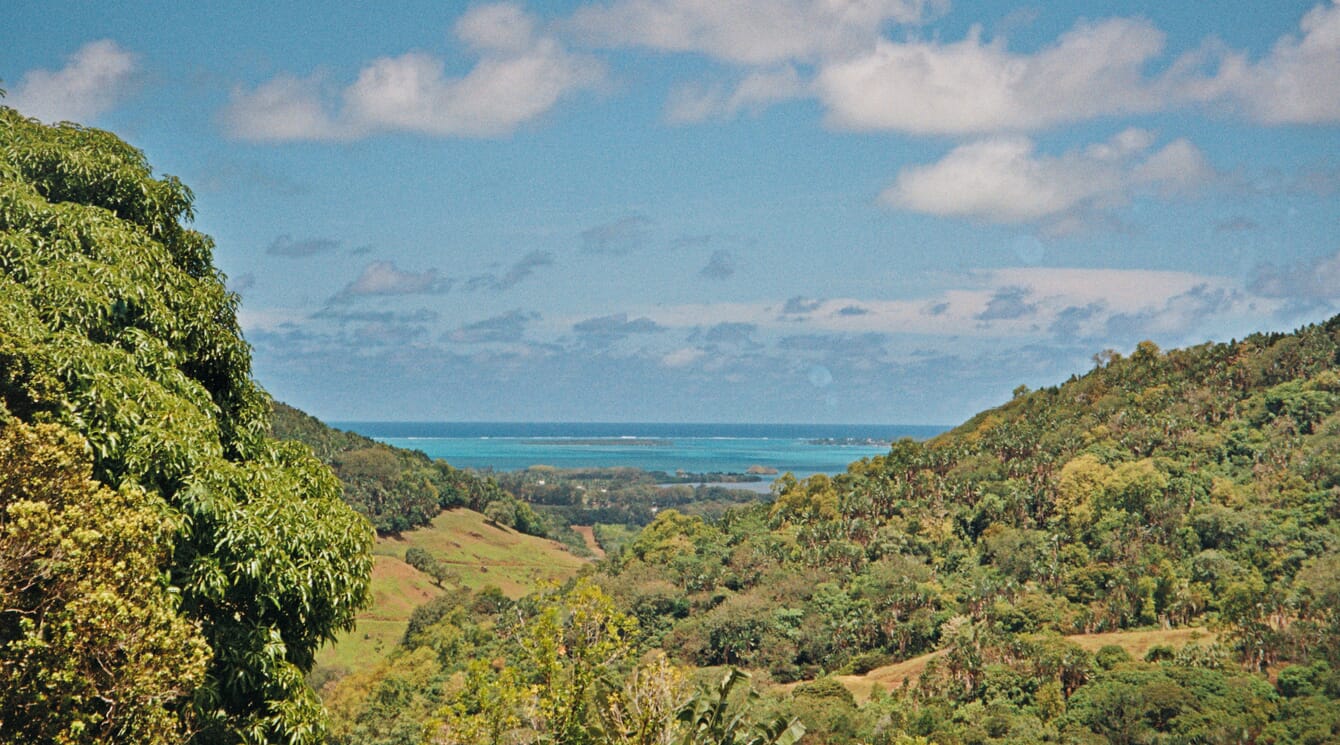
Located on the island’s east coast – a windier, less touristic stretch compared to the north and west – the farm has 120 sea cages spread across four sites along a narrow channel within a lagoon, bordered by two reef passes. These openings allow for steady water exchange, while the surrounding reef provides protection from waves.
Meanwhile, their hatchery contains 36 tanks, 12 of which are dedicated to broodstock for spawning. It is important to note that red drum are not able naturally spawn in the lagoon due to the mismatched photoperiods. Unusually, there is no dedicated fry phase, so once the larvae are ready, they move directly from their initial hatchery tanks into small sea cages.
© Barbier
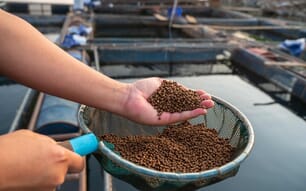
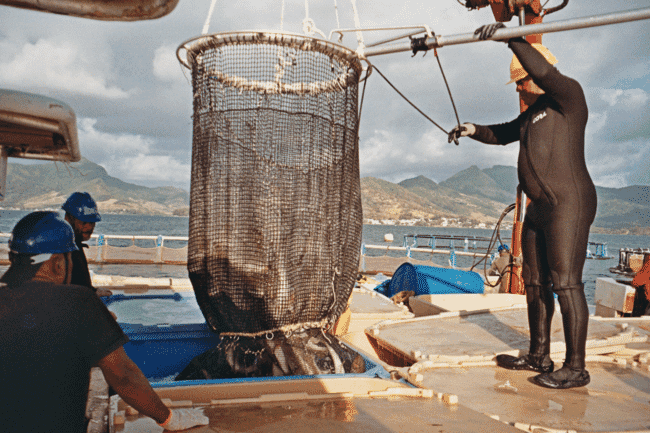
Farm operations are managed by Amine Sghaier, a Tunisian who oversees every stage of production from juvenile transfer through to harvest. The full production cycle spans 2.5 years, with fish typically harvested at an average weight of 3 kg. Because no regional aquafeed producers currently meet FMM’s quality requirements, all feed is imported from European suppliers via cargo ships.
Harvests are scheduled in coordination with international flight timetables to guarantee maximum freshness upon arrival in export markets, a process made more efficient by the farm’s on-site processing facility being located directly beside the landing stage.
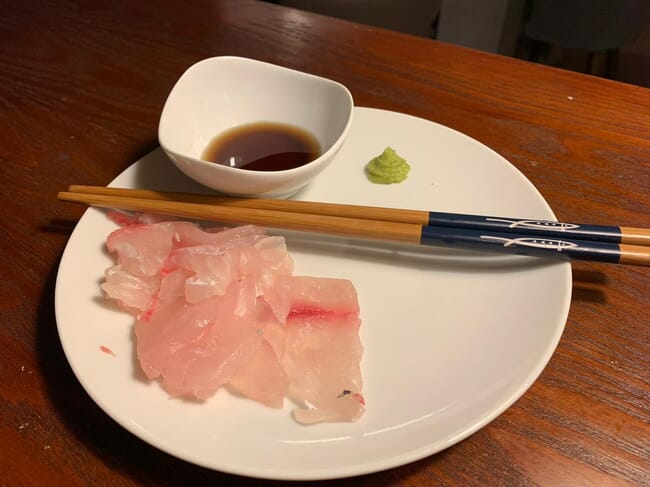
“Fish quality is a cornerstone of Ferme Marine de Mahebourg’s operations and enables its presence in international markets. Raised in the clear, well-oxygenated waters of the lagoon, the red drum benefits from stable natural conditions that support healthy growth and consistent flesh quality,” says Semaesse. “Careful farming practices, combined with rapid harvesting and export logistics aligned with flight schedules, ensure optimal freshness and full compliance with international food safety and traceability standards.”
© Barbier
In parallel, FMM voluntarily brings in a local oceanographer, Yann von Arnim, to conduct ecological impact assessments to ensure close monitoring of any effects of the farm. His findings indicate that marine biodiversity tends to flourish around the cages, with several species such as seahorses and turtles establishing permanent habitats nearby.
“We start with a day-zero audit to really know exactly what we have under the cages, and then we repeat it every six months to monitor the environmental impact if any. Company’s goods practice, such as no usage and no vaccination, limit the risk of activity pollution in the lagoon,” says Semaesse.
“In fact, we have a coral farm next to the cages, specifically to show that the corals grow faster thanks to the biomass that has been created. So basically, when we first set up, the area is desert-like, but gradually, life settles in,” he adds.
Local concerns about sharks occasionally surface, with some residents believing that the cages attract them into the lagoon. However, Semaesse explains this remains speculative, and risk perceptions are often amplified through emotional communication by certain NGOs and associations which can create a negative image of fish farming activities. Factually, the authorities have not recorded any fatal shark attacks in recent years, and a popular snorkelling site just a few hundred metres from the cages – visited by at least ten catamarans a day – has never reported an attack.
© FMM
Operating in a cyclone-prone region brings additional challenges. From December to March, supply chains can become unpredictable, so FMM stockpiles feed well in advance. The coral reef naturally protects the cages from high sea waves, and wind does not significantly affect the installations. Nevertheless, the team closely monitors weather conditions and prepares all operations in advance whenever severe conditions are forecast, in case a lockdown becomes necessary.
Security is another priority. After isolated acts of vandalism damaged cage nets and led to fish escapes, the farm invested in drone surveillance to monitor the site and protect stock. FMM is working closely with the government to address theft-related issues by implementing certification procedures aimed at strengthening supply chain control and preventing the sale of illegally harvested fish in informal markets.
The next chapter for FMM
2025 marked the first time that FMM has returned to profitability since the Covid-19 downturn. Looking ahead, Semaesse believes that the group, the company and he himself have accumulated a wealth of experience over two decades of aquaculture development, expertise that could be transferred to other regions. While Mauritius remains at the heart of FMM’s operations, he envisions a future where the company’s production model could take root closer to major markets, whether in South America or the Middle East.
“The way we can adapt,” he explains, “is by bringing a sustainable production method, with a fish that fits local tastes and market expectations, all while preserving the knowledge we’ve built over 20 years.”
For now, FMM, which has proven its resilience over the years, is focused on responsibly scaling up production at home. Achieving 3,000 to 5,000 tonnes – harvested at the farm’s standard 3 kg size this time – would mark a major step forward. Yet for Semaesse, the guiding principle remains unchanged: the market comes first, then production.
© FMM