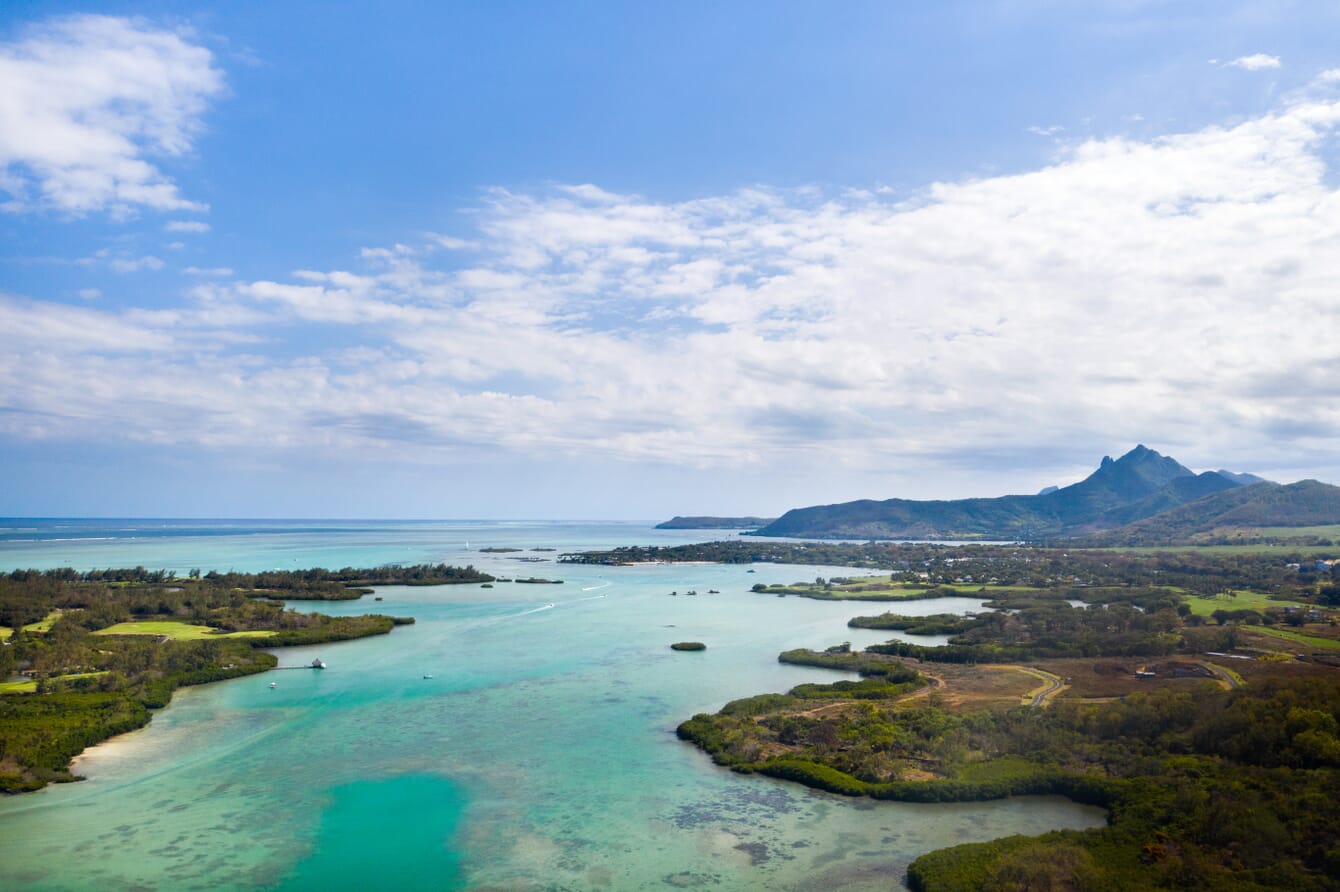
Mauritius has only one major commercial aquaculture farm, but the island is also home to a handful of smaller projects and to individuals deeply committed to the sector. One of them is hatchery specialist and entrepreneur Bettina von Arnim. The daughter of two marine biologists, she has built a career that ranges from hatchery work in France and Mauritius to co-founding an aquaponics farm.
Aquaculture was not a childhood vocation, she explains, but something that emerged gradually. The Mauritian wanted to become an engineer and, living by the sea, diving regularly and – perhaps indirectly – growing up in a family connected to marine science, she chose a general fisheries and aquaculture programme at L’institut Agro de Rennes-Angers in France.
“My parents never influenced me. Actually, they were among the last to know when I told them I was going to study aquaculture in Rennes. Once they knew, they were happy, of course,” von Arnim recalls.
Wanting to test whether aquaculture really suited her, she sought out an internship in a hatchery in New Caledonia that was developing farming protocols for new local species. At the time, there were no larvae in the facility, only broodstock, but the placement gave her the immersion she was looking for: learning farm design fundamentals and planning systems with closed water circuits. It was a first experience that shaped von Arnim’s interest in hatcheries, which she enjoys for their constant demand for technical skill, robustness and precision.
“In a hatchery, every detail counts and you're never bored. There are always things to improve, things to do,” she says.
Building a hatchery career
After graduating, von Arnim spent a couple of years working in the quality department of a commercial hatchery in France. The role gave her a broad view of hatchery operations, from biosecurity and documentation to day-to-day problem-solving on the production floor.
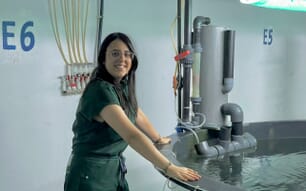
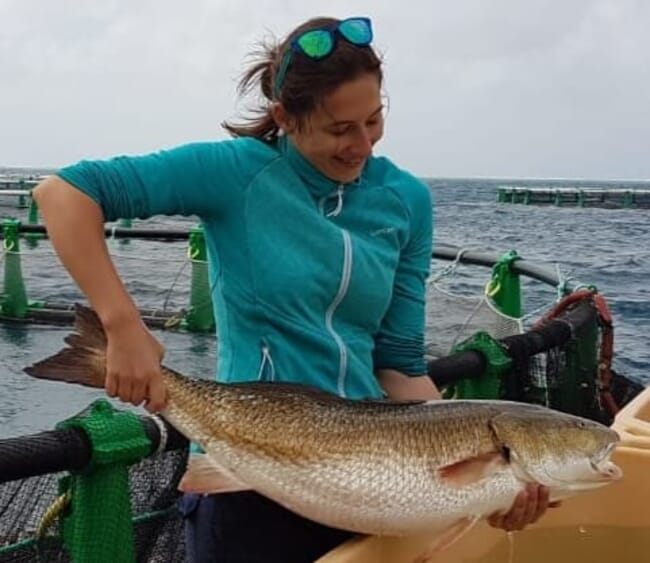
She and her partner, Romain – who also works in aquaculture – then decided to return to Mauritius and joined Ferme Marine de Mahébourg (FMM). Together they took charge of the hatchery, which produces red drum (Sciaenops ocellatus) juveniles for transfer to offshore cages. Their skills proved complementary. Romain brought more than eight years’ hands-on experience across the sector, having started as a technician, while von Arnim arrived with hatchery expertise gained through her quality-focused role in France.
Their priority at FMM was to organise and stabilise the hatchery cycles, putting in place standard operating procedures. The pair undertook extensive research on red drum and adjusted the production parameters, keeping what produced results and discarding what did not.
© von Arnim
Mauritius could be a paradise for aquaculture
The Mauritian sector remains modest: beyond FMM, there are just a handful of smaller companies, including small oyster farm, tilapia and giant freshwater prawn operations. Yet, von Arnim argues that the island offers almost ideal conditions for farming a range of warm-water species.
“There aren't many places in the world that are as favourable to aquaculture,” she says.
However, she cautions that this potential aquacultural paradise also has unique challenges. The first is a practical logistical constraint, as nearly all inputs have to be imported.
“There's a whole logistical side to consider and anticipate that's incredibly complex and unlike anything I've ever seen. For example, when I worked in France, when we needed feed, we called the supplier, and the feed arrived in two days. It’s not the case here,” explains von Arnim.
A second challenge is the lack of dedicated aquaculture training centres in Mauritius, which makes it difficult to find people with relevant experience. One option is to recruit internationally, while the other is to train staff with no background in the field. For people who have never handled live animals, she says, it can be hard to understand the specific sensitivity and constant sense of urgency the work requires.
Von Arnim also highlights humidity as an invisible threat to equipment and materials, which she believes need more maintenance and deteriorate faster than in some other countries.
Beyond the technical and logistical constraints, she feels that public perception is another obstacle.
“I think aquaculture in Mauritius doesn’t have a good image,” she says. “But that’s because people don’t really know how it works. It’s more a bad image caused by a lack of knowledge than anything else. Mauritius definitely has potential to develop. But we shouldn’t forget that aquaculture often involves projects that need large initial investments. The return on investment can be quite long, and there’s a lot of uncertainty at the start.”
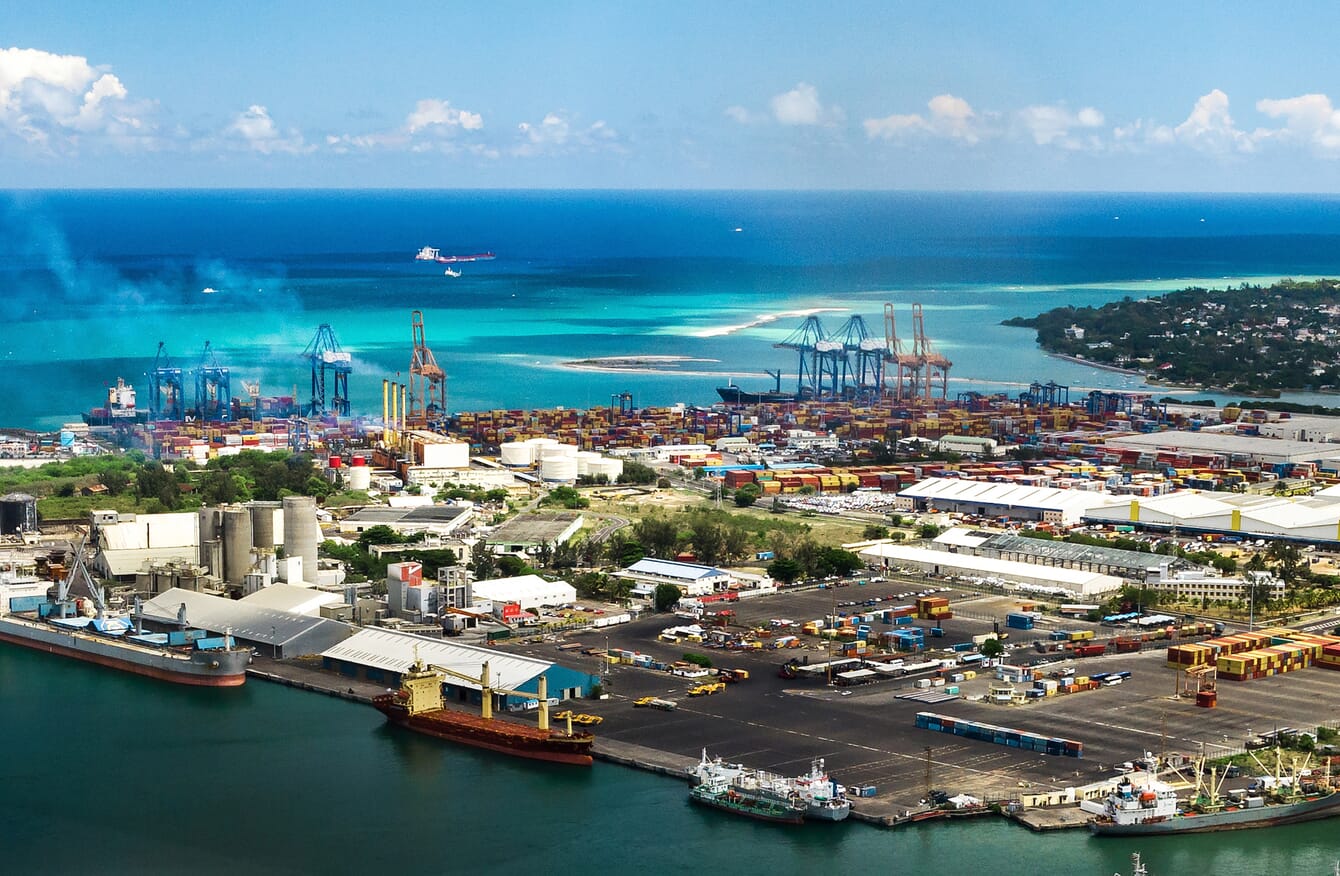
Mauritius’ isolation means much of its daily life depends on imported cargo, from aquaculture supplies to the fish sold in local supermarkets
For her, though, these are difficulties that can be managed. She believes aquaculture could, and should, be developed further, particularly given that most fish in local supermarkets is imported from Asia.
“Personally, I find it a bit of a shame that we could produce [fish] on the island, but in the end we import it. It's true that the potential of what Mauritius can absorb isn't enormous in terms of tonnage, but there would still be room to develop, perhaps, some local aquaculture,” she argues.
Launching an aquaponics project
Von Arnim’s time at FMM was interrupted by a break that coincided with the covid pandemic, when she and Romain decided to launch an aquaponics project, initially setting up a small pilot facility where they could make mistakes and learn from them before scaling up.
In 2019, after acquiring enough knowledge and savings, they committed to the project full time, aiming to prove that a more resilient form of food production was possible on an island whose agriculture sector has some of the highest use of pesticides in the world.
“In terms of aquaponics, I think it has real potential in Mauritius. I truly believe in this type of production,” says von Arnim.
Within months, the pandemic hit and costs rose to two or three times what they had anticipated. They kept going, but von Arnim found herself wanting to return to the business world. During the pandemic FMM’s hatchery had closed, and the company had not hired a replacement for her, which meant she was able to return when it decided to restart production.
Going back to FMM, she found a new kind of challenge. The hatchery had been shut for around one year and needed to be brought back into operation.
“I already more or less knew the team, but they were coming out of a year with almost no production – or none at all – so the equipment hadn’t been used. It’s like a car engine, if you don’t start the car for a long time, eventually it just stops working,” says von Arnim.
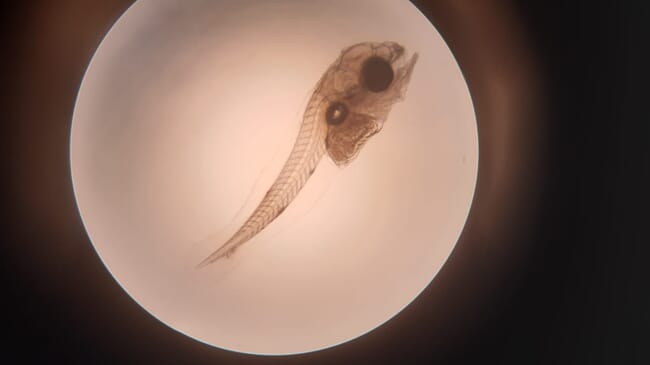
The restart also offered a chance to reconsider the facility’s design, this time with a new objective of producing larger, more robust juveniles for transfer to offshore cages.
“For the technicians, it has to be easy to understand and easy to do – not fifty billion complicated procedures. As I told you, people here aren’t trained in aquaculture. For me, when someone new arrives, there need to be simple procedures that are easy to explain. My goal was really to simplify things as much as possible. Not to simplify just for the sake of it, but to simplify and optimise,” adds von Arnim.
© von Arnim
Romain continued to lead the aquaponics project until 2024, when a series of setbacks – including thefts of equipment, one of which wiped out around 60 percent of their material – pushed them to reconsider. With other projects emerging in parallel and von Arnim focusing on the hatchery full-time, the pair decided to stop.
“We don’t see it as a failure, instead it taught us to be more resilient. We learned a lot, and it actually led us to other ideas that we developed afterwards,” says von Arnim.
A future not necessarily in aquaculture
Von Arnim enjoyed working as a hatchery manager, but never imagined doing it for the rest of her life. Her drive to keep learning and her ambition led her to, in January 2025, start looking at MBA programmes. She applied to an online programme run in collaboration with IAE Paris-Sorbonne Business School, was accepted, and started in early March – an impulsive decision, she says, that happened very quickly but felt like the right one.
“My initial goal was really to tell myself, ‘I’m going to do an MBA, I’m going to develop my strategic vision, and I’ll be able to grow within the company and do new things.’ That was truly my starting point. And in fact, I clearly underestimated and never imagined just how much this programme would completely transform me,” says von Arnim.
After completing a leadership certification, designed to give participants tools to better understand people and manage teams, von Arnim realised that she needed to make a tough decision.
“If I want to continue in aquaculture, I have to leave Mauritius. And I think that for now, I’m not ready to leave Mauritius. Mauritius is like a magnet. For now, I prefer to stay here and explore other fields,” she explains.
Unafraid to move into new domains, and backed by a strong technical and operational background, she is now keen to contribute to something broader and more strategic, while keeping the door open to a possible return to aquaculture one day.