

© Rieve
Brazil, a global powerhouse in agricultural production, currently relies heavily on imported technologies to support its growing demand for biological inputs. In the biostimulant sector, this dependency is particularly visible: the market is dominated by products derived from Ascophyllum nodosum (brown seaweed), imported primarily from the North Atlantic. However, a distinct domestic sector is emerging, driven by the cultivation of the tropical red seaweed Kappaphycus alvarezii. Concentrated in the southern state of Santa Catarina, this nascent industry proposes a shift from imported raw materials to locally sourced, tropical bioinputs.
The Economic Drivers of Domestic Production
Unlike Asian markets where seaweed is largely dried and exported as a commodity for carrageenan extraction, the Brazilian model is vertically integrated with its agricultural sector. This dynamic has created a unique economic environment for producers. Farmers in Brazil are reportedly receiving approximately US $0.50 per kg for fresh seaweed, a premium significantly higher than standard global commodity prices.
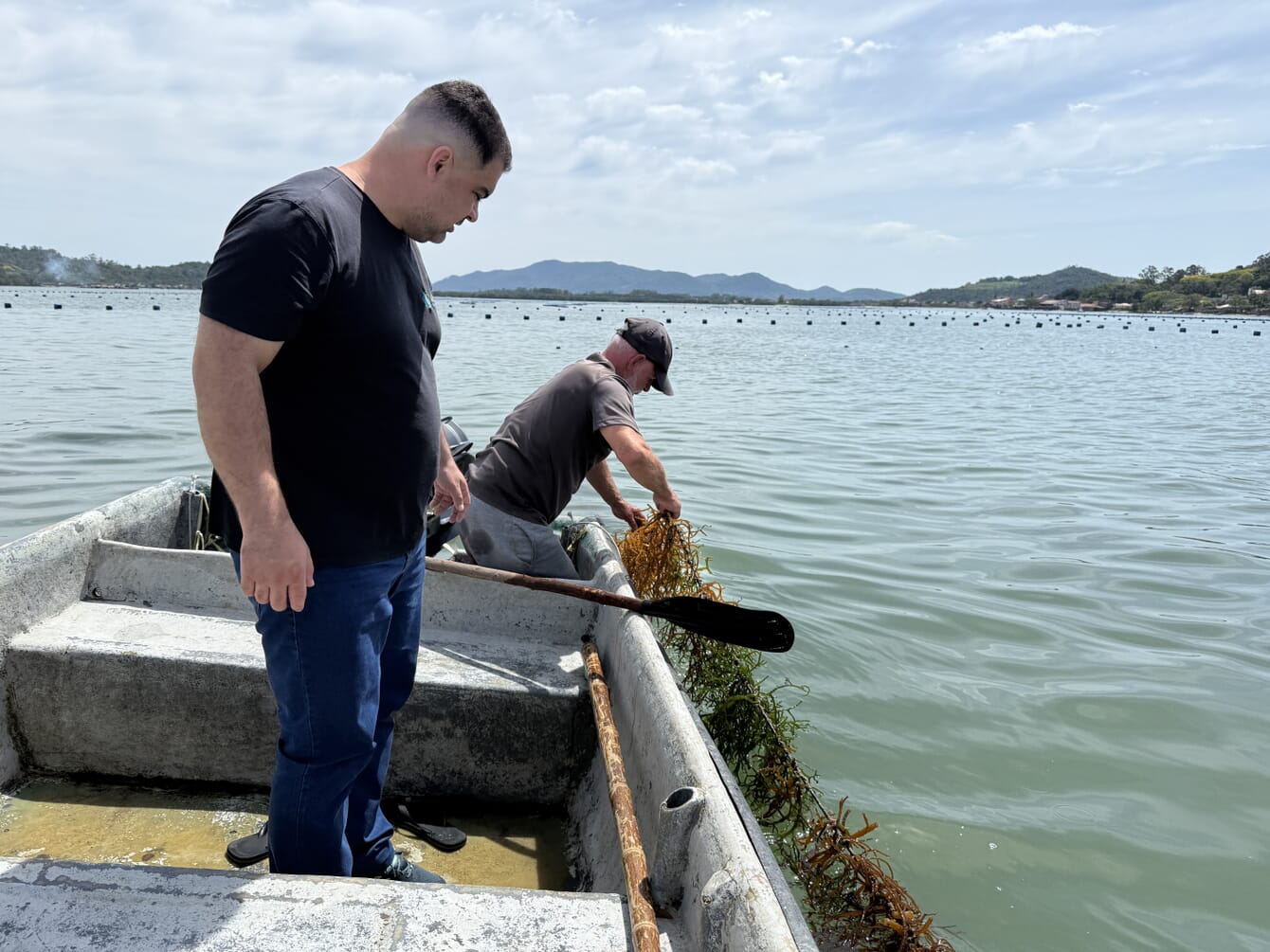
This value is generated by the immediate processing of fresh biomass into agricultural inputs. Processing facilities situated near cultivation sites use mechanical extraction methods to produce a liquid extract, known locally as “suco” (“juice”), yielding roughly 0.75–0.80 litre per kg of fresh seaweed. This proximity enables the use of fresh material, avoiding the degradation of active compounds.
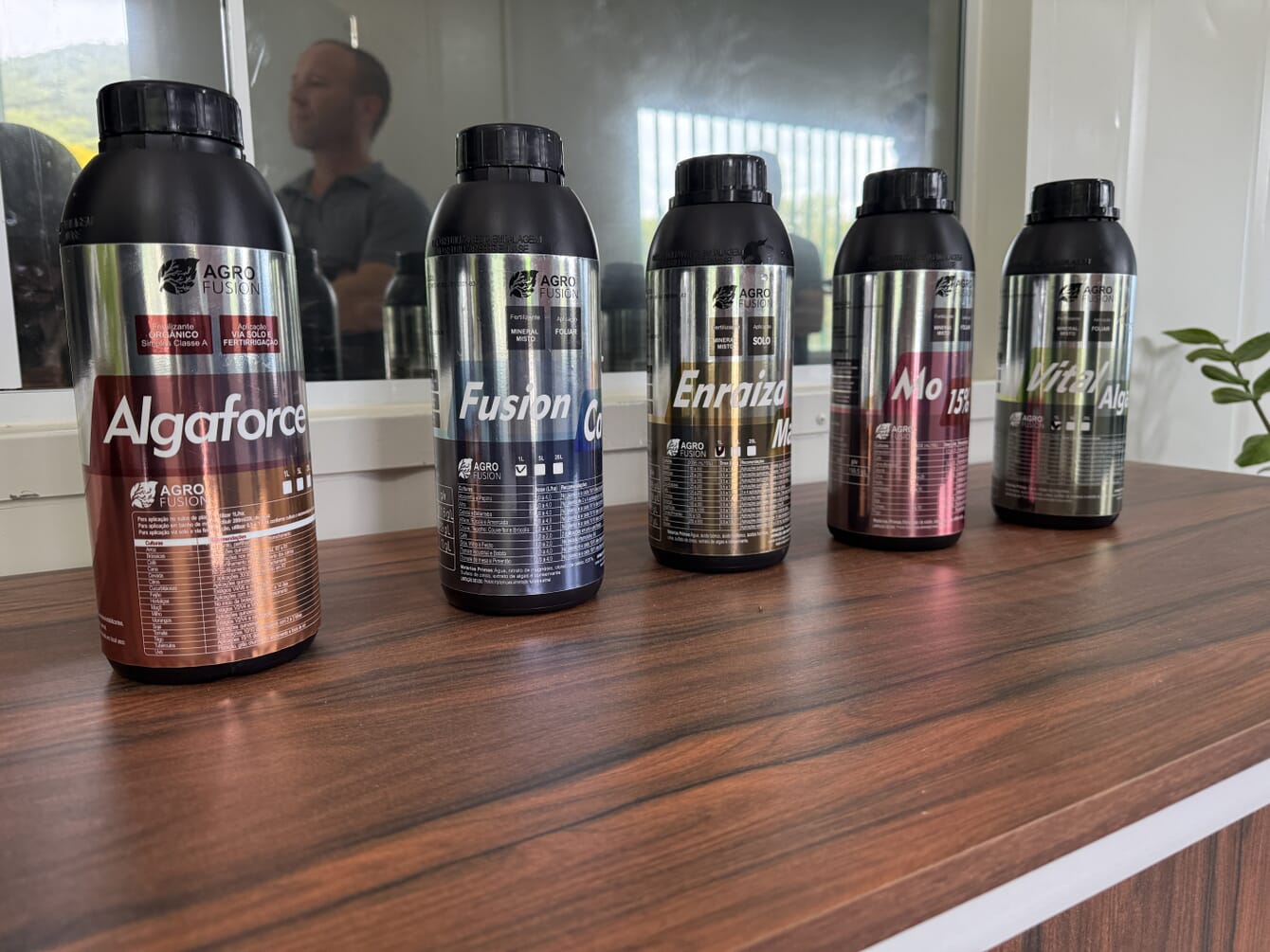
The extract is then in most cases sold in bulk to fertiliser companies for USD $2.50–$5.00 per litre, and formulated into finished biostimulant products that retail to farmers at USD $8.00–$14.50 per litre – demonstrating significant value addition along the domestic supply chain. The sector is scaling rapidly, with Santa Catarina alone producing 1,000 tonnes of fresh seaweed specifically for the biostimulant industry in 2025. According to industry experts, Brazil’s agricultural biostimulant market is estimated at 377 million litres per year, with a total value of US $1.4 billion.
Santa Catarina: a centre of professionalisation
While Kappaphycus cultivation was introduced to Brazil three decades ago, the state of Santa Catarina has only recently allowed the farming of this non-native species and, in a few years, established itself as the primary production hub, accounting for an estimated 80 percent of national output. This growth is supported by a demographic shift in aquaculture; a younger generation, often from families traditionally engaged in shellfish farming, is transitioning to seaweed cultivation due to its comparative operational advantages and profit margins.
Central to this professionalisation is the Santa Catarina Agricultural Research and Rural Extension Company (EPAGRI). Acting as a bridge between primary production and the agro-industry, EPAGRI has been instrumental in stabilising the supply chain. A "fair price" benchmark has been set by EPAGRI's production cost studies and has been respected by both farmers and processors for the past two years. Gabriel Santos, director of Algas Brasil, the region's primary farming business and processor, confirmed the collaborative nature of this pricing: "That price was defined together. It is a good price for the producer and for the industry as it ensures a just and organized supply chain."
© Rieve
Other important work EPAGRI is currently conducting for the emerging seaweed industry includes:
- Genetic characterisation: analysing and cataloging 11 local strains to optimise yields.
- Seasonality management: developing winter-hardy varieties to mitigate production drops during colder months and reduce reliance on seed stock from warmer northern states.
- Mechanisation of farm processes: developing seeding and harvesting systems.
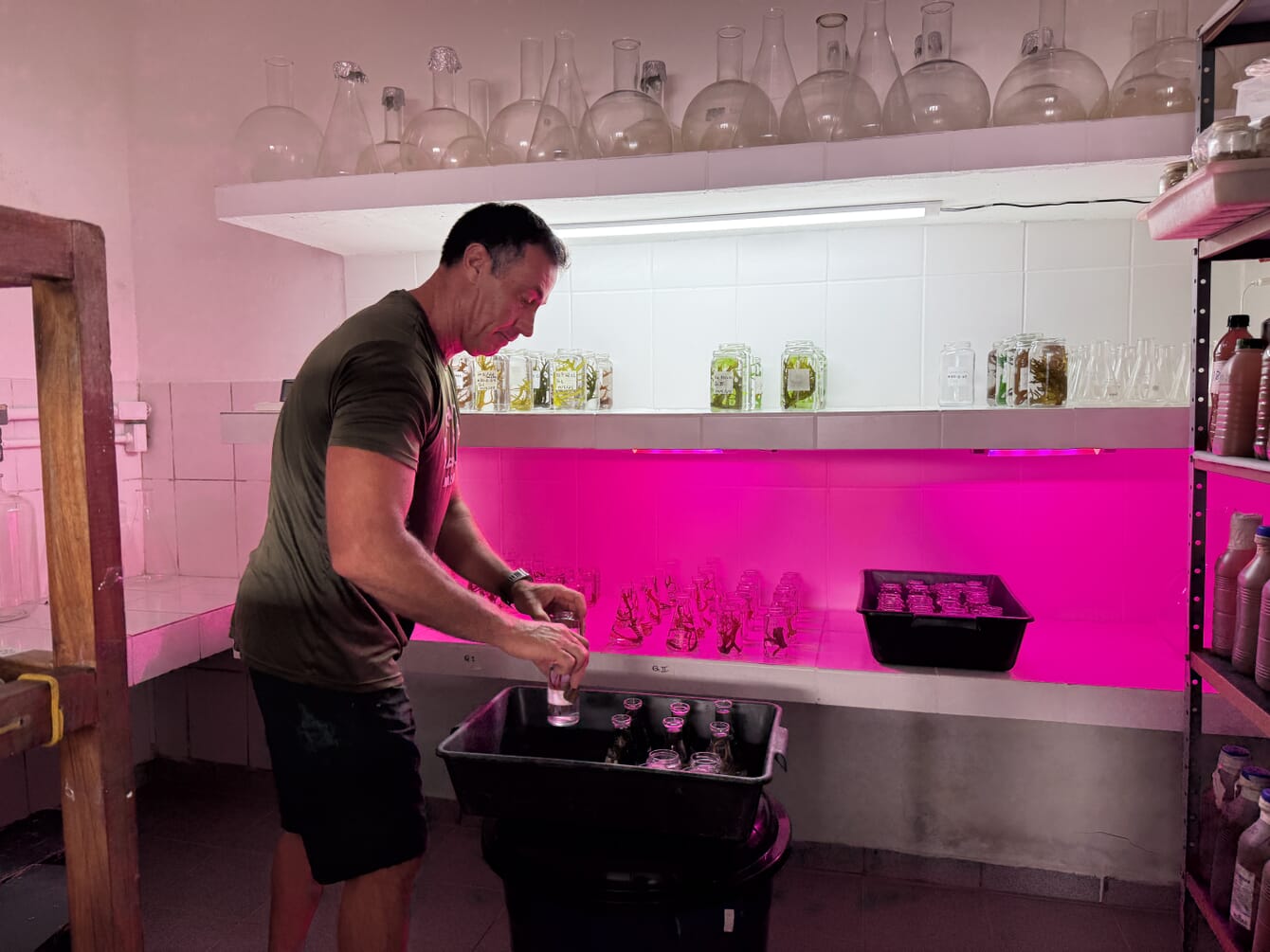
While there is a recognised need for mechanisation in seeding and harvesting to scale production, genetic research remains the primary scientific initiative for improving resilience. As researcher Felipe Suplicy, leading researcher at the Aquaculture and Fisheries Development Center - CEDAP or EPAGRI notes, a key goal is that the strains “will have their genomes characterised to evaluate productivity and resilience to cold temperatures.”
Regulatory and technical considerations
Despite the sector's growth, regulatory frameworks present challenges to wider adoption. Current Brazilian legislation regarding algae-based farm inputs requires a guaranteed alginate content. This standard reflects the historical dominance of brown seaweed (Ascophyllum) imports, as alginate is a primary component of brown algae. Kappaphycus, being a red seaweed, contains carrageenan rather than alginate. This biochemical distinction places domestic red seaweed products in a complex regulatory position, often necessitating legislative updates to accurately categorise tropical seaweed inputs. As biologist Domingos Savio explains, “I think the biggest barrier is the regulations in Brazil that don’t exist yet and are specific to algae… if you are going to sell an algae biofertilizer, it has to have alginate, which Kappaphycus doesn’t have. So the biggest hurdle is there.”
© Rieve
However, the biochemical profile of Kappaphycus offers potential synergies with other established Brazilian bioinputs. The solid by-product of the juice extraction process is rich in carrageenan. In Brazil, microbial inoculants are being applied to crops increasingly – primarily for soybeans – and the carrageenan-rich residues have potential applications as protective carriers for nitrogen-fixing bacteria, fostering a circular economy between coastal aquaculture and inland agriculture.
In this regard, the regulatory gap may soon be addressed through a federal initiative. The National Aquaculture Development Plan (PNDA 2022–2032) explicitly prioritises modernising Brazil’s aquatic supply chains, including revising norms that currently disadvantage red seaweed inputs. By providing a coordinated framework and supporting scaled production, the PNDA could help align coastal aquaculture with the vast bioinput demands of national agriculture.
Convincing the "gigantic" enterprise
While the technical and economic foundations for red seaweed biostimulants are strengthening, widespread adoption faces a significant hurdle: scale. The primary consumers of agricultural inputs in Brazil are not coastal fruit growers, but the massive commodity enterprises operating in the Cerrado and Midwest regions.
For a seaweed-based product to penetrate these markets, consistent efficacy must be demonstrated across several crop cycles and hectares of soy, corn and cotton. Large-scale farming enterprises operate on thin margins and precise management; they require robust data over anecdotal success.
This necessitates a transition from small-scale validation to large-scale, multi-season field trials. Generating this data takes time – and often several agricultural cycles – to prove that Kappaphycus extracts can deliver return on investment (ROI) comparable to or better than established Ascophyllum products.
Therefore, coordinated research efforts are essential to bridge the gap. Institutions like EPAGRI play a critical role here, conducting the rigorous, scientifically controlled trials that large agro-industrial firms demand. By validating application timing, dosage, and physiological effects on major crops, research agencies provide the "proof of concept" required to convince the gigantic farming enterprises that the next revolution in crop nutrition may come not from the North Atlantic, but from Brazil’s own coast.


