

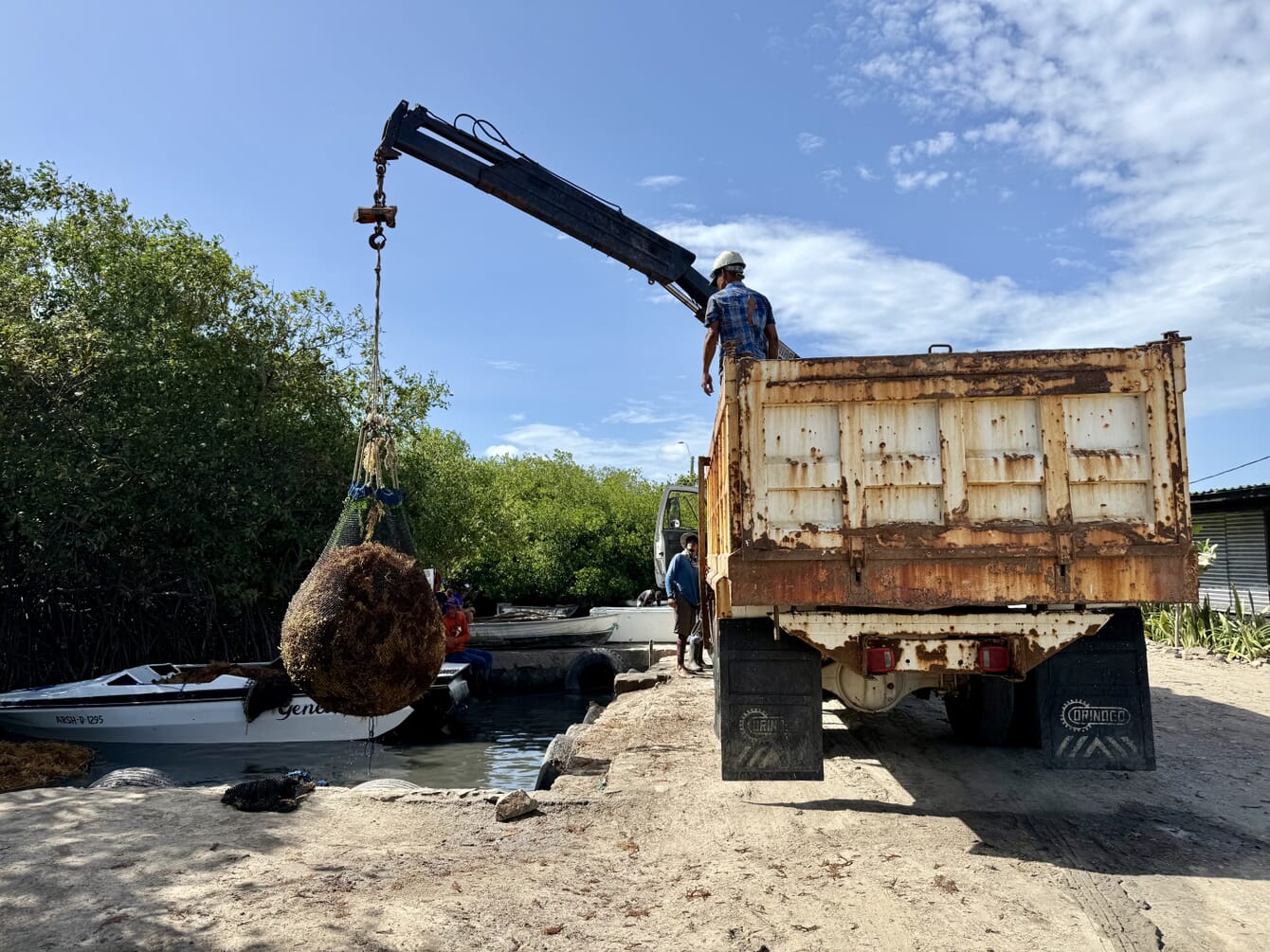
© Rieve
From the established seaweed production hubs of Asia, to the emerging farms of the Western hemisphere, I have always been interested in identifying the gaps in farm technology that translate into opportunities for innovation.
Most recently, I spent months conducting deep fieldwork across the seaweed sectors of six countries in Latin America and the Caribbean – from Brazil and Chile, to St Lucia and Grenada. As I compared these developing regions with the mature markets I’ve studied in Asia, a striking realisation forced me to rethink the standard industry assumptions.
We often talk about scaling regenerative aquaculture as if it were a purely technological challenge ("we need mechanisation to lower the production cost") or a market challenge ("we need buyers to justify production"). While both are true, I am advocating for a critical shift in perspective: that scaling is primarily an organisational challenge.
And I am not referring here to the business model in itself. It is common to hear that primary production cannot scale because the market isn't there yet. But I believe that with the right approach, a truly entrepreneurial venture will always find market access – especially with a crop as versatile as seaweed.
In Latin America, the reality differs greatly from the smallholder models typical of Asia: labour is more expensive and, in some regions, in short supply, so farmers want to modernise from day one. However, the current smallholders simply do not have the capital structure or the capacity to invest in this technology.
When we identify this gap, the industry – often led by NGOs or well-meaning policymakers – tends to reach for a cooperative solution. We assume that if farmers just group together, they can collectively invest. But, in practice, I have seen that coastal fishing and farming communities often lack the specific governance experience and organisational structures to manage large, complex commercial collectives. And even if they manage to organise themselves, they lack the market-driven mindset required to run a competitive business. We need to stop trying to force farmers into the roles of businesspeople and, instead, design integrated community-based farming businesses.
This is not just contract farming; it is a symbiotic ecosystem designed to professionalise the sector.
In this model roles are clearly separated to optimise the outcome. The farmers focus on what they do best: reading the water, managing the crop and maximising biomass. As they do so, they will inherently adopt site-specific incremental innovations. I have seen this many times.
Meanwhile, the entrepreneurs involved should focus on the logistics, the complex market negotiations, and the product development.
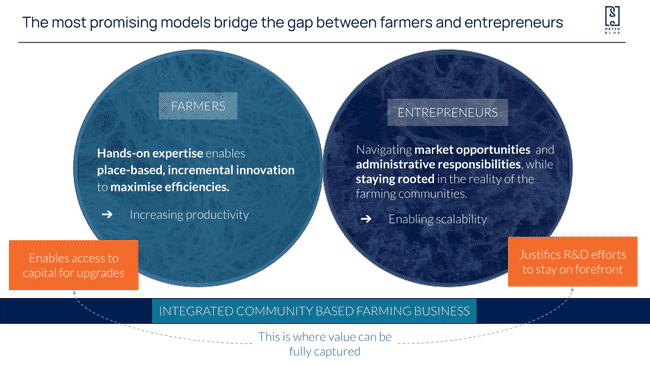
When this organisational structure works, it creates a virtuous cycle of reinvestment that solves the technological gaps by:
- Professionalising production – by capturing higher value markets, its possible to reinvest in the farms, funding key forms of technology – such as hydraulic arms for lifting grow lines, and advanced sensors for environmental monitoring – that a smallholder could never afford alone.
- Continuous R&D – the enterprise creates a buffer that allows for reinvestment into product development, ensuring that its members don’t just sell raw biomass, but stay at the forefront of market trends.
While it may sound simple, this model relies on the involvement of a unique kind of entrepreneur who can straddle two very different worlds.
On one hand they must possess the cultural sensibility and close connections to the farmers to understand the gritty reality at the production level. They need to build genuine trust within coastal communities.
Yet, on the other, they must maintain a global, market-driven perspective, capable of navigating international boardrooms and supply chains.
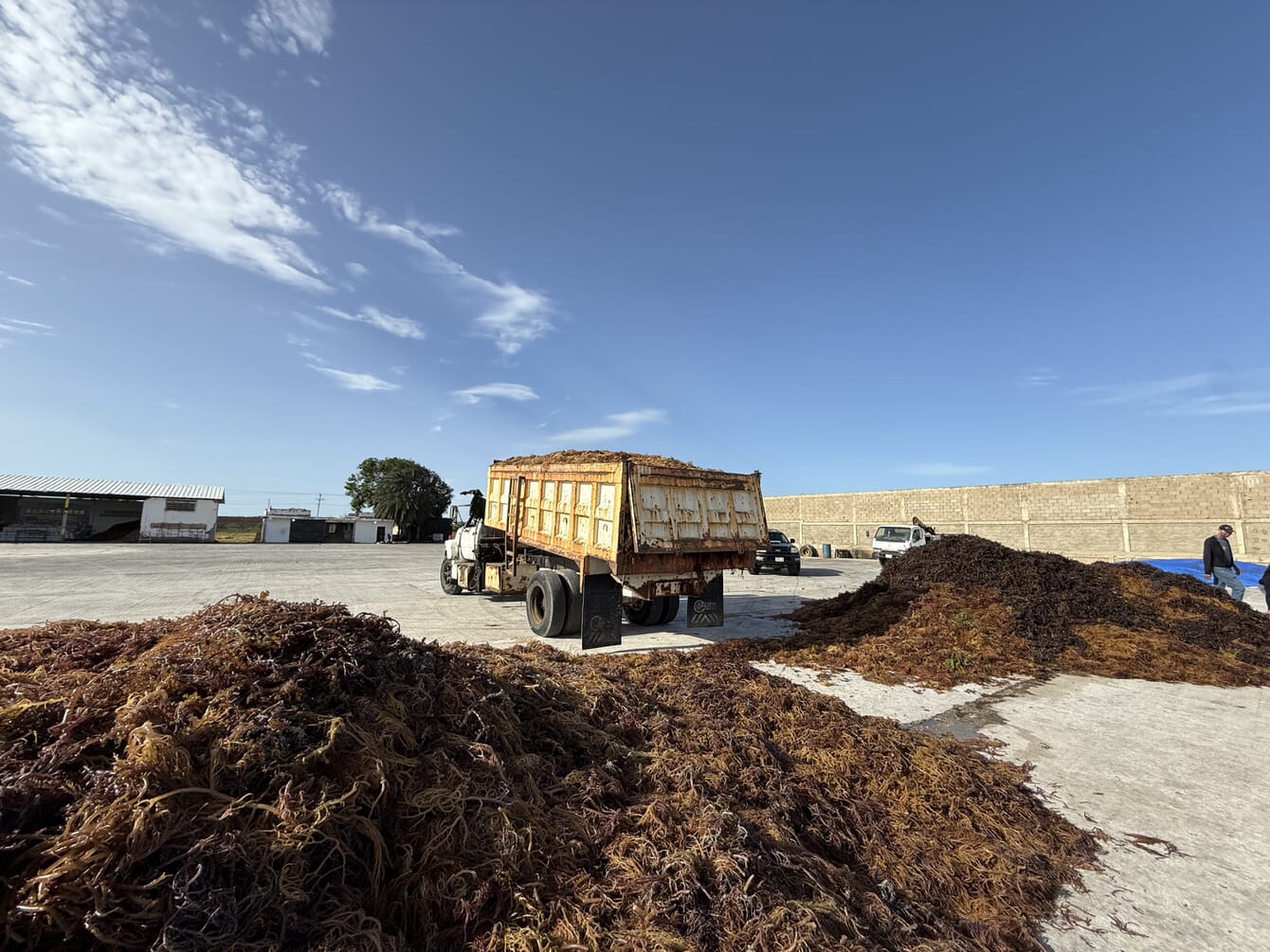
© Rieve
Reflecting on my recent travels across Latin America and the Caribbean, the exciting news for the continent is that, as an emerging sector, the seaweed industry is not constrained by legacy frameworks. This presents a unique opportunity to create brand new models that are tailor made for each farming community, although if certain methods are shared then that is also to be welcomed.
The immediate priority must be to identify and support these bridge-building entrepreneurs who can unlock the full potential of this form of regenerative aquaculture. And this includes the socio-economic impacts, just as much as the environmental ones.
This organisational shift, or rethinking the human architecture of this industry, is a topic I am looking forward to focusing more on in 2026. I want to map the design principles of the most successful seaweed farming businesses that I have seen, in order to identify the characteristics that are not place-based or species-specific, and see what can be replicated.


