


© Dr Ravi
Seaweed farming has long been discussed as a tool to help tackle climate and ecosystem stress. Yet despite growing interest from investors and policymakers, the sector still lacks a widely accepted way to demonstrate that under certain conditions, seaweed cultivation removes more carbon than it emits, and that the benefit can be verified and traded.
That “validity” gap is what Dr LS Ravi, a former telecommunications executive with extensive experience and a deep interest in sustainable economies, is trying to address. He came to aquaculture relatively late in life, during a family boat trip to an Alaskan national park where he first saw kelp lines.
“What I learned on that cruise was that the seaweed cultivation itself was just an experiment. And then they found that it actually did tremendous benefits to the ecosystem,” Dr Ravi recalls.
He heard that seaweed farms could help revive stressed ecosystems, including benefiting reefs. At around the same time, his consulting work exposed him to how other industries monetise avoided emissions, including the way electric vehicle companies have used tradable credits under regulatory regimes, generating additional profits.
“A part of me was thinking, are there other environments where there is actually kind of a net depletion or removal of carbon that are not getting rewarded for the effects that they produce?” says Dr Ravi.
Following that line of thought, Dr Ravi went on to complete a Doctor of Business Administration (DBA) at Wilmington University, focusing on seaweed aquaculture and carbon markets.
Arguments for making seaweed viable as carbon credits
A carbon credit is often described as one tonne of CO₂ avoided or removed, although the term covers different systems. Many crediting approaches are already established, but each comes with trade-offs. In forestry, permanence can be hard to guarantee if trees are later harvested. For mangrove projects, one challenge is accurately measuring how much carbon ends up stored in sediments.
“The cost of climate change is in the trillions of dollars because it impacts people all over the place and all industries. There is a big urge to actually make sure that they use some investment vehicles to decarbonise polluted environments,” says Dr Ravi.
For now, there is no widely adopted seaweed-specific crediting methodology under the main carbon standards that applies across regions and end uses. Dr Ravi argues the sector’s core challenge is not a lack of biophysical potential, but the difficulty of demonstrating verifiable net climate benefits across diverse farming systems, geographies and supply chains.
Seaweed offers one major advantage: its biomass growth can be measured and quantified, providing a starting point for estimating carbon uptake. “When you grow seaweed in a carbon-rich environment, it's like a plant – it grows. You can actually quantify, in tonnes, how much seaweed grew,” says Dr Ravi, “but that is only the first step in assessing carbon outcomes.”
Carbon markets require proof of net benefit and durable storage, not just growth‑related uptake. As a result, the end use of the biomass can determine whether a project can credibly claim carbon removal. This is one reason seaweed credits remain difficult to standardise, even where the ecosystem benefits of farming are widely recognised.
In temperate regions such as Maine, USA, farmers require infrastructure such as boats for harvesting and chillers to preserve freshness. The operation’s energy use and materials footprint could outweigh the carbon taken up during seaweed growth, leading some farmers to see credits as “not viable” as a dependable revenue stream.
Dr Ravi’s point is not that those farmers are wrong, but that the sector lacks a consistent analytical framework for testing such assumptions across regions. “What I’m trying to say is there’s a big difference between saying… it is not viable, and questioning, is it viable or not,” he says. For Dr Ravi, a credible framework would help identify when (and where) the numbers might work.
When visiting MarineElixirs in India, Dr Ravi noted that much of the handling on the Kappaphycus farms was manual, and the overall operational footprint appeared smaller than on farms located in temperate regions. “My working hypothesis was that if regions within the equatorial belt can cultivate seaweed with a consistently low operational carbon footprint, then the resulting biomass could potentially support both commercial production and net‑positive carbon outcomes.”
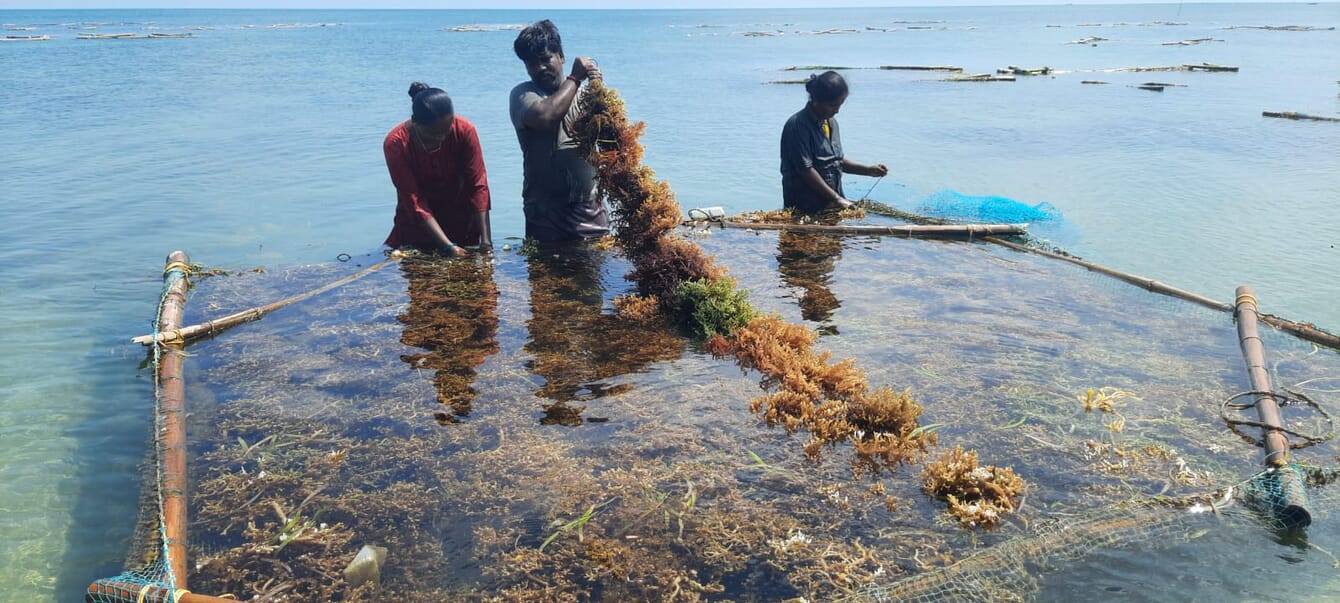
© MarinElixirs
This kind of “environmental sweet spot” could support two outcomes at once: marketable biomass and a potentially net-positive carbon balance. In those settings, Dr Ravi believes seaweed carbon credits could eventually become a second revenue line, but only if the sector can establish measurement, verification and a policy pathway that buyers will accept.
Dr Ravi suggests one route to improving net outcomes, especially in energy-intensive regions where processing energy is a major factor, would be to pair seaweed with low-carbon infrastructure, such as offshore wind, and to think in more integrated terms (including IMTA concepts), rather than treating seaweed as a standalone crop.
A regional “readiness index”
During early conversations with industry stakeholders, Dr Ravi was told seaweed aquaculture is too diverse for a single universal approach to carbon crediting. His engineering response was to build something more foundational: a framework that can take account of local realities and indicate which lever is most likely to unlock progress.
During his DBA, he developed a stakeholder-informed framework for his thesis based on surveys of three key stakeholder groups: industry, policymakers and researchers. The outcome is a region-by-region index designed to highlight where seaweed credits may be feasible and to identify which of policy, investment conditions, technology, or measurement capacity is the main constraint.
Two regions distinct seaweed-producing are highlighted. The first is Delaware Bay, where there is strong university and research capacity, along with experience in measurement and automation. In that context, the framework suggests that the critical next step is persuading policymakers to create incentives that will help the sector scale. For the second, a tropical region in India, the index points to strengthening measurement and verification capacity, and potentially cutting processing emissions further by linking operations to renewable energy.
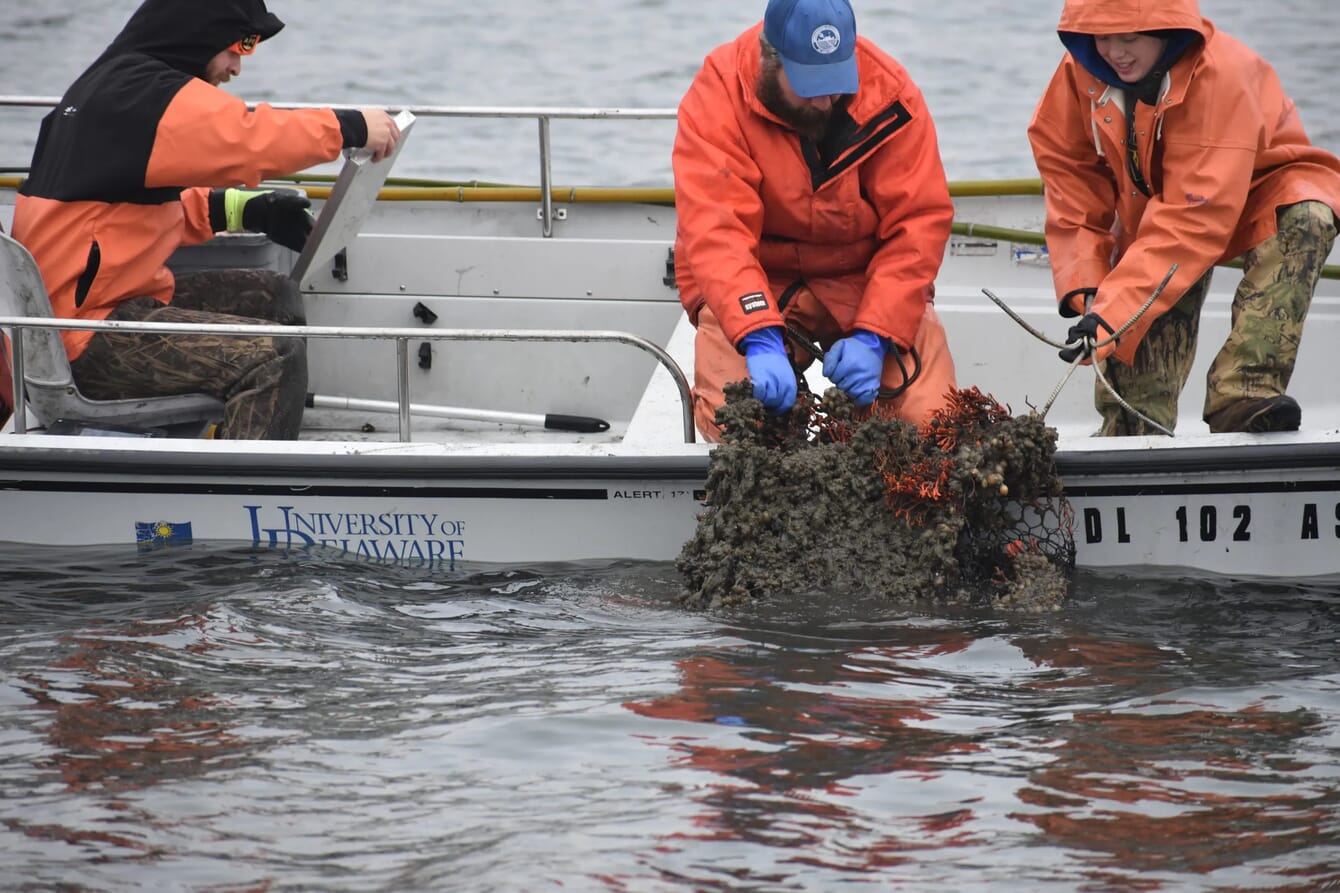
© University of Delaware
For Dr Ravi, the goal is to give the industry a clearer route map: “They’re not seeing the clean pathway which says, if I grow one tonne of kelp in France, will that assure me that it equates to one blue carbon credit? That’s the core question the industry is struggling with.”
The next step, he argues, is turning those regional indices into hard numbers, linking specific seaweed species and farming systems to quantified and verifiable carbon outcomes that could support bankable credits. He emphasises that credits would not be a guaranteed add-on to every seaweed business model, but in low-footprint regions with supportive policy and credible verification capacity, they could eventually help close the financing gap that is slowing scaling.
“I believe seaweed farming is broadly net beneficial for the planet,” Dr Ravi reflects. “But translating those benefits into credible, bankable carbon credits requires careful measurement, governance and long‑term verification.”


