
© NSC
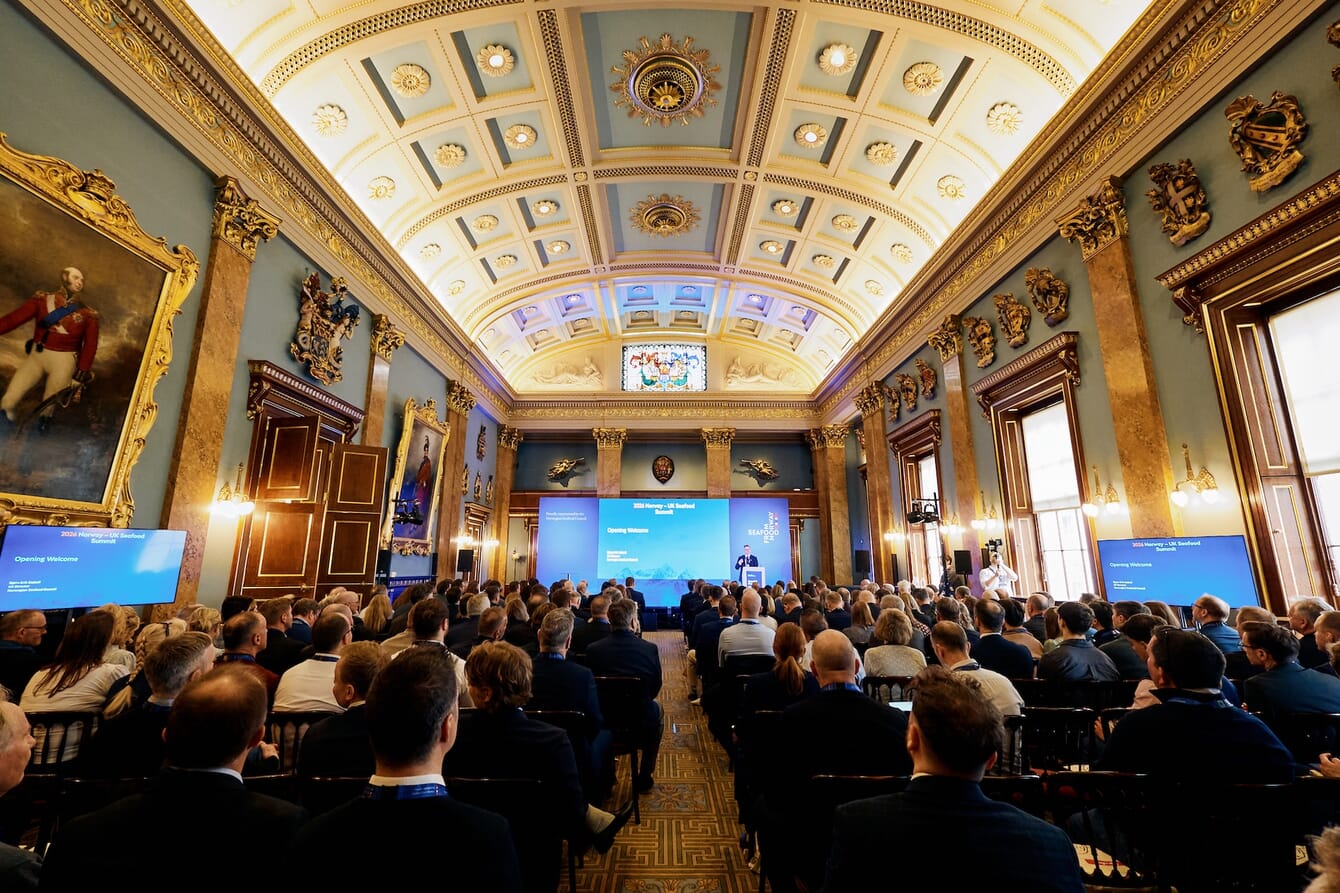
Held on 24 February 2026 at the historic Fishmongers’ Hall in London, the event hosted by the Norwegian Seafood Council (NSC) brought together a record number of delegates to address the future of the seafood trade.
This annual gathering has become a vital platform for dialogue between the two nations, uniting influential voices from the fishing, retail, foodservice, and media sectors.
Marianne Sivertsen Næss, Norwegian minister of fisheries and ocean policy, who attended the event, said: “Norway and the UK share a long and proud history in seafood trade, built on collaboration and trust. The annual Norway–UK Seafood Summit plays a vital role in strengthening this partnership, providing a unique platform for the seafood sector to come together, exchange ideas and shape the future of this industry.”
The 'Protein Battle' and consumer trends
The 2026 programme focused on key industry priorities, with speakers unanimous on a clear message: innovation and sustainability will be central to driving long-term growth.
Joe Shaw Roberts of Worldpanel by Numerator provided a deep dive into UK seafood in a shifting consumer landscape, citing huge opportunities for suppliers and retailers following an increase in meals eaten at home and a move towards treating. Alexander Andersen, of McKinsey, discussed ‘The Protein Battle’ and consumer trends around this food source, explaining that consumers view protein as a standalone category. He emphasised the importance of clearly labelling seafood as a rich source of protein, concluding with, “To win the protein battle, seafood must win on format.”
Further commercial insights came from category consultant David Marston from William Murray, who broke down findings from NSC’s new prawn category report, identifying the opportunities out-of-home consumption and stressing the need to lead with quality and origin messaging.
Sustainability and technology
Regarding supply, researcher Daniel Howell from the Institute of Marine Research provided an update on sustainable Norwegian fisheries management. Reviewing the Barents Sea stock status of cod, haddock and saithe, he revealed that he was “cautiously optimistic” about future quotas.
Jack Bobo of the Rothman Family Institute for Food Studies at UCLA said the future of food was being shaped by trust and perception – and it’s time for a new narrative that recognises historical context. He considered shifting global populations and the food revolution, framing the seafood industry as a frontrunner in the bigger picture: “The blue economy is not just feeding the future. It’s showing the rest of the food system what that future looks like.”
© NSC
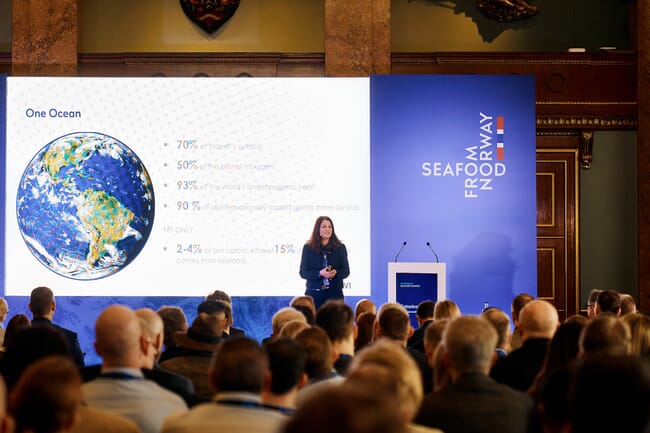
Catarina Martins of Mowi discussed putting bold innovations into practice, highlighting the importance of resource efficiency to suppliers and outlining how aquatech and AI are driving the future of the business. She said: “Using one data language we can convert data into insights, insights into action and action into better [seafood] farming.”
Strengthening international ties
NSC UK director Bjørn-Erik Stabell reflected on the event in a press release: “This year’s Summit discussions highlighted the importance of securing the future of the seafood industry, through innovation, sustainability and ultimately collaboration. Through data-driven analysis and scientific research, leading voices provided valuable insights to reinforce the credibility of Norwegian seafood as a trusted food source.”
Dan Aherne, chairman of the UK Seafood Federation and CEO of New England Seafood, who was also in attendance, recognised the importance of the relationship between the two nations – especially in pressured times: “It’s a hugely important relationship between the UK and Norway in terms of seafood trade – and as the world gets more challenging it becomes even more important to cement those partnerships.
“We’re all struggling with the same dynamics of rising costs, inflation, availability challenges, but if we’re creative as an industry, if we work together, if we really accentuate the positives of this amazing food source, then we can overcome those together and the trade will continue to prosper.”
The 2026 summit concluded by reinforcing its role as the primary arena for shaping a resilient seafood sector and ensuring sustainable growth between the UK and Norwegian markets.
© NSC

