
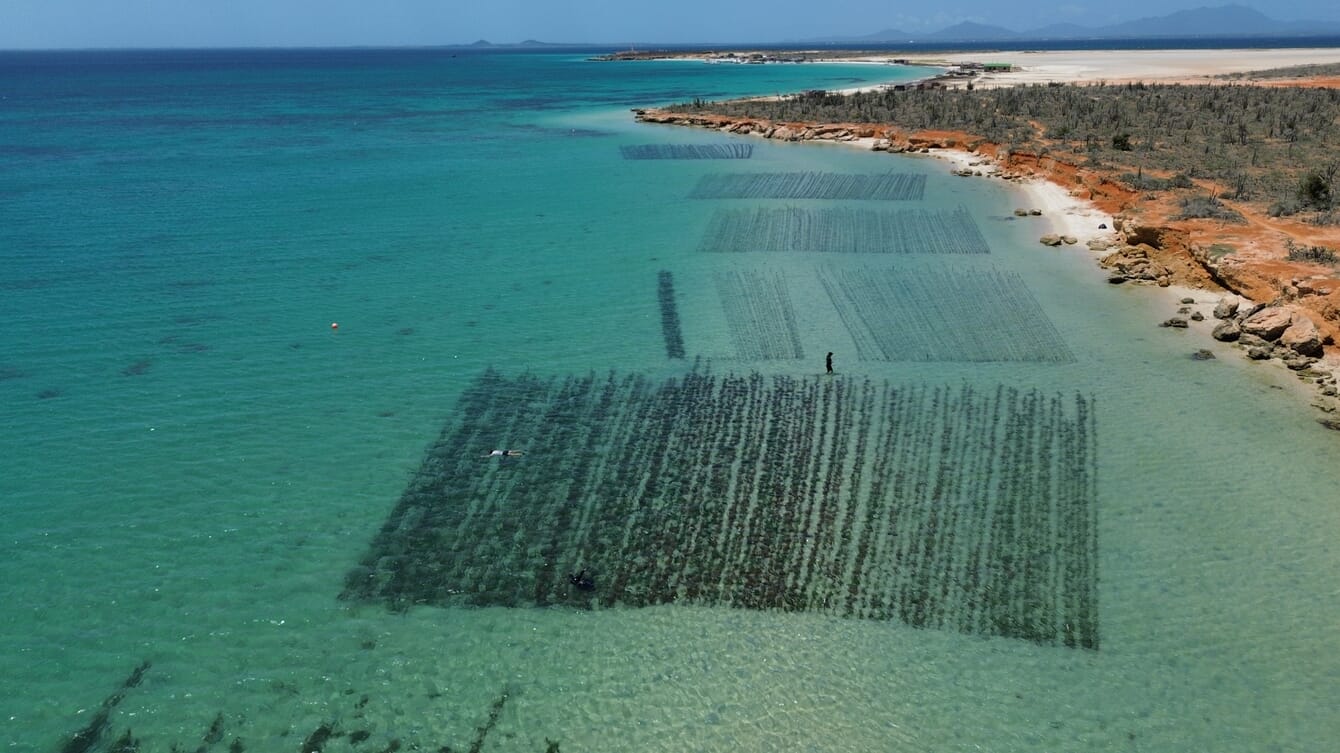
© Hatch Blue
The initiative targets this under-mapped but high-potential region to address a critical market inefficiency: the lack of reliable, standardised data on where seaweed is produced, at what scale, and by which organisations. The expansion comes at a time when the region is seeing growing demand for sustainable marine inputs.
By closing this data gap, Seaweed Insights enables:
- Identification of investment-ready supply chains
- Early discovery of scalable seaweed production hubs
- Reduced diligence risk for aquaculture, climate, and bio-based investments
The LAC region represents a priority geography for regenerative blue-economy growth, with the potential to support climate-positive production, resilient coastal livelihoods and emerging global markets in food, materials and biostimulants. The Hatch Blue platform positions itself as the foundational intelligence layer for investors seeking early exposure to this fast-growing sector. This initiative was made possible through the support of four primary funding partners: Builders Vision Philanthropy, Mustardseed Trust, The Nest Family Office, and the Center for Applied Aquaculture Innovation (iAlumbra).
Fieldwork and findings
The final study covered six key producing countries, with fieldwork conducted between July and November 2025. Project manager at Hatch Blue, Karlotta Rieve and her partner, spent three weeks on the ground in St. Lucia, St. Vincent and the Grenadines, Grenada and Venezuela during July and August, followed by another three weeks across Chile and Brazil during October and November. The team interviewed more than 75 farmers and visited 15 major production sites across 20 farming regions, capturing data on cultivation practices and supply-chain dynamics.
The project documented the region’s primary farmed red seaweed groups, including eucheumatoids and Gracilaria species. While the team aimed to document giant kelp (Macrocystis pyrifera), it was excluded from standardised comparisons because only two active farms were identified in Chile.
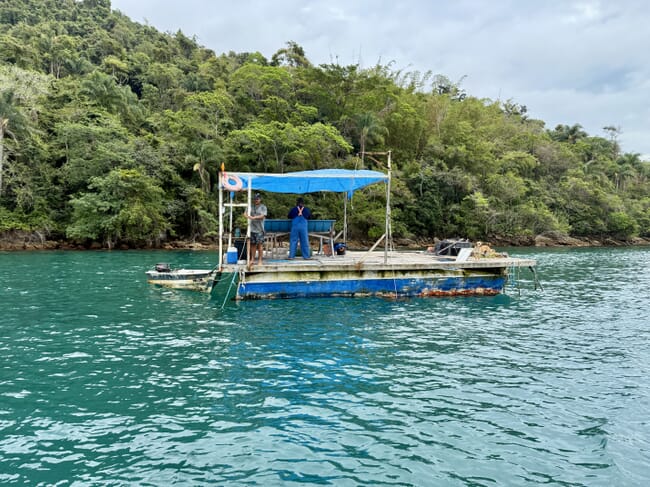
© Hatch Blue
Regional and national trends
In the Caribbean, Saint Lucia remains the regional leader, accounting for 50 to 60 percent of total production and supported by a workforce of around 800 farmers. Meanwhile, Grenada has expanded its industry through notable government collaboration, particularly via the Ministry of the Blue Economy.
In contrast, Saint Vincent and the Grenadines is focused on a critical rebuilding phase after Hurricane Beryl caused major infrastructure damage in 2024. Across Caribbean countries, women are driving innovation by leading value addition in cosmetics and food products, although the sector remains highly vulnerable to climate stressors.
In South America, Chile leads South America’s seaweed sector, but 97 percent of supply is still wild-harvested. The farming of seaweed has been primarily based on the agar agar obtaining Gracilaria (Agarophyton chilensis) for decades. Yet, in the recent decade, this sector has been struggling. Beach prices are falling as there is a market monopoly with one single processing operation left in the country.
In Venezuela, the industry has expanded rapidly since 2019, reaching the second seaweed producer position in the region led by integrated companies like TIDE that support over 350 small-scale producers.
Brazil’s industry is increasingly professionalized, particularly in Santa Catarina, where seaweed farming is co-located in aquaculture parks alongside shellfish. The market here is uniquely driven by a strong demand for liquid biostimulants in the country’s vast agricultural sector.
Pathways for growth
The report finds that regional expansion is as much an organisational challenge as a technical one. Integrated, community-based models and contract-farming structures, such as those seen in Brazil, are identified as the most promising pathways for future growth.
Further expansion also depends on climate-resilient farm designs, including improved seeding quality. In Chile and Brazil, strategic research is increasingly focused on genetic biobanks and strain selection to develop varieties better suited to local environments. In addition, clear regulatory frameworks and fair market conditions are needed to improve market stability and ensure reliable access for producers.
The full regional analysis and database are now available via an open-access digital platform. To explore the findings, visit https://seaweedinsights.com/.


