© BarAlgae
Spun out from TransAlgae – a biotech company that focused on genetically modified algae to deliver vaccines – BarAlgae chose instead to focus on natural strains.
"We’re strictly non-GMO," explains Omri Sharir, the company’s vice-president of business development and marketing. "We took the production know-how and technology [from TransAlgae] and built a platform for cultivating wild-type strains.”
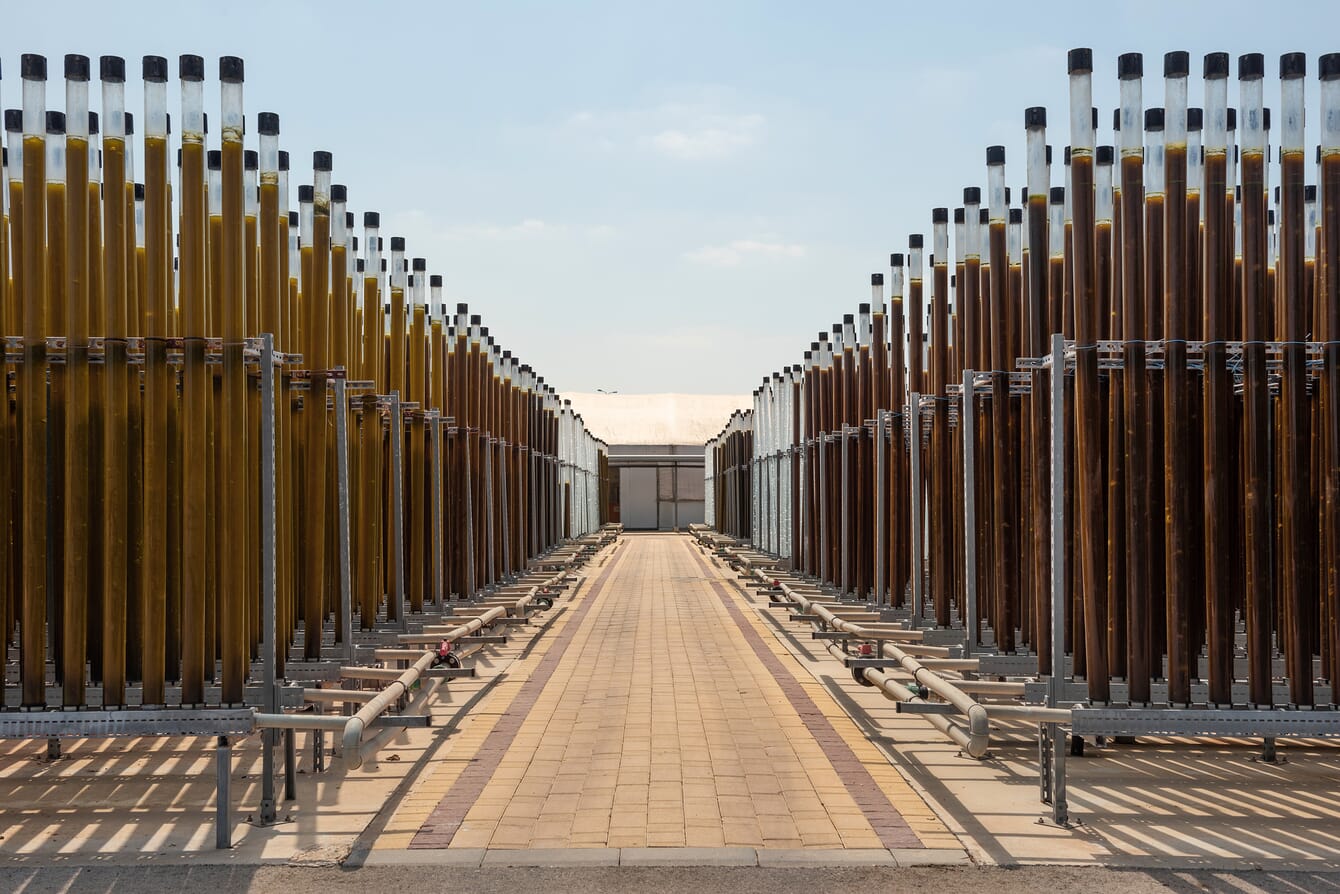
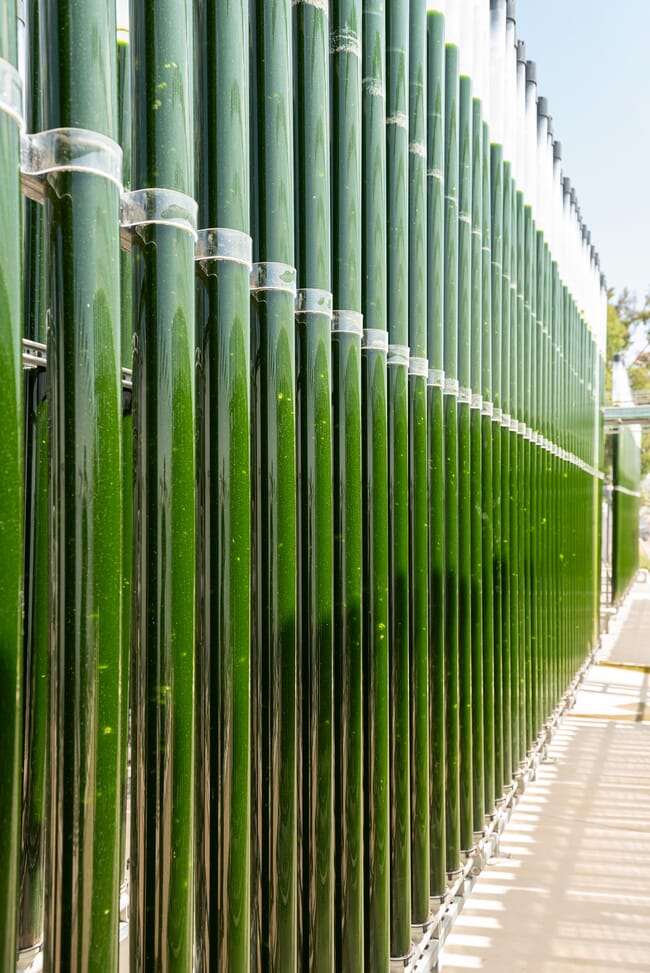
Since then, BarAlgae has successfully domesticated and upscaled production of over 12 species of microalgae in a modular facility that houses 48 self-contained photobioreactors.
"Most companies manage one, two, maybe three species," Sharir notes. "We’ve gone way beyond that, which gives us a huge amount of flexibility."
"Our production platform is a novel technology. It is fully automated and AI-driven, so once the biological protocol is defined, the system optimises it daily. That allows us to scale quickly and consistently,” he adds.
BarAlgae is currently targeting three major sectors: cosmetics, nutraceuticals and aquaculture, with the latter presently accounting for about 55 percent of their sales volumes. For aquaculture, their feeds are primarily sold to hatcheries in frozen paste form, as both single-strain products and blends. They currently supply customers in the Mediterranean, Latin America and Southeast Asia.
"Hatcheries depend on microalgae – they’re essential for shrimp and marine fish larvae," Sharir emphasises.
Sharir highlights that BarAlgae’s products offer a strong value proposition over in-house alternatives.
"Growing algae in-house is labour-intensive, inconsistent and prone to variability. Managers told us, ‘If we could just have a reliable, off-the-shelf product, that would solve a big headache.’ So we developed exactly that," he explains.

© Aviv Kurt
Sharir points out the efficiency gains: "Just a few milliliters of our product can replace a tonne of water-grown algae at the hatchery. They simply defrost it and apply it across multiple tanks. This saves significant labour, resources and risk."
"Crucially, it offers a superior and balanced diet, which directly results in increased return on investment (ROI) for the hatchery,” he adds.
Equally, he adds that the company provides hatcheries with an online calculator, making it easier for hatchery operatives to use BarAlgae's products.
Meanwhile, according to Sharir, trials by leading feed companies have shown performance advantages of whole algae over processed products.
"We think it’s because algae are endemic to the marine environment – it’s what larvae naturally eat. Even if science hasn’t identified every compound, there’s a synergistic effect you can’t replicate with processed ingredients," he suggests.
As a result of these factors, Sharir is confident that they will continue to make inroads into the hatchery market. "It’s a conservative industry, but once hatcheries see the increased ROI – higher survival, better performance, less risk – they get it," he reflects.
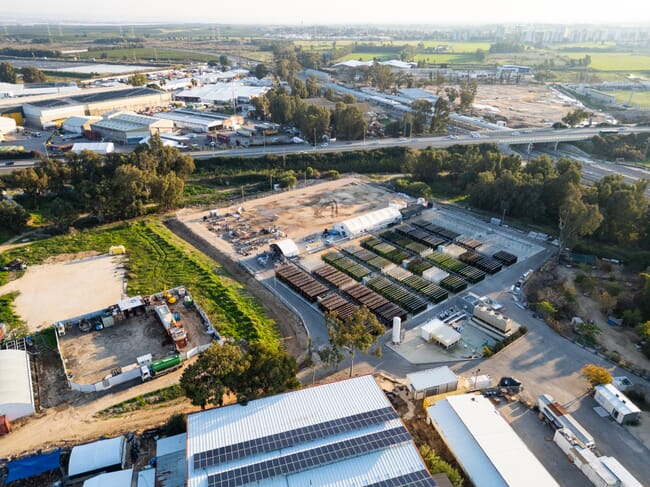
They are now looking to set up similar facilities in Latin America and Asia © BarAlgae
Global expansion
While BarAlgae has established an international foothold via exports from its original base, in Israel, the company is now exploring ways to establish production facilities within key markets.
"After a few years of supplying frozen paste from our original location, we kept hearing the same feedback in India and Ecuador," Sharir explains. "They told us, ‘This is great, but we need local supply.’"
"We're now in advanced talks with major players to set up cutting-edge facilities in the heart of aquaculture hubs there. We expect the first international facility to be set up by the end of 2026."
Such local facilities would be able to deliver live, rather than frozen, algae to their local markets, offering benefits beyond reducing logistical and regulatory challenges for hatcheries.
"Our frozen paste already outperforms local algae in terms of nutritional consistency. But live algae go further – they recycle ammonia and improve water quality,” Sharir explains.
To fuel this growth, BarAlgae is currently looking to raise several million dollars, with the majority earmarked for new production facilities.
"We’re not a turnkey technology company," Sharir stresses. "We’re involved all the way to market. That means investing alongside our partners and operating the facilities to ensure they meet the same rigorous standards we use for cosmetics and nutraceuticals. The ultimate goal is to provide a consistent, superior-quality, local supply of live microalgae, allowing hatcheries to fully outsource their feed production."
As aquaculture tries to balance growth with sustainability challenges, BarAlgae sees reliable hatchery inputs as being more critical than ever.
"Hatcheries don’t want to be algae producers," concludes Sharir. "They want healthy, fast-growing larvae. By giving them consistent, high-quality algae – whether frozen or live – we’re helping them focus on what they do best. That’s how we see our role in the future of aquaculture."
© BarAlgae