© GoSmart
Melchner’s connection to the ocean began as a boy, fishing with his father – all-too-often fruitlessly – in the Mediterranean. After completing his studies in marine biology he put aside his dreams of becoming a marine adventurer and turned his curiosity toward practical ways to solve the issues plaguing the seas.
“I wanted to explore the ocean, yes, but I also wanted to solve the problems I saw,” he recalls.
He saw aquaculture as one of the most effective ways to reduce pressure on wild fish stocks and in 2004 joined GiliOcean Technology, a pioneering company that was designing and operating cages for use in offshore aquaculture. Over the last 21 years he worked his way up and gained a variety of experience, starting as an aquaculture technician and ending up as company CEO.
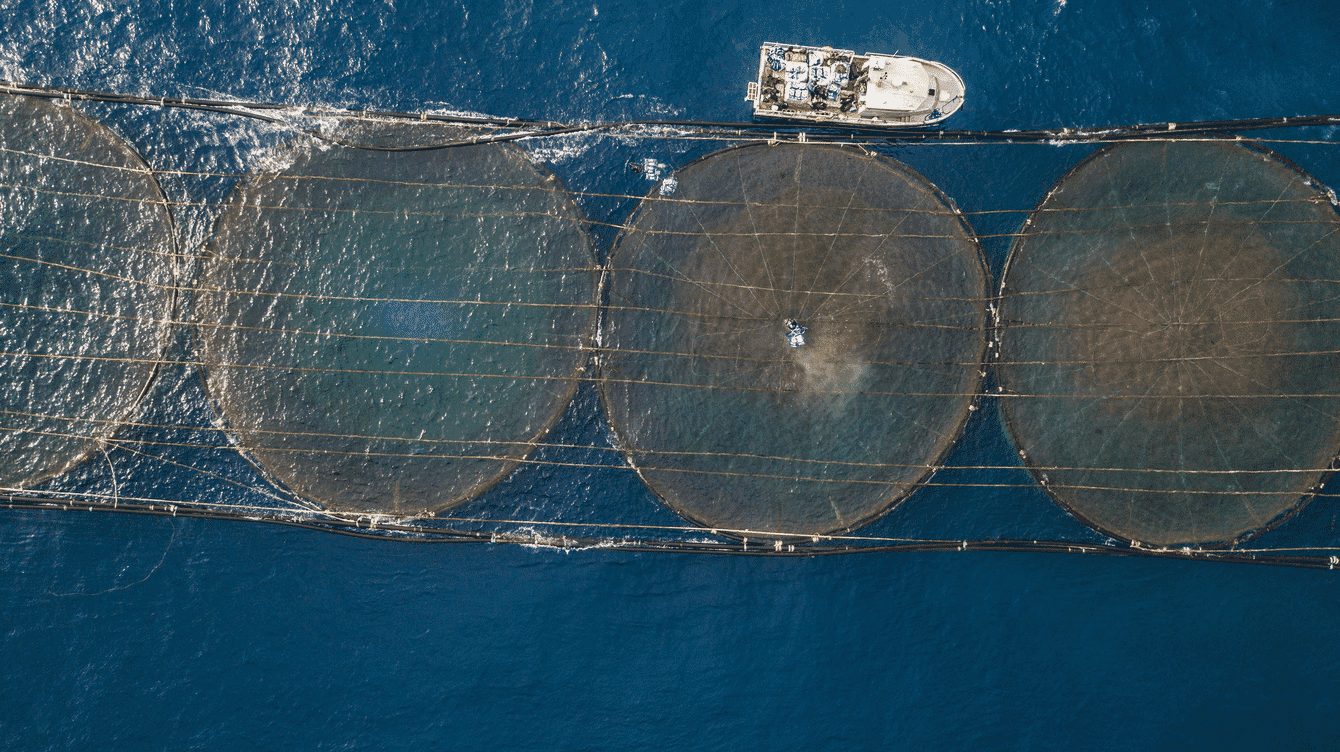
“We were building one of the largest open-ocean projects in the world at that time,” Melchner explains. “In 2017 we farmed 15 kilometres offshore, in 82 metres of water. We had waves over 11 metres high and suffered zero damage or losses. It was an amazing project.”
As shareholders in the project, Gili were focused on cutting operational costs. Observing the rapid technological progress in the salmon industry, they found most available systems too complex and costly for bass and bream producers. To bridge this gap, Melchner founded GoSmart with the goal of providing real-time, accurate data solutions that are affordable, easy to operate, and effective even in challenging environments and lower-margin sectors.
“It all started because we saw people feeding the fish every day, raising feed portions based on guesses,” Melchner explains. “They’d say, ‘We think the fish are this big,’ and I told them, ‘We can’t work on estimation – we need solid data.’”
When he couldn’t find suitable tools on the market, he decided to build them. A successful application to the European Commission’s SME Instrument in 2017 provided €2.35 million in funding to develop an early prototype of their system – one that uses computer vision and AI to measure fish biomass, monitor environmental conditions and track feeding behaviour – all in real time.
Working with partners such as Nvidia, Intel and Google, Melchner’s team designed a robust, solar-powered, off-grid monitoring system capable of sending data from even the most remote farms.
“We had to design everything ourselves,” he says. “There were almost no underwater cameras in aquaculture outside Norway.”
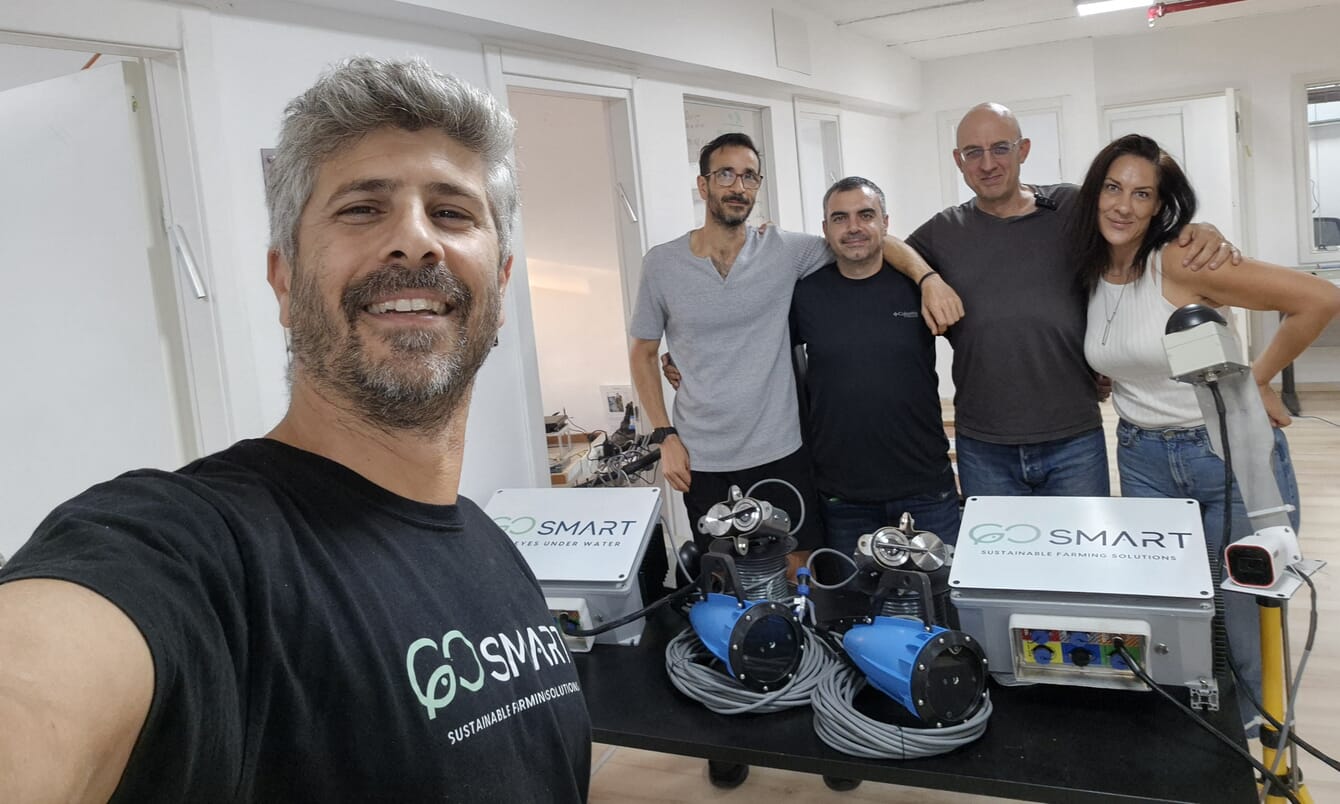
GoSmart’s first-generation camera was a compact, waterproof unit capable of capturing 3D imagery of fish underwater.
“Our first version measured biomass distribution, created growth curves and recorded oxygen and temperature levels in real time – every ten seconds,” says Melchner.
He insists that continuous data collection – not periodic measurement – is the key to understanding the fish.
“Only then can you identify abnormal behaviour – stress, predators, disease – before it becomes a problem,” he reflects.
To achieve that, GoSmart built an affordable hardware platform with a software-as-a-service (SaaS) business model.
“Our systems work on subscription,” Melchner explains. “Farmers pay monthly, basically from the savings they make. They reduce labour, optimise feed, and comply with new sustainability and traceability regulations.”
That last point, he notes, is crucial.
“Every system we deploy has GPS tracking. We can tell exactly which cage a fish came from, and its full history. In the US, regulations coming into effect by 2028 will require full traceability from farm to retailer. We’ve already tested this – sending fish to the US that were monitored from the cage to the distribution centre.”
© GoSmart
An increasingly sophisticated system
The company is on the cusp of launching its second version, which includes a rugged aluminium housing, improved energy systems and an additional camera designed to analyse fish behaviour. It is about to be trialled at three separate farms.
“The big step forward is the fish behaviour and appetite monitoring algorithm,” he says. “We can detect how the group reacts to feed. If they’re eating, the graph goes up. If they’re not responding, it drops. The farmer can see this instantly, even from his phone.”
This, Melchner believes, marks the first true step toward fully automated feeding. “If I know the weight of the fish, their distribution, and their appetite, I don’t need the farmer to decide when to stop feeding,” he says. “That’s the beginning of an autonomous decision-making system for aquaculture.”
So far they have developed algorithms for sea bream, seabass, rainbow trout and salmon, while those for meagre and seriola are in development.
However, looking further ahead the team’s goal is to built dynamic farming protocols that adjust feeding and management strategies to the specific conditions of each cage.
“We’re collecting billions of data points in our cloud. That’s how we build better farming protocols,” he explains. “Every cage is different. The ocean affects each one differently. The idea is to create adaptive systems that respond automatically to the fish, the water, and the environment.”
The company is also developing a health control plan, in conjunction with local universities, using AI to detect early signs of disease, based on changes in swimming patterns and group behaviour.
“If we can give farmers real-time alerts about health issues, we will cover most of their urgent needs – growth, feeding and fish welfare,” Melchner says.
GoSmart’s technology is currently deployed in nine countries, including Spain, Italy, Greece, Cyprus, Türkiye and Chile.
“Our first focus was the Mediterranean,” Melchner says. “There was almost zero technology there – no oxygen sensors, no cameras, nothing. Now we’re expanding globally.”
In Chile, the company is working with one of the country’s largest salmon producers.
“They tested our competitors first,” Melchner explains. “But they saw that our system offered more flexibility and didn’t depend on electricity. Our price is also very competitive. From the beginning, we designed for affordability and scalability.”
Closer to home, GoSmart has partnered with Eden Farm, which is growing salmon in an arid part of Israel where summer temperatures can hit 50°C.
“I was sceptical,” admits Melchner. “But they’re doing it. They’ve adapted Israel’s expertise in desalination and water treatment to aquaculture, and it’s working. Our cameras help them track performance and make adjustments. If they can farm salmon here, they can farm it anywhere.”
They are also working closely with Skretting – with the feed giants having a clear interest in any technology that can improve feeding efficiency.

© GoSmart
Finding funding for expansion
Despite the company’s progress, Melchner is aware of the challenges that remain.
“Our main bottleneck is finance,” he says. “In Israel, if you start a cyber or defence company, investors throw money at you. But ag-tech and aquaculture? Much harder.”
GoSmart is currently raising $3–5 million to accelerate production and deployment with existing and new customers, expand internationally, and develop new species-specific algorithms and health monitoring algorithms.
“We’ve done a lot with a small budget,” Melchner says. “But to become a global leader, we need to release the bottleneck. With the right funding, we can become the gold standard for computer vision in aquaculture.”
In terms of potential investors, Melchner says he welcomes strategic partnerships, not just capital.
“There are not many VCs working in aquaculture. We already have several in our data room – from the US, UK, Israel and the Nordics – and a strategic investor who understands aquaculture and AI could help us take this technology global.”
© GoSmart