
Aquaculture is a young industry compared with the terrestrial animal production sectors, yet it is one of the most complex and fast-moving. Unlike swine or poultry, where only a handful of breeds dominate, aquaculture involves farming over 350 different species worldwide. Understanding the nutritional needs of each of these species and assessing how well different farms are performing are significant challenges, and those are the problems that Canadian startup Wittaya* has set out to solve.
Because aquaculture is so fragmented, “one-size-fits-all” technology is difficult to apply. Wittaya’s answer is what it describes as an “objective truth” layer. Rather than selling physical products, the company provides access to a digital platform that helps users understand the impact of nutrition and other factors (environment, genetics, etc.) on performance, drawing on tools developed with scientists and designed for the whole value chain – from feed ingredient suppliers through to farmers.
Through sustained and systematic processes, the company also identified several shortcomings and significant biases in the analysis of performance data from farms and research and development trials and developed robust computations to objectively benchmark performances, including growth rate, survival/mortality and efficiency of feed utilisation.
Founded in 2017, Wittaya has built an international, multidisciplinary team serving clients on every continent. It has developed models for more than 30 aquaculture species, bootstrapped the business through its early years and then raised a major funding round in 2023, and is now preparing for its next phase of growth – with rising revenues, a new CEO and plans to expand beyond aquaculture into monogastric livestock such as swine and poultry.
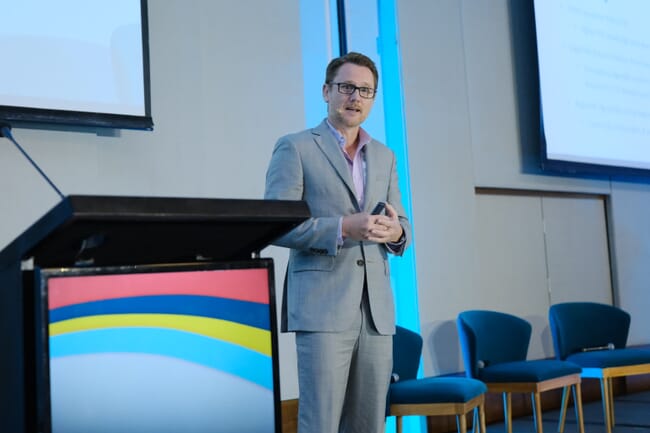
“This year, we generated over a million US dollars in revenue, which was an important milestone and, as we’re growing really quite fast, it looks already like we might be on track to hit two million by the end of 2026,” explains Stephen Gunther, incoming chief executive officer of Wittaya.
© Wittaya
From feed to farm in a complex industry
Wittaya was co-founded by Dominique Bureau, the company’s chief scientific officer. A professor of animal nutrition and aquaculture at the University of Guelph in Ontario, Bureau has long been interested in tackling “real world” challenges.
He and co-founder Evan Hall, a fisheries biologist and entrepreneur, started the company and were approached by Gunther – a former master’s student of Bureau’s who had stayed in touch. Gunther, who had extensive experience in the salmon and feed industry in Europe and South America, was recruited as the sales lead.
“The chance to reconnect with Dominique and work together again professionally was something I couldn't pass up. His passion for the industry is contagious,” Gunther recalls. “And then I met his business partner, our former CEO Evan Hall. Evan explained to me the vision of the company. It gave me a sense that Wittaya really had a drive to help the industry thrive and become more sustainable.”
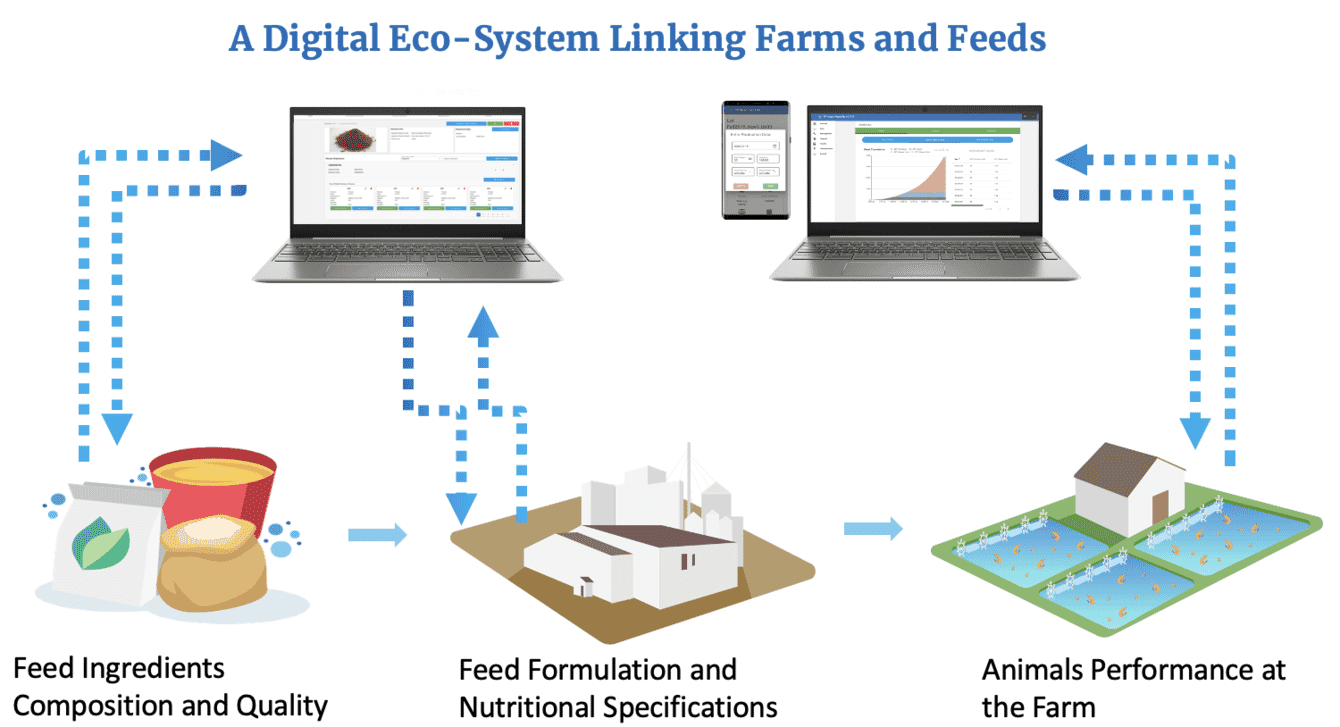
Wittaya has built a digital ecosystem that links the feed, ingredient and farming supply chain. The company uses data from across the sector – including feed ingredients, additives, trials, feed formulation, on-farm performance data, including growth, environmental and other performance measures. It integrates and merges these data to provide actionable insights for stakeholders across the aquaculture supply chain, globally, including optimal nutritional specifications for different species and types of aquaculture feeds.
For additive suppliers, the platform can help demonstrate the value and market fit of their products. For feed manufacturers, it supports benchmarking and optimising feed strategies. For farmers, it can forecast growth and feed requirements and benchmark performance to support day-to-day decision-making.
“We take data from the feed ingredient to the feed to the farm and integrate that to provide actionable insights. Wittaya’s uniqueness is in its foundation because their tools are powered by some of the most advanced mathematical and nutritional models,” says Gunther.
The company also developed industry-wide benchmarks for different popular aquaculture species, including tilapia and shrimp, based on the analysis of data from 1000s of commercial production lots from around the world.
That uniqueness, he explains, comes from models developed under Bureau’s guidance, drawing on his 35 years as a leading aquaculture nutritional scientist. Their production and performance benchmarking work is, for now, unparalleled in the industry and, according to the team, is gaining traction because it can accurately benchmark performance across regions, time periods and different farming situations – crucial in a sector where every farm is different.
“They're not just mathematical models, they're science-based and real world-tested models – nutritionally and biologically based on the performance of the animals,” adds Gunther.
© Wittaya
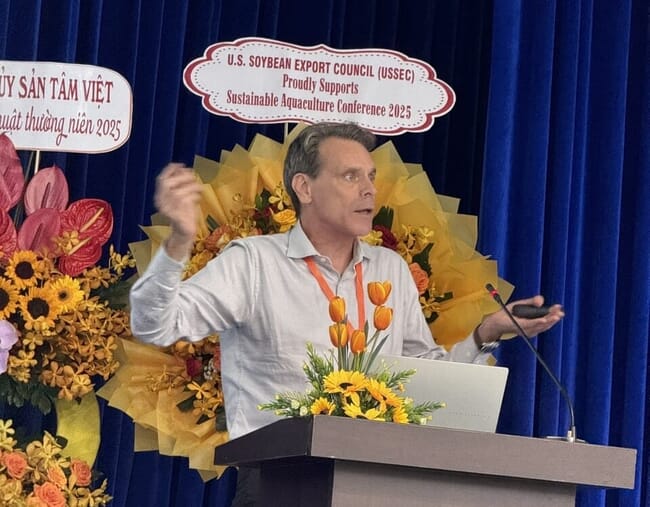
He says the models have been tested in the field and, across multiple species, their ability to forecast growth performance and feed requirements is at least 95 percent aligned with what they observe on farms. The tool helps customers understand the nuances of aquaculture – a sector with so many variables that having a platform like this makes interpretation much easier.
“The aquaculture industry is so dynamic and every member of the, of the industry is so unique that while they might at a high level seem to all have similar problems or similar challenges, they're all really distinctive. So, there isn't one solution,” says Gunther.
Inside the growth story, and the next chapter
In 2023, Wittaya raised US $2.8 million (£2.15m) in a seed funding round, helping the company strengthen its presence in South-East Asia and establish a sister corporation in Singapore. Since then, it has been moving beyond the small-startup phase into a larger, more established business.
“We’ve got a fantastic team that, despite the challenges of trying to run a startup business, stuck with us. Until we had our successful investment round in 2023, we were bootstrapping the business,” says Gunther. “The patience our team has had, and the confidence they’ve had in Wittaya’s ability to become a successful business, is a major plus. It speaks highly of them, and I think it also speaks highly of the ethos we have at Wittaya.”
Gunther says he is excited about what comes next for the company, as its nutritional models gain wider acceptance across the aquaculture industry. But for him, keeping a tight focus is essential.
“I think that one of the challenges that startups face is there's so many low hanging fruits that you try and go after to maintain cash flow in the business that sometimes you just broaden your scope too much. Chasing things that in the end might bring in revenue, but they're not necessarily the right things to be chasing or the right revenue to be chasing,” he explains.
In line with its focussed strategy, Wittaya is now expanding beyond aquaculture. The team sees monogastric production as a space where they can replicate their successful aquaculture business model in terrestrial animal species. The move has been driven by both push and pull: many of the feed suppliers they work with already serve the wider animal nutrition industry, and clients began asking whether Wittaya could offer the same capabilities for other species like poultry and swine.
“Now that we've had this high level of success in aquaculture, we realise that the models that we've developed are transferable,” says Gunther. “The tools we developed for aquaculture are looking very novel and attractive to stakeholders of the terrestrial animal livestock industries.”
He argues that starting out in aquaculture and then moving into terrestrial animals gives Wittaya an advantage. Aquaculture involves a large number of species and is highly dynamic, and the team believes this has equipped them with skills that would be harder to acquire by moving in the opposite direction, from a “simpler” single-species land system into aquaculture.
As the company grows, Gunther sees the main challenge as managing resources effectively as both the customer base and the team expand, while still keeping “boots on the ground”. With a focus on multiple species across multiple geographies, Wittaya needs to build up regional and in-country capacity.
“Probably the biggest challenge for any business that I've ever been involved in is that balance between how much you can invest to grow and how much growth you need before being able to invest,” concludes Gunther.
Readers who are interested in Wittaya’s approach to nutritional modelling can contact Stephen Gunther for more information: stephen.gunther@wittaya-aqua.ca
*Wittaya is part of Hatch Blue's investment portfolio, but The Fish Site retains editorial independence.


