
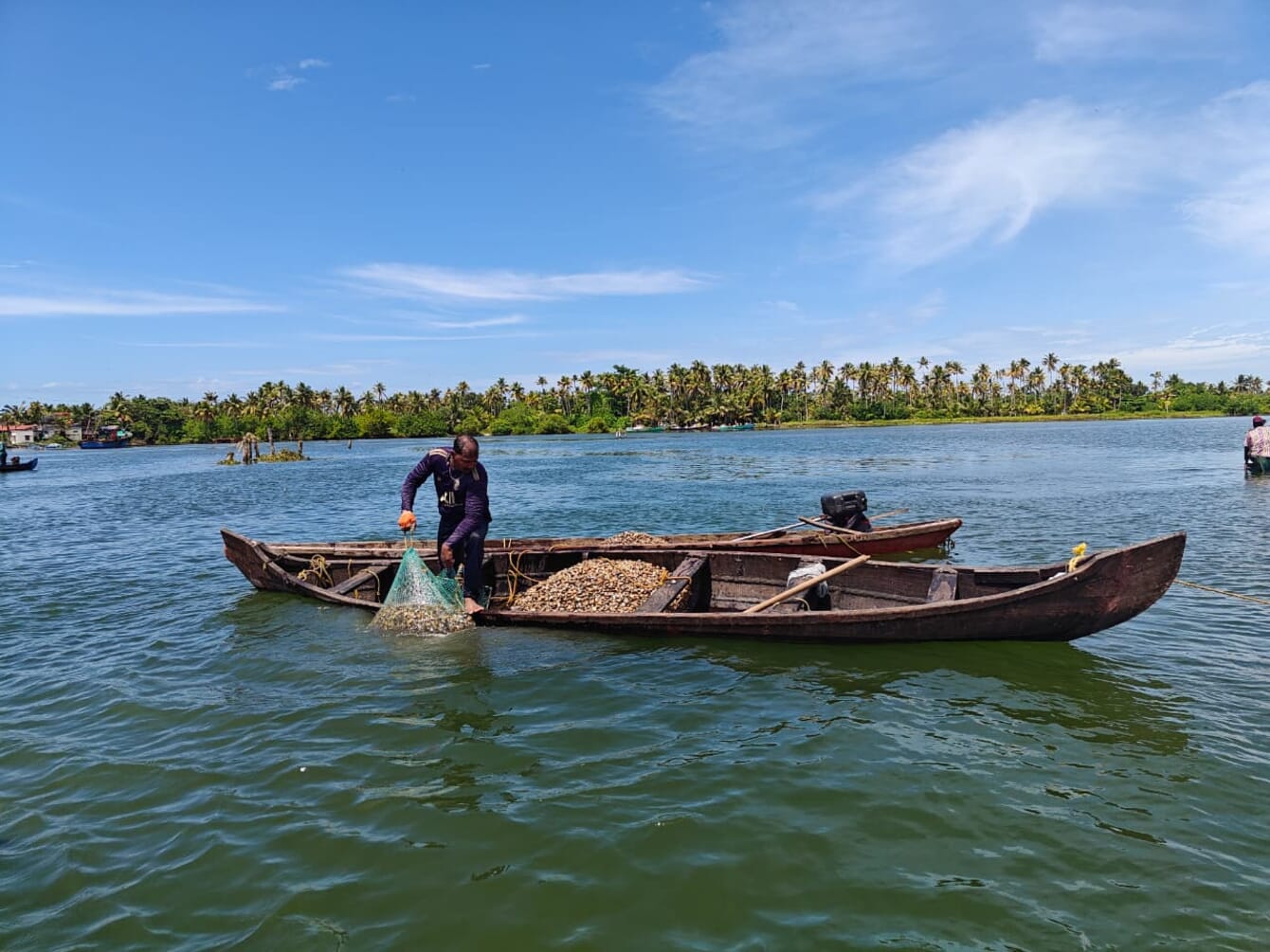
© CMFRI
A year after the ICAR – Central Marine Fisheries Research Institute (CMFRI) launched a stock enhancement programme in Ashtamudi Lake, the short-neck clam (Paphia malabarica) population is showing early signs of recovery. Field monitoring data indicates clear evidence of spatfall and a marginal rise in standing stock.
In light of the spawning and early growth phase of the resource, CMFRI has recommended a three-month fishery closure from 1 December to protect the clam population during this critical period.
Stock enhancement sucess
The positive indicators follow the release of three million hatchery-produced clam seeds into the lake last year by the CMFRI Vizhinjam Regional Centre, led by principal scientist Dr M K Anil. Stock depletion of the short-neck clam had been reported in Ashtamudi following the 2018 floods and associated environmental changes.
Experiments conducted alongside the sea-ranching initiative showed a survival rate of 80 percent. The ranched clams attained a marketable size of 34mm in seven months, demonstrating that hatchery-based stock enhancement is a viable management tool for the lake. The programme functions as part of the ecosystem-based fisheries management approach utilised by CMFRI to rebuild depleted stocks and secure the sustainability of the lake’s unique fishery.
The Shellfish Fisheries Division of CMFRI has been closely monitoring the clam beds throughout the year. The resource-mapping survey conducted under Dr Geetha Sasikumar, principal scientist, confirmed widespread spatfall in October showing successful natural recruitment. The smallest spat recorded last month measured 2.38 mm, and the multi-modal length distribution observed across clam beds indicates a healthy, multi-cohort population, according to the survey.
Proposed closure and environmental concerns
Despite these gains, CMFRI cautioned that the recovery remains fragile. As the spawning season began in October, the coming months are essential for the survival of juvenile clams. Consequently, the institute recommended continuing the fishery closure from December to February – a measure previously supported by fishers and implemented annually by the State Fisheries Department.
The institute also flagged environmental concerns, specifically unscientific sediment extraction and broken-shell collection in spatfall zones, which can destroy seed clams before they mature. CMFRI recommended that the bar mouth region near the Neendakara Bridge remain a no-take zone, consistent with earlier management measures. Sustaining this resource is vital for the livelihood security of the hundreds of fishers dependent on Ashtamudi Lake.


