
© Evan Durland
The breakthrough comes from a dedicated breeding programme known as the Bivalvi project, a collaboration between Italian clam producer Naturedulis, Norwegian research institute Nofima, and the University of Bologna.
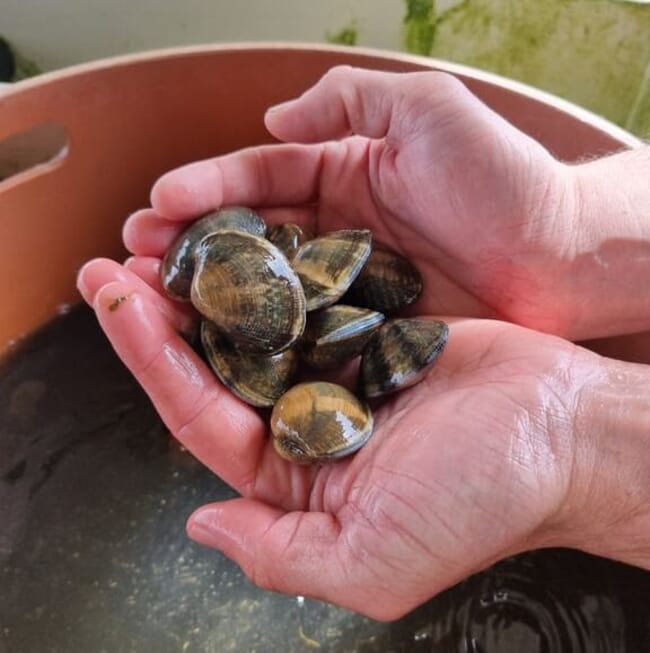
Manila clam is cultured in Italy by the company Naturedulis. Naturedulis, based in the nutrient-rich Goro Lagoon, operates a hatchery for clams. The company supplies juvenile clams to other shellfish farmers in the region. Their ambition was to harness the natural potential of these clams through selective breeding, enabling better utilisation of the lagoon’s nutrients and boosting production.
Earlier in 2025, farmers began seeding the first clams selected specifically for rapid growth.
“We expect these clams to be market-ready by Christmas 2025, slashing the production cycle by at least three months,” said Leonardo Aguiari of Naturedulis in a press release.
He added that the Bivalvi project has been pivotal for the Italian hatchery Naturedulis and local clam-based economy.
Since the 1960s, Nofima has worked to develop breeding programmes for a wide range of species in collaboration with industry partners. This includes cold-water species salmon and cod, as well as the warm-water tilapia. The sophistication of these programmes varies and develop over time.
“Manila clam is the latest species to benefit from breeding work by Nofima’s geneticists,” said project leader Anna Sonesson.
She is proud to be involved in breeding a low-trophic species such as clams:
“Shellfish breeding is not common in Europe. Even though a driver of sustainable food production is to move down the food chain, there is still very little breeding of low-trophic species. This means missing out on improved production efficiency, health, quality and lower mortality,” Sonesson explained.

