
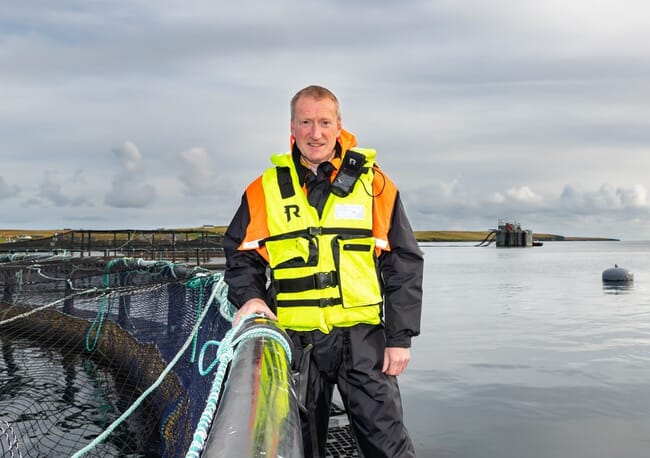
© Salmon Scotland
The anticipated surge follows a landmark trade agreement between the United Kingdom and India, set to take effect later this year. The deal is expected to eliminate a 33 percent import duty that has long restricted Scottish producers from accessing the Indian market. Under high-growth projections, annual exports could exceed £30 million by 2030, driving significant inward investment and employment across Scotland.
New analysis from the trade body Salmon Scotland indicates that India is on track to become one of Scotland’s premier overseas markets by the mid-2030s. Most fish eaten in India is locally sourced, but demand for premium imported seafood is rising quickly in major cities such as Delhi and Mumbai.
Salmon Scotland’s chief executive, Tavish Scott, noted that the transition mirrors the rapid expansion seen in the Chinese market, where exports reached nearly £100 million in 2025.
“India now represents the next major opportunity. With tariffs set to be removed, exports to India could deliver up to £130 million over the next decade, supporting jobs and investment in coastal communities across Scotland,” Scott said in a press release.
The Scotland Office minister, Kirsty McNeill, echoed this optimism, stating that the deal marks a pivotal moment for the sector. “The UK-India trade deal taking effect later this year presents a major opportunity for Scottish salmon – opening up another key market for exporters while boosting the economy,” McNeill said. “The UK Government’s support for Scotland’s iconic food and drink sector, including via Brand Scotland and the trade deals we are securing, is helping exporters of our finest Scottish produce reach every corner of the globe while driving economic growth at home.”
While most fish consumed in India is currently sourced locally, demand for premium imports is rising. Industry experts believe Scottish salmon’s reputation for rigorous production standards will resonate with India’s expanding middle class.
Scottish salmon exports to India have so far remained modest, reaching around 70 tonnes a year worth roughly £0.5 million up to 2022, indicating early demand and supply chains already in place. However, Salmon Scotland forecasts that volumes could exceed 3,500 tonnes per year by the end of the decade, provided that robust cold-chain logistics are maintained.

