

© Planktonic
Planktonic* was founded in 2008 by Håvard Aakerøy and Dr Nils Tokle, who were on a quest to identify natural zooplankton species that could be harvested or farmed and then cryopreserved for use as a hatchery feed.
While the concept might sound simple, cryopreservation at large scale had never been achieved for zooplankton. And the idea was all the more unusual when the founders decided that the most suitable candidate species to capture were members of the barnacle family
It was a decision made by a coincidental discovery – one spring, the founders’ nets filled with a barnacle nauplii.
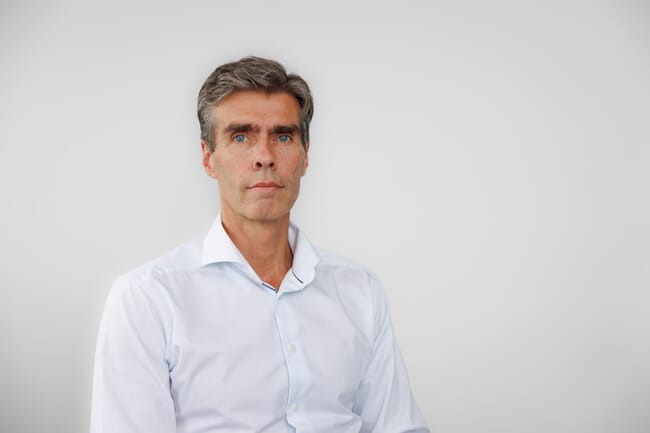
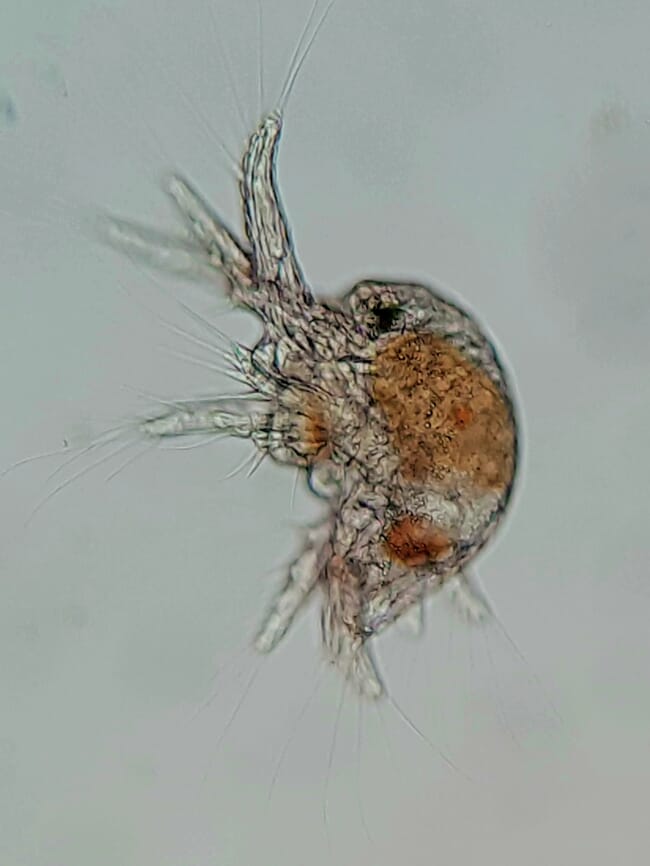
“You know, each barnacle contains approximately 10,000 offspring, of the right size” says Rune Husby, Planktonic’s CEO, “and account for around 20 percent of their total biomass. If we can harvest these barnacles before they spawn… then we could have a pure, even-sized fish feed.”
Less than a decade after the company’s breakthrough, Planktonic’s cryopreserved barnacle nauplii – sold under the Cryo S and Cryo L brands – are being used as first feeds for high-value marine species in hatcheries across Europe, the Middle East and Asia.
“Who would have thought?… It was previously known as a fouling organism. Now it’s a high-valuable feed particle,” Husby reflects.
From concept to commercial operation
Husby joined forces with Aakerøy and Tokley in 2016, following career had revolved around investment banking, but which included investing in startups.
“It was really the people, the two founders, and the finance that was in place. The opportunity looked very interesting and nobody had done it before,” Husby recalls.
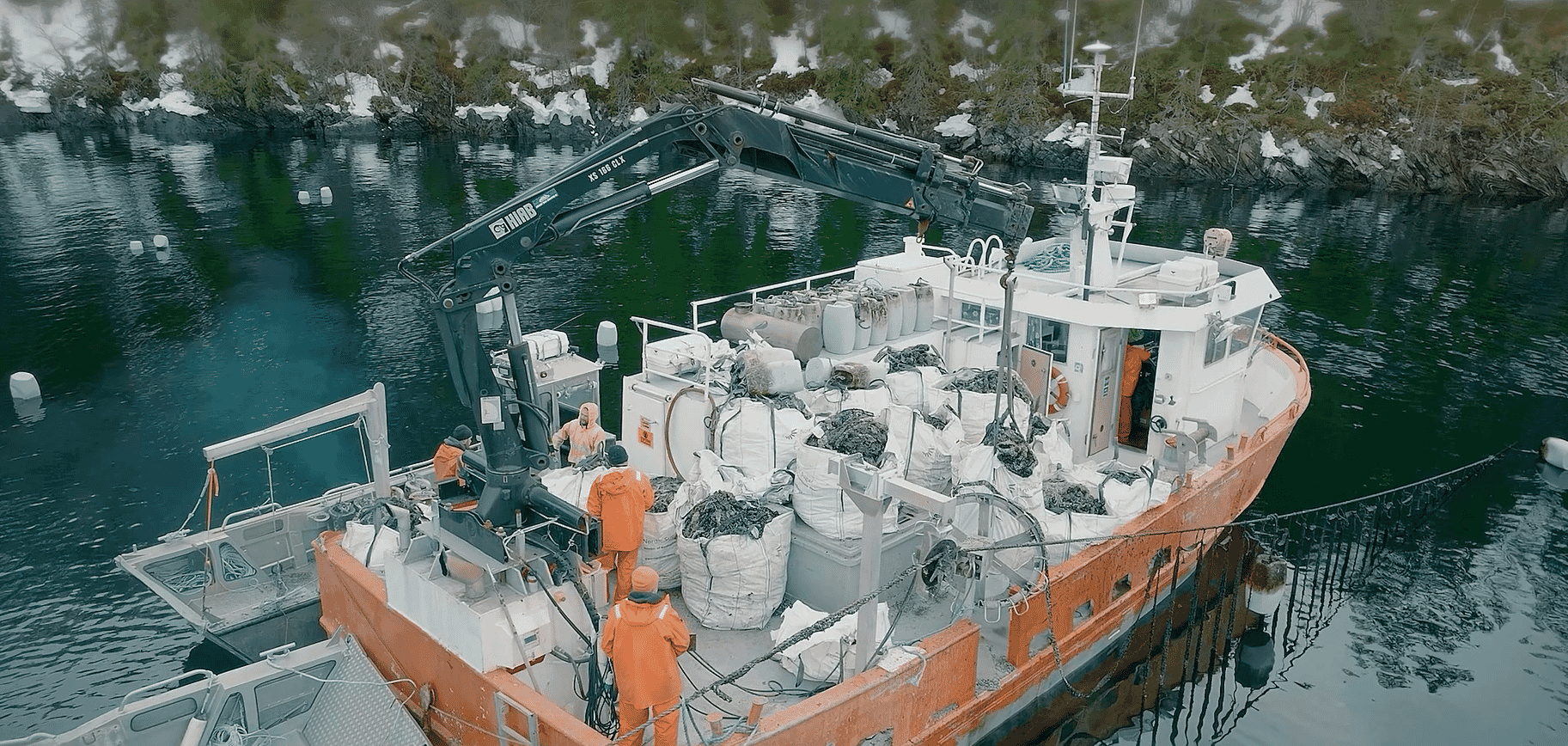
Their very first collection methods were rudimentary – crushing harvested barnacles under rubber boots to release the eggs. But these days Planktonic uses both wild harvesting – scraping barnacles from rocks in suitable coastal areas – and farmed production using rope-based substrates similar to mussel lines.
“We deploy the bands at a time when the barnacle will settle first, so they will populate the whole bands,” Husby explains. Regular washing controls biofouling, ensuring consistent settlement and growth.

© Planktonic
Once harvested, the barnacles are processed through a customised production line that gently separates the nauplii from the surrounding biomass.
The next step was to develop a means of preserving their nauplii, in a manner that would allow them to be stored, transported across the world and then reanimated by the end users. Cryopreservation was the obvious method, but experts initially dismissed the concept – it had only previously been achieved with zooplankton in small vials – never in bulk.
“They turned everything on its head… and came up with a solution to actually cryopreserve these species in huge quantities,” Husby says. “That hasn’t been done before… that’s why we have managed to get this patented.”
During the process the larvae are initially mixed with cryoprotectant and then frozen in stages: firstly a controlled descent to around –42°C before being transferred into liquid nitrogen at –196°C for long-term storage.
The result is a stable and nutritious feed product that can be revived instantly when the customer requires.
“They come in frozen ice cubes and you just thaw them in seawater and they will be alive again, start swimming around, and… be fed to the fish,” Husby explains. Another important point is that even though they wake up and begin swimming, they never reach a reproductive stage. Cryopreservation arrests them at a specific early developmental phase, which has been demonstrated in numerous studies, including one conducted at the University of Stirling. Therefore, there is no risk that they will continue developing within the facility or pose any threat to biological diversity.
© Planktonic
A nutritional match for marine larvae
Marine fish larvae evolved to consume zooplankton – tiny organisms rich in marine fatty acids which are also perfectly sized for early feeding. But harvesting zooplankton year-round, at scale, had previously been deemed impossible, which is why rotifers and Artemia have been used as first feeds in hatcheries for decades. Although these organisms are often given enrichment protocols to enhance their omega-3 content, their nutritional profile remains imperfect.
“The holy grail of marine aquaculture has been to give the fish natural zooplankton,” Husby explains. “Everybody agrees that marine zooplankton is nutritionally superior… they have the marine fatty acids in the balance that is optimal.”
According to Husby, this belief is born out by trials involving Planktonic’s products which indicate better growth, higher survival, reduced deformities and earlier gut development in fish fed the barnacle nauplii.
It’s similar, Husby jokes, to a baby raised on breast milk: “If you get mother’s milk in the beginning instead of Coke, you will probably develop better.”
Long-term trials in Greece even indicate lasting performance effects. After 20 months in sea cages, juveniles that had initially been fed barnacle nauplii rather than traditional live feeds showed reduced feed conversion ratios (FCR).
“That is really where we can create huge value,” Husby notes. “Because live feed is only ~1 percent of total production cost – while dry feed can represent 70 percent – so improvements to live feed can produce large economic gains throughout the entire value chain.”
Despite this advantage, persuading hatchery managers to switch from the tried and tested to barnacles is by no means easy.
As Husby explains: “They have to make some changes within the hatchery and they must be willing to change their standard operating procedures.”
However, he emphasises that Planktonic positions itself not as a supplier but as a partner.
“We’re living with the customers,” he says. “It’s upon our shoulders to make sure that everything goes right… you have to be as much of a partner as a salesperson.”
It’s a strategy that seems to be working: industry leaders now rely on Planktonic feeds for their cleanerfish and seriola juveniles respectively.
“I take that confidence with great pride,” Husby reflects.
© Planktonic
Scaling
Planktonic’s current production sits around 20 tonnes per year – while relatively modest in volume it’s enormous in particle count. Scaling up is now a core focus, supported by fresh investment from IVC and the Blue Revolution Fund.
“We have ample resources to put out the amount of farms we need,” Husby says. The medium-term plan is to expand both within Norway and internationally. “I feel confident that we will be able to produce what’s needed… and be a serious and profitable player within the hatchery segment.”
And he is not concerned that scaling up will impact barnacle stocks, even in the areas where they are harvesting.
“This is a battle for space,” Husby explains of barnacle ecology. “ A few months after harvesting the surface is covered again We have been harvesting now for close to 10 years but the areas look as new as ever.”
Diversification
While cleanerfish, cod and seriola hatcheries in northern Europe have been Planktonic’s core markets, demand is rising further south.
“Now we’re focusing a whole lot more on sea bass and sea bream, especially in Turkey and the Meditteranean” says Husby. Asia, especially Japan, is emerging as another strong opportunity
“Aquaculture production of Seriola looks very interesting,” he says. Japan’s production still relies heavily on wild-caught juveniles from China – something regulators aim to end by 2050 – creating a major opening for larval-feed innovations.
Husby also sees the cod sector as primed for growth.
“Cod could have a huge potential… cod fisheries are going down,” he notes.
Species such as grouper, which are only farmed in small volumes at the moment, may also offer scope for growth.
“The difficult types of species is where we shine,” Husby argues. “We can give them something that the rotifer cannot.”
Even shrimp isn’t off the table. “I wouldn’t rule out… tailored products for at least part of the shrimp market,” he says.
Planktonic’s patented processes gives it a head start over potential competition, but the company isn’t complacent.
“You will probably see that people don’t stop thinking about trying to evolve in this space,” Husby notes. But when it comes to barnacle-based feeds, “we are the only ones that can really do that.”
In the next five to ten years, Husby hopes to see Planktonic become “a serious and profitable business within the hatchery segment… especially in Europe and Turkey,” while expanding into a range of other key global markets.
If Planktonic’s science continues to scale – and its early-life nutritional effects continue to translate into long-term performance – barnacle nauplii may play a key role in the next generation of marine aquaculture.
*Planktonic is part of Hatch Blue's investment portfolio, but The Fish Site retains editorial independence.

© Planktonic


