

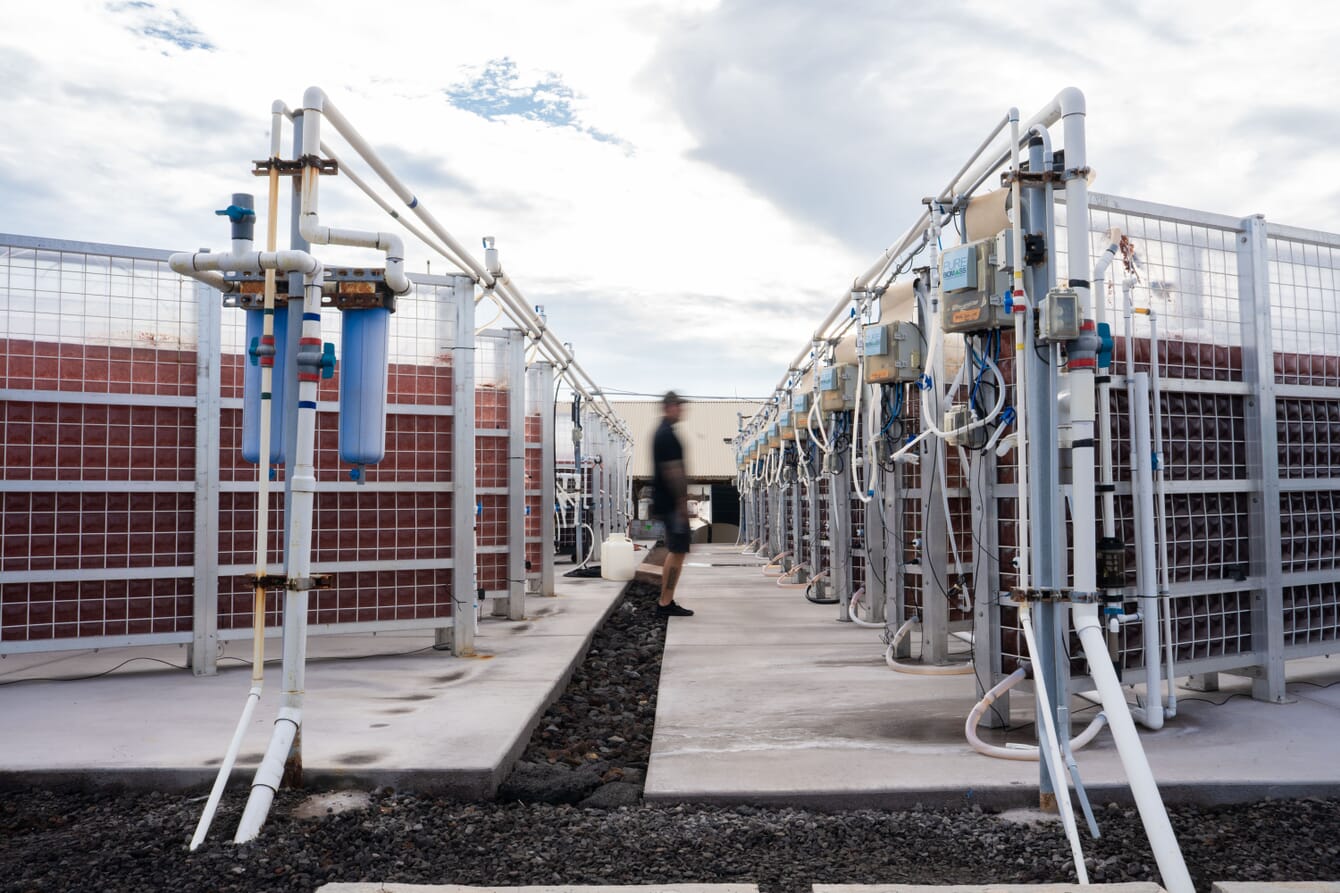
© Johnny Prehn
Just a few years ago, Hawaii-based Symbrosia* was best known as a research-driven seaweed startup working to stabilise the production of the red seaweed Asparagopsis taxiformis, whose bromoform-rich compounds can inhibit methane formation in the rumen of livestock such as cattle. Since then, SeaGraze – its family of Asparagopsis-based feed additives – is now performing reliably in commercial settings and being adopted by cattle producers primarily for its nutritional and economic benefits.
“We see a misconception that Asparagopsis is purely a climate solution,” explains Alexia Akbay, chief executive of Symbrosia. “In reality, SeaGraze is a nutrition and performance tool first, with methane reduction as a co-benefit.”
That shift in framing has been central to recent uptake. Rather than depending on sustainability budgets or carbon-driven incentives, SeaGraze is being positioned as a product that “pays for itself” through improved weight gain, feed efficiency and mineral absorption. According to Symbrosia, producers consistently report a minimum 180 percent return on investment before methane reduction is even taken into account.
Scaling production and strengthening the product
Symbrosia’s growth since it was last covered in 2023 has been quick and deliberate. The company is now producing around two tonnes of wet biomass each month and expects to double that by mid-2026. What began as a capacity to supplement the diets of eight cows a month can now support the diets of 6,000, with work already under way to reach 22,000 cattle per month before the opening of their 15-acre biorefinery in 2027.
The company attributes this growth to a combination of improving its genetics and cultivation systems, alongside a decision to be as self-sufficient as possible.
“Symbrosia is fully vertically integrated – from genetic seedbanking and strain development, to land-based aquaculture production, to downstream processing, formulation and packaging,” says Akbay. “This allows us to maintain product consistency, respond quickly to market needs and scale without dependency on third-party supply chains.”
Bioactive potency has also been a major focus during the research and development phase, which has been partly funded by a €1 million grant secured in 2024. Symbrosia reports that its optimised strains produce a higher concentration of key bioactives, including a four-fold increase in bromoform, the compound most closely associated with methane reduction.
The grant has also helped the company develop its SeaGraze Oil formulation, now positioned as its highest-performing product, and build its patented BioMass Monitor, an optical-sensing tool that automates biomass and health checks of seaweed during cultivation.
“This investment directly accelerated our path to low-cost, large-scale, precision cultivation,” says Akbay.
Today, Symbrosia has reached break-even on production costs, reduced pricing and made regulatory progress with the US Food and Drug Administration (FDA), with core toxicology, residue and exposure studies completed.
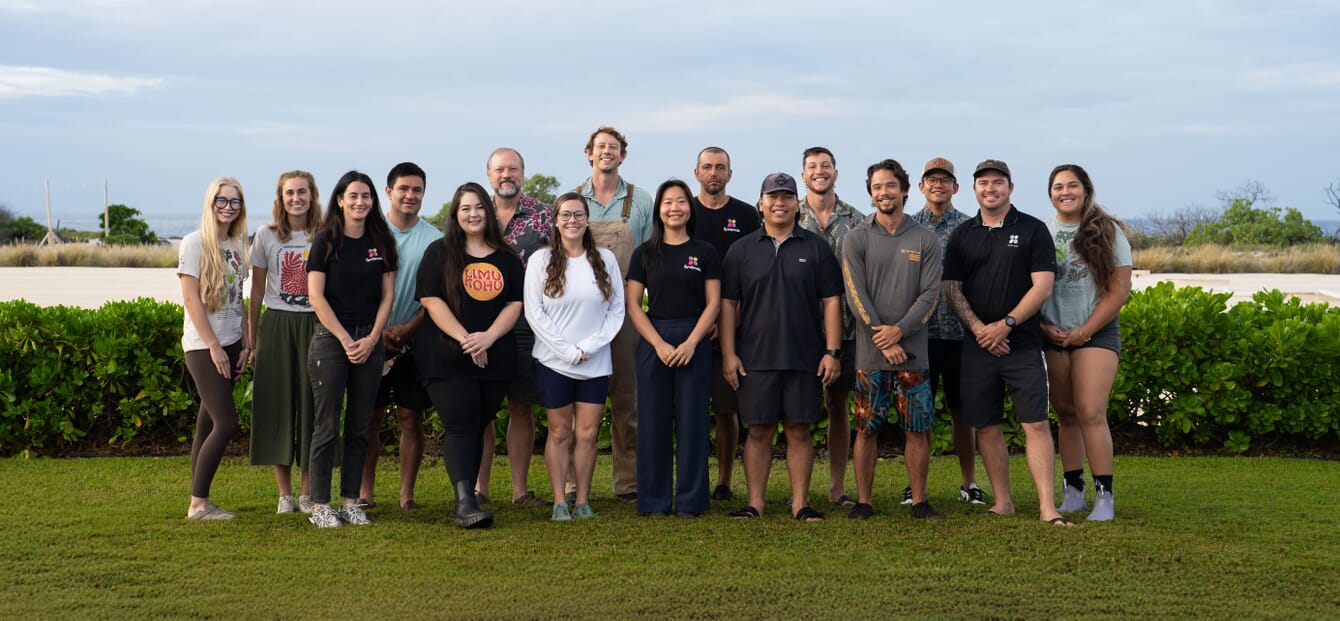
© Johnny Prehn
Verifying methane reduction claims
More than 30 peer-reviewed studies have documented methane reductions from Asparagopsis species, and Symbrosia has further validated outcomes on farms and ranches using tools such as GreenFeed, SimpleScan and laser-based gas sensing – technologies which, according to Akbay, have limitations as they remain expensive, inconsistent in field conditions and unrealistic for extensive deployment on cattle farms and ranches.
To address this challenge, and to meet the requirements for generating carbon credits through Verra (a voluntary carbon credit standard), Symbrosia has developed its own measurement tool.
“We published the first dose-dependent meta-analysis for Asparagopsis taxiformis, a tool that calculates expected methane reduction from SeaGraze using dose and feed parameters (protein, fibre, fat),” explains Akbay.
The analysis found beef cattle receiving an average dose of around 15 mg of bromoform per kilogram of dry-matter intake (DMI) were estimated have roughly 35 percent lower methane yields, while the highest doses examined – about 36 mg/kg DMI – were associated with reductions of more than 80 percent. For dairy cows, average doses of about 11 mg/kg DMI produced a more modest 17 percent reduction, with the highest dose cutting methane by just over 40 percent.
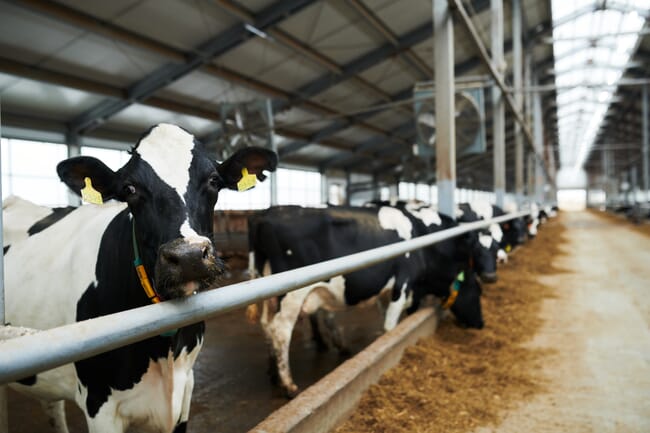
For livestock-feed suppliers watching the development of greenhouse gas-verified additives, this approach offers a practical template for scaling quantification without deploying hardware on every farm. It enables the generation of carbon credits for farmers, which can then be sold or retained for insetting, supporting carbon neutrality goals and underpinning sustainability claims.
Ecological restoration of a native species
In Hawai’i, A. taxiformis, locally known as limu kohu, is a culturally and ecologically significant native species. In early 2025, a partnership between the company and the University of Hawai‘i Sea Grant Programme was launched to restore native populations.
For Akbay, this work is embedded in the company’s core values.
“Restoring native limu populations strengthens coastlines, biodiversity and food webs – and Symbrosia’s work would be incomplete without honouring this responsibility. We cannot commercialise a species without protecting its wild lineage,” she says.
Through this restoration project, Symbrosia is also able to invest in slower, foundational research, such as genomic mapping, long-term phenotyping and heat-tolerance studies, which would not fit within a typical venture-backed timeline.
“Selective breeding and advanced strain development have the capacity to reduce cultivation costs by 50 to 70 percent, increase bromoform consistency and improve product quality – but these breakthroughs require patience, iterative testing and ecological stewardship,” notes Akbay, adding that it can take five to ten years to obtain such information.
The programme allows Symbrosia to conduct rigorous scientific work while maintaining clear ethical boundaries between wild populations and domesticated lines.
“The model protects the science, the species, and the future of our coastlines – enabling the kind of foundational research that unlocks major commercial advantages down the line, while honouring the responsibility we have to Hawai‘i’s native ecosystems,” Akbay explains.
Currently, the main bottleneck to scaling is access to finance.
“The technology risk is gone, the economics are proven, and demand from producers is building. We are now in active dialogue with strategic and institutional partners to finance the next wave of production,” says Akbay. The team is aiming for the commissioning of a 15-acre biorefinery in 2027.
Symbrosia has also noted a shift in investor expectations since 2023. According to Akbay, investors are no longer swayed by “climate potential” alone, and instead scrutinise unit economics, scalability, IP defensibility and clear regulatory paths.
“Fortunately, Symbrosia has matured into precisely that profile,” concludes Akbay.
*Symbrosia is part of Hatch Blue's investment portfolio, but The Fish Site retains editorial independence.
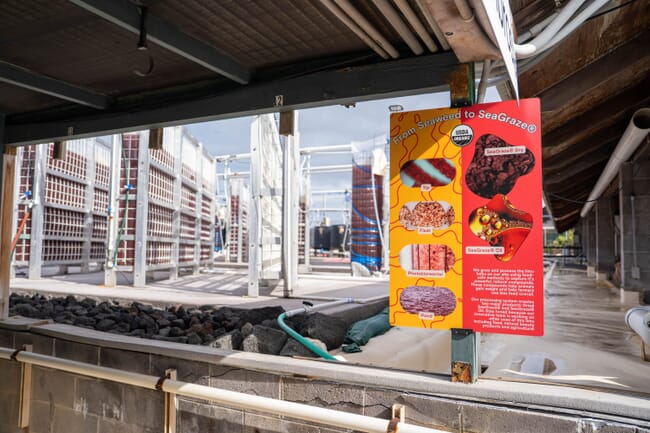
© Johnny Prehn


