© Streekvis
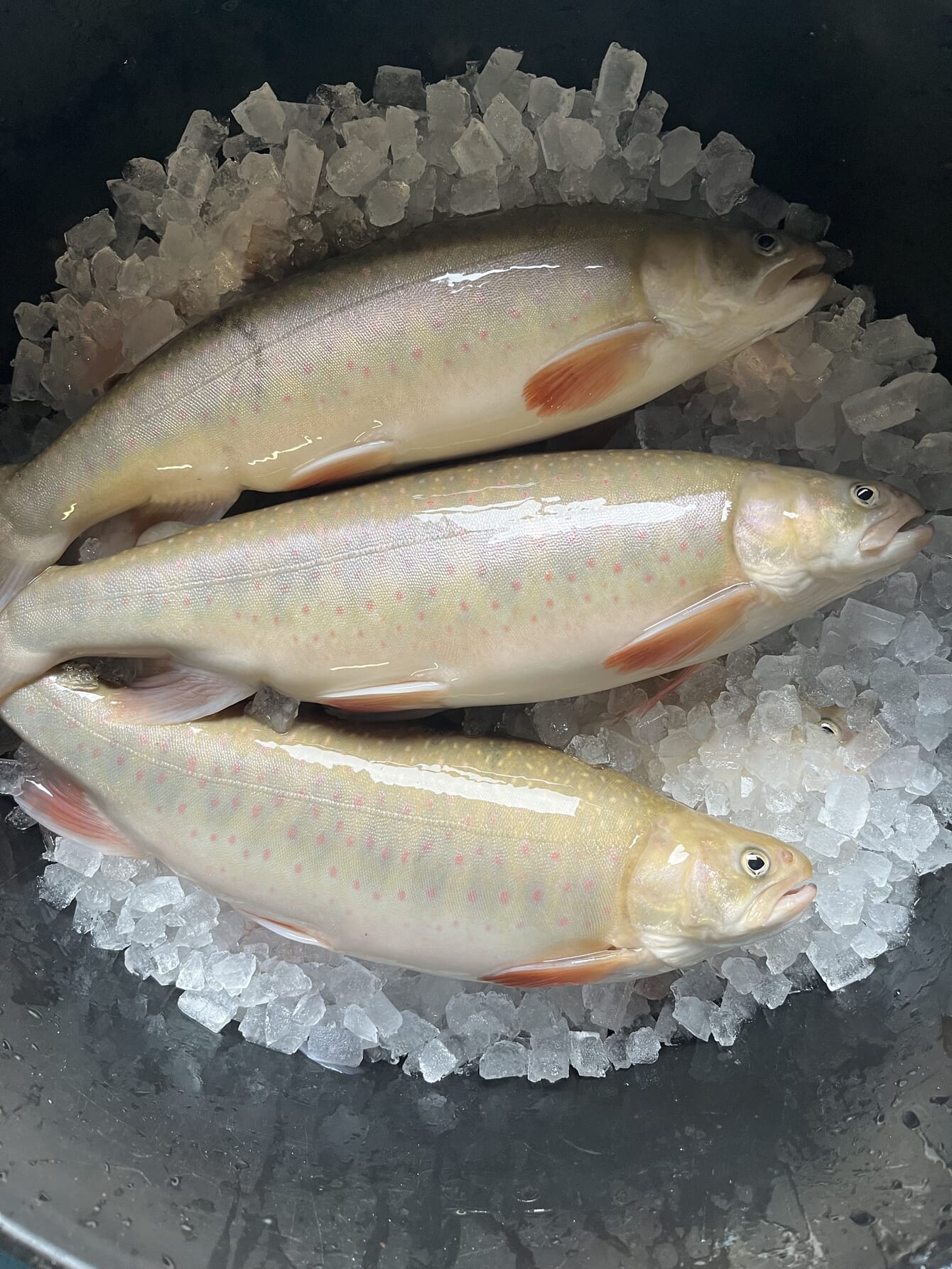
The Arctic char (Salvelinus alpinus) is a cold-water fish in the family Salmonidae, native to alpine lakes and Arctic and subarctic coastal waters in northern Europe. It was first scientifically described in the genus Salmo and it somewhat resembles a small, but beautifully speckled, Atlantic salmon.
In a small village near the river Rhine, in an area well known for its fruit orchards, we meet Jelle Busscher. He studied aquaculture in the Netherlands and after graduating in 2014, he worked for a halibut farm in Norway. He loved the wild feel of Norway and planned to settle down in the country and eventually start his own fish farm. After looking at a lot of fish species he believed the Arctic char had the most potential.
“It tastes like a cross between salmon and trout, being milder and cleaner in taste than salmon. The meat has a subtle sweetness and although generally light pink it cooks white. The texture is delicate but still firm. It is a perfect fish for food connoisseurs and besides being much appreciated in Western cuisine, Arctic char also does great in sushi and sashimi,” Busscher passionately explains.
From Norwegian fjords to Dutch rivers
Life, however, threw him a curveball and instead of building a fish farm in a remote fjord of Norway he ended up back in the Netherlands, on the opposite side of the river from his alma mater Wageningen University. Here he continued developing his concept for Arctic char and he explains, “My philosophy was to develop an honest and beautiful product and continue from there”.
Since 2019, he has operated the Streekvis farm, which loosely translates to local or regional fish in English. He constructed this farm from scratch, with the help of his father. “We had a very limited budget and sourced most of the equipment and materials second-hand from farms that went out of business. We also repurposed – cheaper – equipment from local orchards,” he recalls.
After six years of continuous operation, he still runs the Recirculating Aquaculture System (RAS) by himself with the help of a part-time employee. “When I was still learning how to operate the farm and to understand the fish, I really overworked myself running everything alone; luckily that time has passed,” he says with a smile.
RAS is perfect for producing fish locally and sustainably, but Busscher does have some concerns to share. “It keeps surprising me how mistakes in the European RAS sector are being repeated. This can be really damaging to the European aquaculture sector in the long run,” he explains. For farmers just starting out in the business he adds, “To achieve optimal performance RAS systems need to be tailored to individual species - so please do not fall for the generic RAS systems being marketed as suitable for all species”.
© Streekvis
From egg to plate
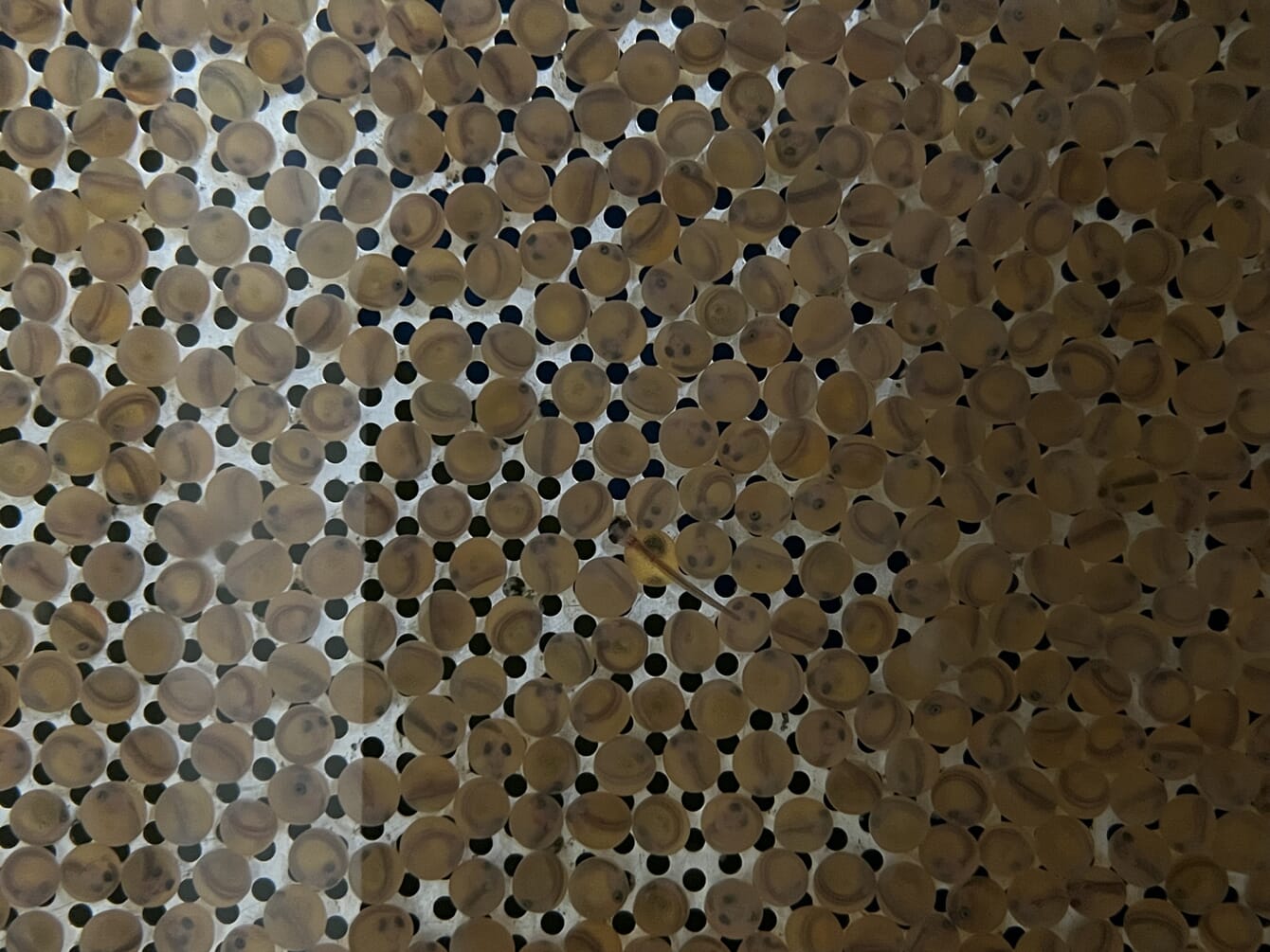
Twice a year Busscher imports a batch of eggs from a hatchery in Canada that supplies triploid eggs which contain sterile fish as to avoid early maturing of the fish.
“By the time the eggs arrive at our farm they are around 6 weeks old and will continue to develop another 3 weeks before hatching,” Busscher explains. This long egg incubation period means the juvenile fish are almost fully developed when hatched; already measuring 2 centimetres.
After a cold flow-through nursery stage of 8 weeks, at roughly 10°C, the fish are moved to larger tanks at a higher stocking density of with a minimum of 75 kilograms per m3 and a slightly higher temperature of 13°C.
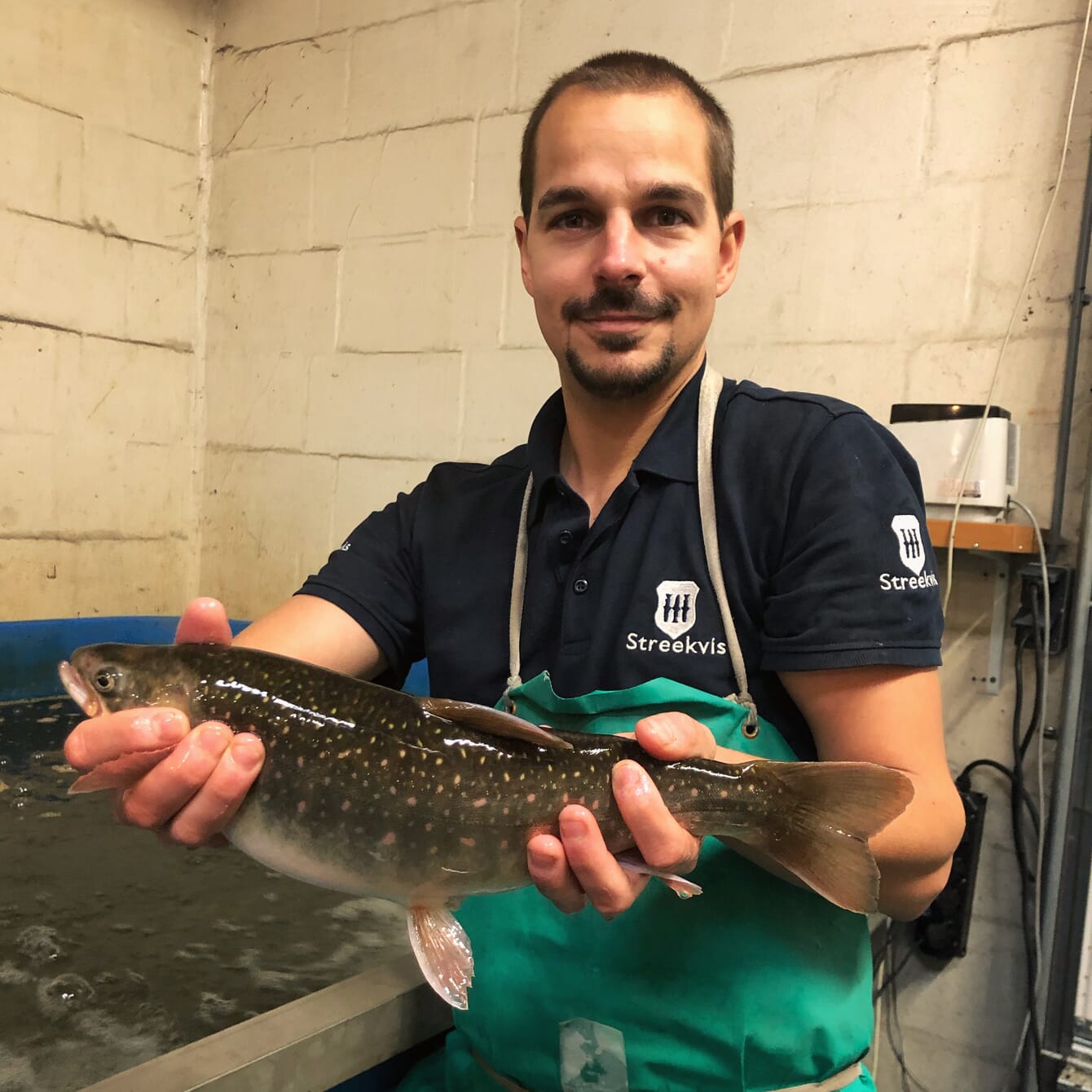
“The fish handle high stocking densities well as they naturally live in schools. They are also much more docile compared to salmon and can be easily picked up and handled,” says Busscher while picking up a beautiful fish from the tank.
During the remainder of the growout period the fish are sorted and moved to larger tanks several times. Busscher uses a straightforward approach to RAS with a drum filter to remove solids and a large trickling filter to do the rest of the job. The water is cycled 3 times per hour at 90 to 95 percent and comes from a borehole located on site.
All in all, the growout period takes 12 months at which the fish reach on average 850 grams, with fast growers exceeding one kilogram. At the moment Busscher produces 12 tonnes of fish per year and is now farming the 12th generation of fish on the farm.
Short Supply Chains
Short Supply Chains (SSC) is where the unique approach of his farm really stands out. A SSC is defined by the EU as a supply chain involving a limited number of economic operators, committed to cooperation, local economic development, and maintaining close geographical and social relations between food producers, processors and consumers. This SSC concept is quickly taking root across Europe as consumers increasingly appreciate local food and related attributes such as the place of origin, traditional production methods and processing techniques.
Busscher is a strong believer in short supply chains and has an impressive farm-to-fork approach in place.
“Working with short supply chains ensures that the story of your product stays relevant which allows you to charge a premium. It also gives you more control over which buyers you want to work with and who you want as ambassadors of your product,” he explains.
In the typical longer supply chains, farmers have little control and fall last in line in terms of negotiating power; with retailers almost always taking most profits.
Busscher explains that generally a maximum of one supply chain actor in the chain between a farm and the final consumer is accepted. “Locally produced is somewhat more open to interpretation as in the United States, for example, a radius of 500 kilometres around the farm is often accepted as local. In Western Europe however, distances are much smaller and for our farm we use a radius of roughly 300 kilometres; encompassing the Netherlands, Belgium, Luxembourg and western Germany.”
The story behind the product
Busscher’s fish come with a clear message: A sustainable and local alternative for salmon, free of any chemicals and genetically modified organisms. “Junk free!” as he calls it himself.
He markets the fish on Instagram using well-presented photos accompanied by tags like #finedinning #freeofchecmicals #dutchcharr and #michelin in the hopes of enticing both the foodservice sector and end consumers. Through social media and personally reaching out to chefs listed in the Michelin guide, he has been able to establish a wide network of clients from high-end restaurants. The remainder of the fish is sold via a dedicated seafood wholesaler.
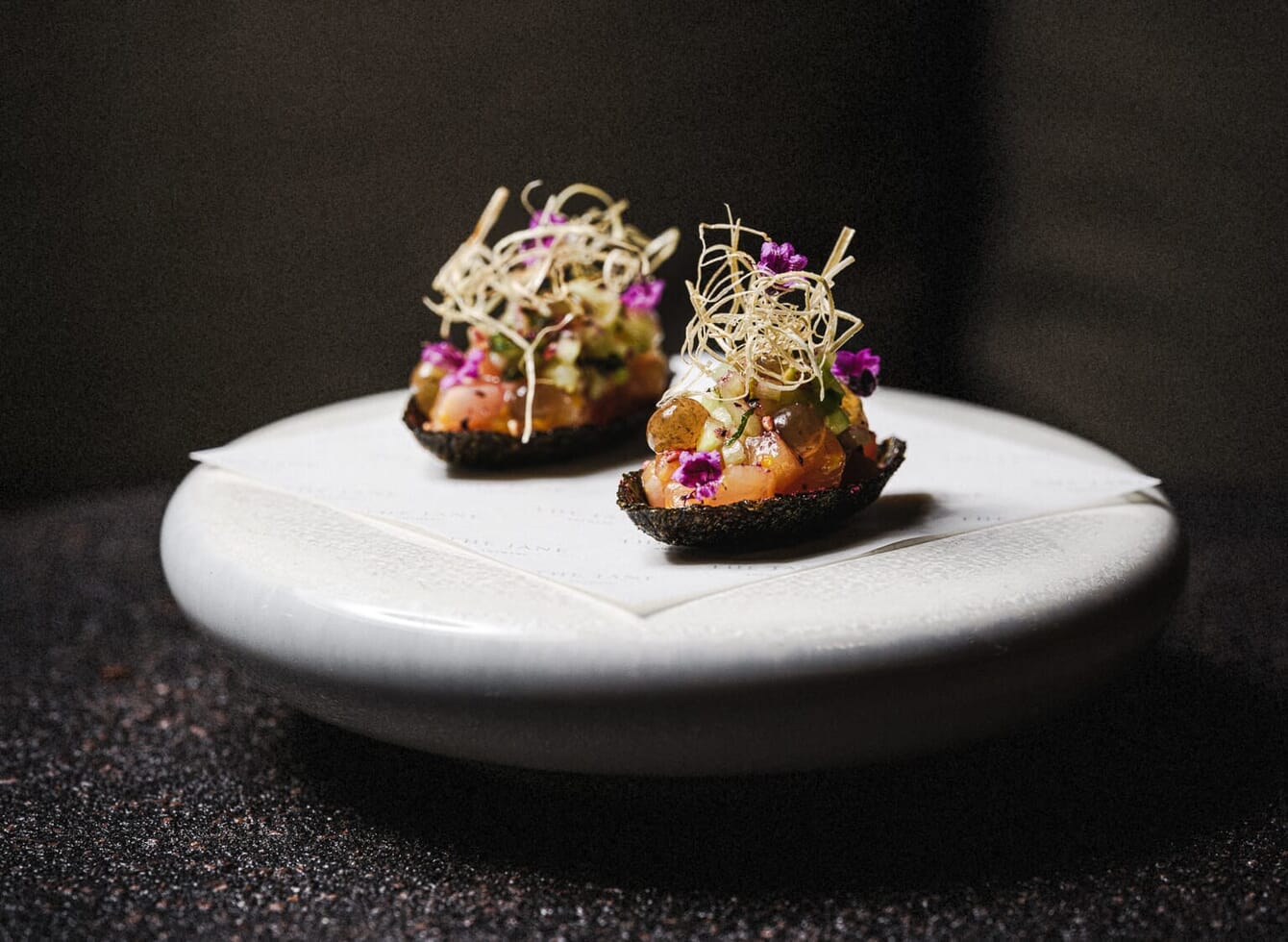
Some of his proudest collaborations include the high-end Dutch and Belgian foodservice industry. Streekvis has been served in about 20 percent of the Dutch Michelin-rated restaurants. Clients include Flore in Amsterdam, which has been recognized for its innovative and sustainable cuisine with a green star for sustainability, The Jane in Antwerp, Treeswijkhoeve in Waalre, and ‘t Nonnetje in Harderwijk, all having 2 Michelin stars.
© Streekvis
Marketing tips for novice farmers
For farmers that are interested in developing short supply chains, Busscher shares three lessons he learned the hard way. “Foremost, be critical about the story of your product. You have to make sure you can differentiate yourself from your competitors and that it is not just a story that you will have a hard time defending. You can, for example, proudly claim that you do not use antibiotics in your farm and make that your Unique Selling Point, but if most of your competitors do not use antibiotics either, what really differentiates your product and makes it stand out?”, he stresses.
Second, put a lot of focus on analysing and defining your clientele. “If you want to sell directly to consumers, your story needs to be even stronger and you will need to put a lot of time and effort into digital marketing and social media,” he says.
On the other hand, if you primarily focus on the foodservice sector you need to find a way to reach the chefs that make the decisions. “You need to find a way to put your fish under their noses and let them work with it. Especially during the first years, this takes a lot of initiative and energy; do not underestimate this because the fish won’t sell themselves!”, he continues.
“Last, you need to realise fish farming and building a market takes time, mentally and financially you need to be able to handle this. Once you have a name in the business it will become easier.”
A bright future for Dutch char
Busscher is optimistic about the future of Dutch char. His 12-tonne farm has been profitably operating for two years now, “Without cutting corners in terms of feed, stocking densities and animal welfare to increase our margin and instead sticking to our original mission”, he adds. He has been steadily progressing on his plans to bring his farming concept to the next level.
“All drawings, calculations and plans are ready for a 100-tonne farm” he proudly explains.
He believes he can sell 100 tonnes of Dutch char annually while upholding his values of producing a local, honest and tasty product – and is now seeking investors who share that vision.
© Streekvis