


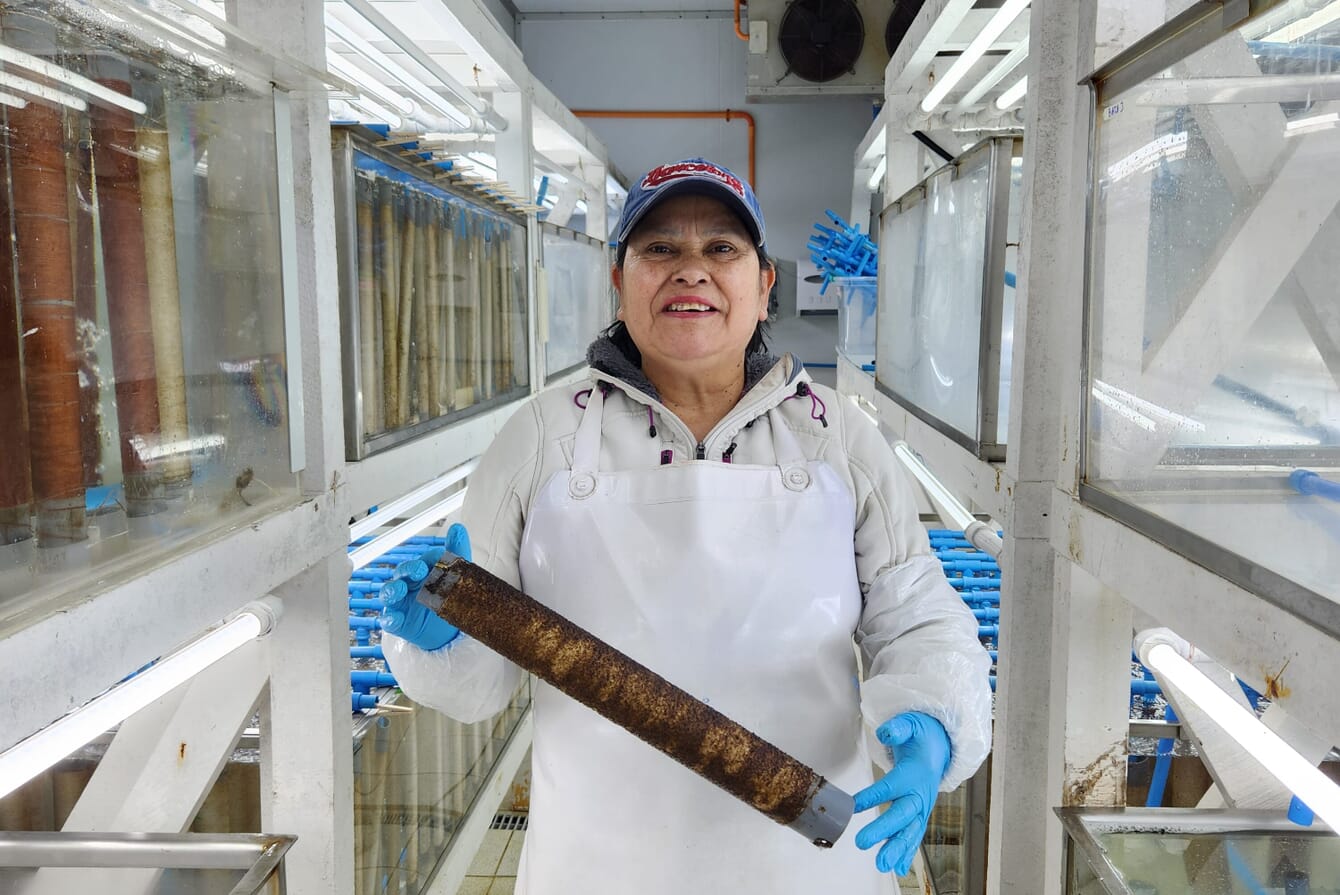
© The Nature Conservancy
Given its exceptionally long and geographically diverse coastline, stretching along 4,000 miles of the Pacific Ocean, it’s no surprise that Chile is known for its seafood. Both aquaculture and wild harvest fisheries are major industries within the country, together generating more than $8.5 billion in annual revenue and employing tens of thousands of coastal residents.
More than half of those earnings are found in salmon aquaculture, which dominates Chile’s seafood sector. In the context of the national economy, the impact is not insignificant; farmed salmon is Chile’s second largest export and accounts for more than 6 percent of the country’s annual revenue from exports. As the number two producer after Norway, Chile is also an important player in the global salmon aquaculture sector, contributing about a quarter of the total supply.
Though production is considerably smaller than farmed salmon, both by volume and market value, Chile leads in the wild harvest seaweed space as well. Unlike most other coastal areas, where seaweed cultivation has expanded rapidly and now represents the overwhelming majority of production, wild harvest is still the preferred method in Chile. Seaweed aquaculture was introduced in the 1960s and saw some growth through the 80s and 90s, but production largely stagnated at the turn of the century. During that time, wild harvest steadily increased. Yielding more than 340,000 tonnes per year, Chile is now by far the world’s wild seaweed harvester, with double the output of runner-up China. (Despite this growth, Chile ranks eleventh in total seaweed production; 97 percent of the global seaweed crop is farmed, almost all of which occurs in a handful of Asian countries.) The industry generates about $100 million, just a small fraction of salmon aquaculture’s monetary impact, but is still a vital source of jobs, with a workforce of around 75,000 Chileans.
The Environmental Cost
It's clear that salmon aquaculture and wild harvest seaweed are significant socially and economically – but the future of both industries is in question due to environmental challenges. One of the biggest issues associated with salmon aquaculture is nutrient pollution. When not managed properly, fish feed and waste increase nitrogen and phosphorus levels in the surrounding waters, which in turn can contribute to the growth of algal blooms that deplete oxygen from the ocean and threaten aquatic life. Other potential impacts include the transmission of disease to native fish populations, contamination from the overuse of chemical inputs like antibiotics and pesticides, farmed fish escaping and breeding with their wild counterparts and the reliance on wild fish stocks for feed production.
Chile’s wild seaweed industry has its own sustainability difficulties. While seaweed harvesting can be sustainable at a smaller scale, the expansion of the sector within Chile has led to the use of intensive extraction methods and overexploitation. Seaweeds are often considered keystone species for their many essential services; more specifically, they provide food and habitat for a wide variety of marine animals, sequester carbon and offset the localised effects of ocean acidification. When seaweed populations dwindle, it undermines the health of the entire ecosystem.
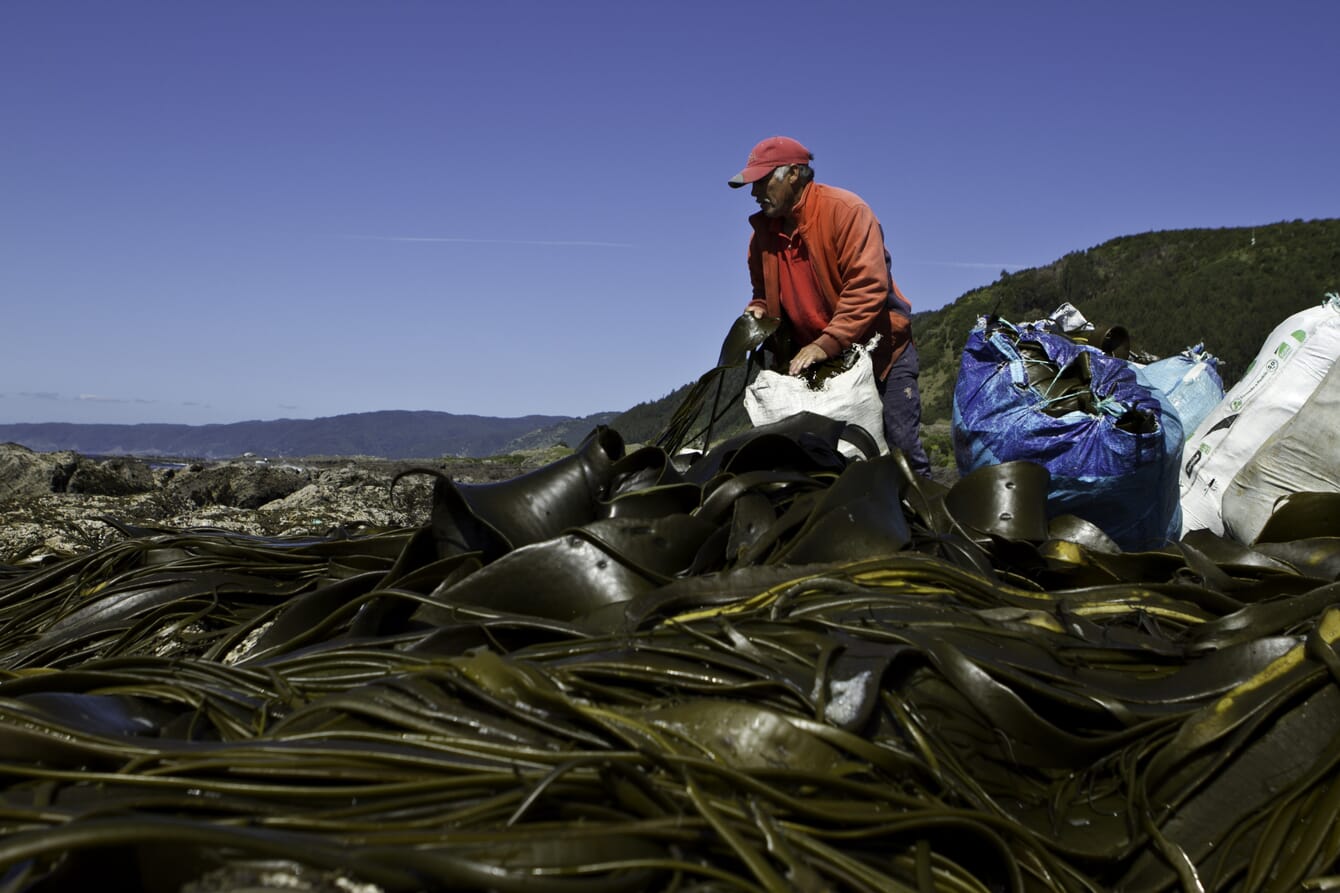
© Erika Nortemann, The Nature Conservancy
Farmed Seaweed Could Be a Solution
Considering the environmental constraints associated with farmed salmon and wild seaweed, it’s necessary to find alternative, more sustainable economic opportunities for Chileans – and of the options, seaweed aquaculture rises to the top, according to a new report co-authored by environmental non-profit The Nature Conservancy Chile and Argentina-based NGO Mayma and funded by the Walmart Foundation.
“The Walmart Foundation supported the development of this report to help improve water quality and reduce emissions near salmon farms, ease pressure on critical wild seaweed ecosystems, and unlock new income opportunities for local communities,” says Chelsea Scantlan, sustainability program officer at the Walmart Foundation.
Although farming currently accounts for only 3 percent of national seaweed production, the country’s ideal ecological conditions, familiarity with seaweed species, and increasing international demand for seaweed products mean that there is enormous development potential. This is good news, since responsible growth in the industry could deliver important social and environmental benefits.
By offering a non-extractive source of seaweed, cultivation could alleviate pressure on overexploited wild species and allow native seaweed populations to recover. Seaweed aquaculture can also mitigate some of the concerns tied to salmon farming. As it grows, seaweed absorbs nitrogen and phosphorus from the water, reducing the risk of algal blooms and deoxygenation. Furthermore, seaweed farming is an opportunity to diversify local economies and empower women, youth and Indigenous peoples who have historically played an important role in seaweed harvesting and management.
“Seaweed farming is more than a sustainable production alternative – it’s a catalyst for marine regeneration, economic growth and social inclusion,” says Juan José Donoso, Chile country director at The Nature Conservancy. “With its ability to restore ocean ecosystems while creating resilient, equitable livelihoods in coastal communities, seaweed stands out as a nature-based solution to some of the most pressing environmental and social challenges of our time.”
However, scaling seaweed farming is not without its challenges; a number of financial, institutional and regulatory barriers could complicate matters. For one, small-scale farmers often face high startup costs but typically do not have access to financing options. On top of that, the limited presence of the industry domestically means that new growers lack educational and training opportunities. Even if they overcome these obstacles and successfully bring a crop to harvest, growers face other problems further down the road. The infrastructure necessary to support a farm – hatcheries, drying facilities, processors, storage, transportation – are uncommon within Chile, and the local market for seaweed products is relatively small. Existing policy and regulation are not written with these challenges in mind, meaning there are significant gaps that could limit the industry’s growth.
TNC Chile and Mayma’s report, titled Roadmap for the Sustainable Development of Seaweed Aquaculture in Chile, seeks to identify and address these gaps in small-scale seaweed aquaculture, with the goal of improving livelihoods for seaweed gatherers and farmers and protecting marine ecosystems.
To compile their findings, the team of authors worked collaboratively with coastal communities, public and private sectors, academia, civil society organisations and national experts. “Deep collaboration with communities ensures the roadmap is not only relevant, but truly transformative,” says Mayma Azul, program director Ana Webb. “Local visions, needs, and knowledge guided every step of the process. The result is a document grounded in territory, with global reach.”
Azul led the methodological development, fieldwork and territorial coordination of the study, conducting desk research as well as interviews with seaweed farming stakeholders, while TNC Chile worked with an academic institution, a local fishers’ union, and a salmon farm on pilot farms to demonstrate the operational, environmental, and economic feasibility of community-based seaweed farming and the ability of seaweed aquaculture to mitigate the impacts of other aquaculture activities.
Through this comprehensive, community-based process, the researchers developed a shared vision, roadmap, and five-year action plan for a sustainable Chilean seaweed aquaculture industry that benefits the entire value chain. Recommendations are split across four key areas:
- Innovation, Research and Technology Transfer: To generate validated knowledge on commercially valuable species, improve the technological foundation of seaweed farming, and consolidate innovative solutions adapted to diverse territorial contexts, while developing effective strategies for transferring this knowledge throughout the value chain.
- Market Development, Value Addition, and Applications: To position Chile as a leader in differentiated seaweed-based products with value-added applications, aimed at both domestic and international markets, while promoting innovative uses of seaweed across multiple sectors.
- Governance, Public Policy and Regulation: To have adequate legislation and regulations that allow for effective governance of the seaweed value chain in Chile, ensuring administrative efficiency, legal certainty and active participation of stakeholders in sectoral governance.
- Development and Social Inclusion: To foster an inclusive seaweed farming industry by expanding access to training, technology, and resources, while recognizing and empowering the roles of women, youth and local communities in sustainable development.
Together, these resources are intended as a tool for decision-making and public policy design that fosters the sustainable growth of a diversified and resilient seaweed farming industry. Read the full report here.


