

© Vertical Lake
Jack Oyugi’s Vertical Lake is redefining what is possible in aquaculture. Built as a fully land-based, closed-loop system, it stacks tanks vertically, recycles 98 percent of its water, and produces traceable fish alongside organic plant food. Already serving hospitals, hotels and farmers across Kenya, the patented innovation is gaining global attention, including a nomination for the Earthshot Prize in 2025, and shows potential to scale across cities, arid regions and beyond.
Could you share your personal background and what led you to create Vertical Lake?
I am a two-time founder. Before Vertical Lake, I was running Biofit feeds, a company focused on animal feed production. Our biggest challenge was sourcing affordable, reliable protein, essential for feed. We tried water hyacinth and black soldier fly, but both were inconsistent or too costly. What worked was fish meal. It was high quality and reliable, but buying it from lakes meant competing with communities who rely on fish for food.
That raised a powerful question: why not bring the lake closer?
We focused on omena [also known as the Lake Victoria sardine] (Rastrineobola argentea) and tried raising it outside a natural lake. The first attempt failed, all the fish died within days. That failure pushed me to study how lakes function: water movement, oxygen, temperature, pH and natural biofiltration.
Then it clicked. Lakes work because water moves continuously and waste is pushed out and recycled. I realised I could replicate those conditions vertically. I designed a system where water flows downward through stacked tanks, is naturally filtered, and is pumped back up using solar power. That was the beginning of Vertical Lake.
What exactly is the Vertical Lake model, and how does it work in practice?
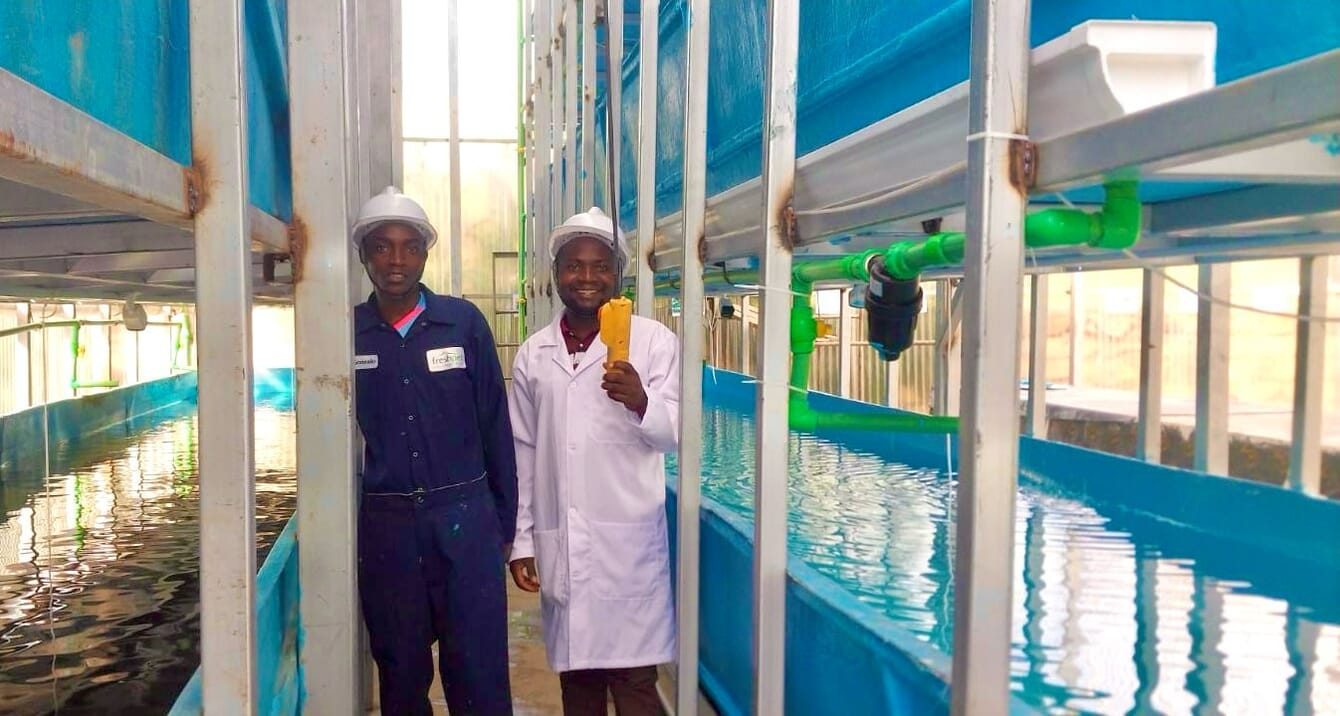
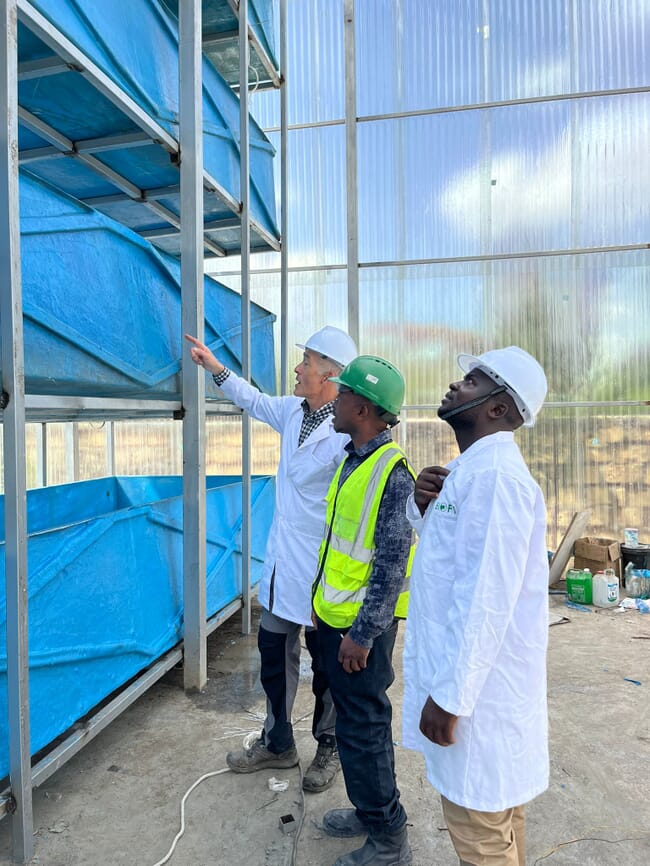
Vertical Lake is a land-based aquaculture system that grows clean, traceable, organic fish in vertically stacked tanks while recycling waste into valuable by-products. Each unit is solar powered, runs on rainwater, and uses a closed-loop design to reduce environmental impact.
Water flows from tank to tank, passing through natural biofiltration layers that break down waste. Sensors track water quality in real time, while cameras monitor fish behaviour to detect stress or illness early. No antibiotics or chemicals are used.
Because the system is land based, it avoids exposure to polluted rivers and lakes. The result is premium, organic fish, already trusted by hospitals, hotels and health focused consumers.
Each unit can be installed in small spaces, including cities or drylands. It saves over 98 percent of water and turns daily waste into BlueHarvest organic plant food. One system can feed a family and regenerate soil at the same time.
© Vertical Lake
What are your main products and services?
From a single Vertical Lake system, we are able to generate multiple high-value products, with clean aquaculture at the centre. Our flagship product is boneless, premium fish fillet. We recently began working with Greenspoon, a premium grocery store in Nairobi, and demand continues to grow.
We also process fish waste - bones, scales and skin - into collagen. This is being piloted in hospitals for wound healing, with patients recovering from chronic wounds in under a year. We are exploring skincare and nutritional products as well.
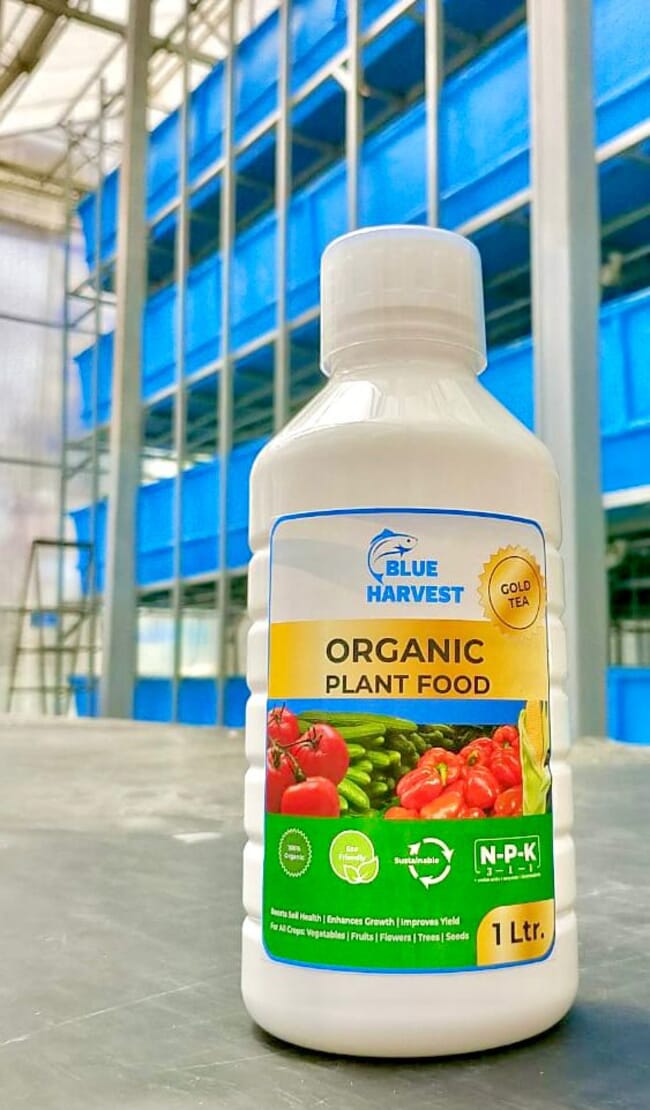
Lastly, we produce an organic plant food (organic fertiliser) called BlueHarvest using fish waste through a natural fermentation. It comes in gel and liquid forms (Gold tea). The gel supports root development, while the Gold tea boosts growth after transplanting. Farmers in Kenya use it on crops like maize, tea, vegetables and fruit. It improves drought tolerance, water efficiency and yield.
What is the size of your production unit and your current capacity?
We are currently operating in Rongai Nairobi Kenya on a compact 10m x 10m space. From that space, we can raise up to 40,000 fish per cycle, while generating four tonnes of organic plant food every month. That level of output, in such a small footprint, is equivalent to what you would get from more than 25-30 traditional ponds laid out horizontally. It shows just how efficient the Vertical Lake system is maximising both protein and biofertiliser production within a very small area.
What have been your biggest milestones so far
Proving that fish can be grown in extremely dry areas. People once said fish would not last a month here because it can go a whole year without rain. Today, our tanks are thriving using solar energy and recycled water.
The system is fully commercially ready – we scaled from basic pilot tanks to a modular system that works anywhere and produces no emissions. Our carbon footprint remains extremely low.
We have created jobs locally and supplied clean, traceable fish to the market for over a year. Over 500 farmers now use our BlueHarvest plant food – and report reducing input costs by 50 percent after switching from synthetic products and increasing production by 40 percent.
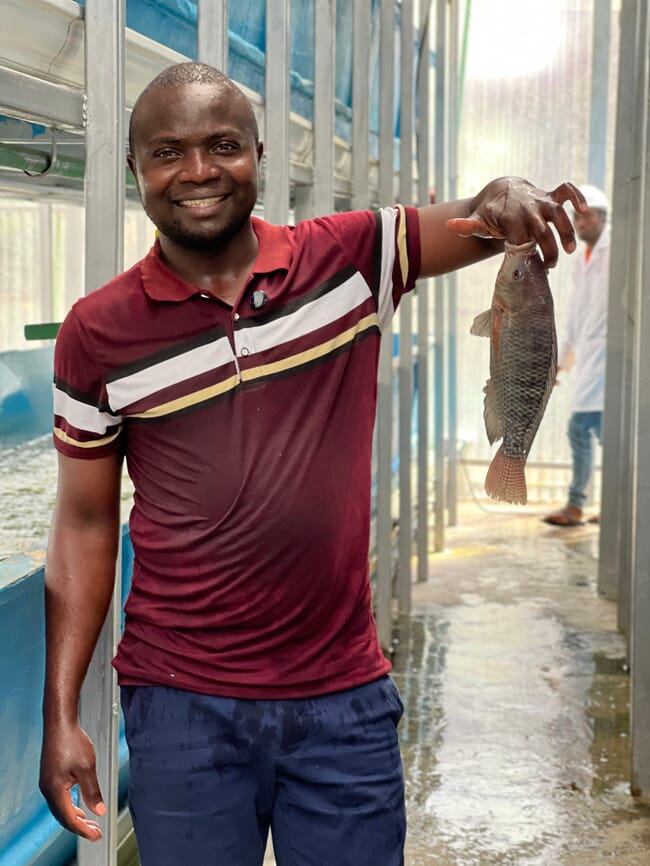
Developing our collagen product took two years of lab work, and showing good tiral results as patients are now recovering from chronic wounds; even wounds up to 20 years old recovers within a few months on collagen treatment. Growing large tilapia of about 1.2 kilos in our system was another major technical breakthrough.
© Vertical Lake
What challenges have you faced in developing or scaling the technology?
Our biggest challenge has been financing. We funded the early stages ourselves, and although we later received support from the Royal Academy of Engineering and the UK Government, delays in funding slowed our rollout. Most grant providers see the innovation but do not fully understand the concept, making it harder to secure the right support. We have had to grow organically by reinvesting revenue.
Market adoption has also been a challenge. Our fish is premium and organic, so it costs more than pond-raised contaminated alternatives. Some customers do not see the difference. Fortunately, long-term contracts are starting to come in, which improves stability.
Infrastructure is another issue. Our current location is remote with poor road access, especially during the rainy season. There are also regulatory gaps. Vertical aquaculture is new, and even government agencies sometimes struggle to categorise or license us.
From a technical point of view, the system is simple. It runs on solar and gravity. Feeding is manual, but harvesting is easy, just drain the water and collect the fish. That simplicity is one of our greatest strengths.
What is your vision for Vertical Lake in the next five to ten years?
I see Vertical Lake as a global solution, fully scaled into a commercial operation with multiple departments producing clean fish fillets, medical-grade collagen and organic plant food. But more than that, I want to see this technology in people’s hands everywhere. We are designing units of all sizes, from small models that produce 50 fish per month to larger systems generating over 10,000. These can be deployed in urban areas, drylands and even refugee camps. The goal is millions of Vertical Lakes empowering communities with food, income and sustainable farming.
Are there any organisations, or individuals who have influenced or supported your journey?
The Royal Academy of Engineering in the UK has been instrumental through funding, mentorship and visibility. I am a fellow of the Academy, and their support has helped us shape our innovation in the African context. GIZ also supported us during the early stage when the idea was still forming. We have received valuable input from the University of Nairobi. My co-founder, Dr Jez, has been central to our growth, commercialisation and go-to-market strategy.
What feedback have you received about the system?
People often say Vertical Lake is a simpler, more accessible version of RAS – easy to set up anywhere, even in small spaces. That feedback affirmed our design. One person once said, “This system cannot support fish growth.” It stuck with me and became a challenge to prove them wrong. As a founder, even doubt can fuel progress if you stay grounded in your vision.
© Vertical Lake


