© IMR
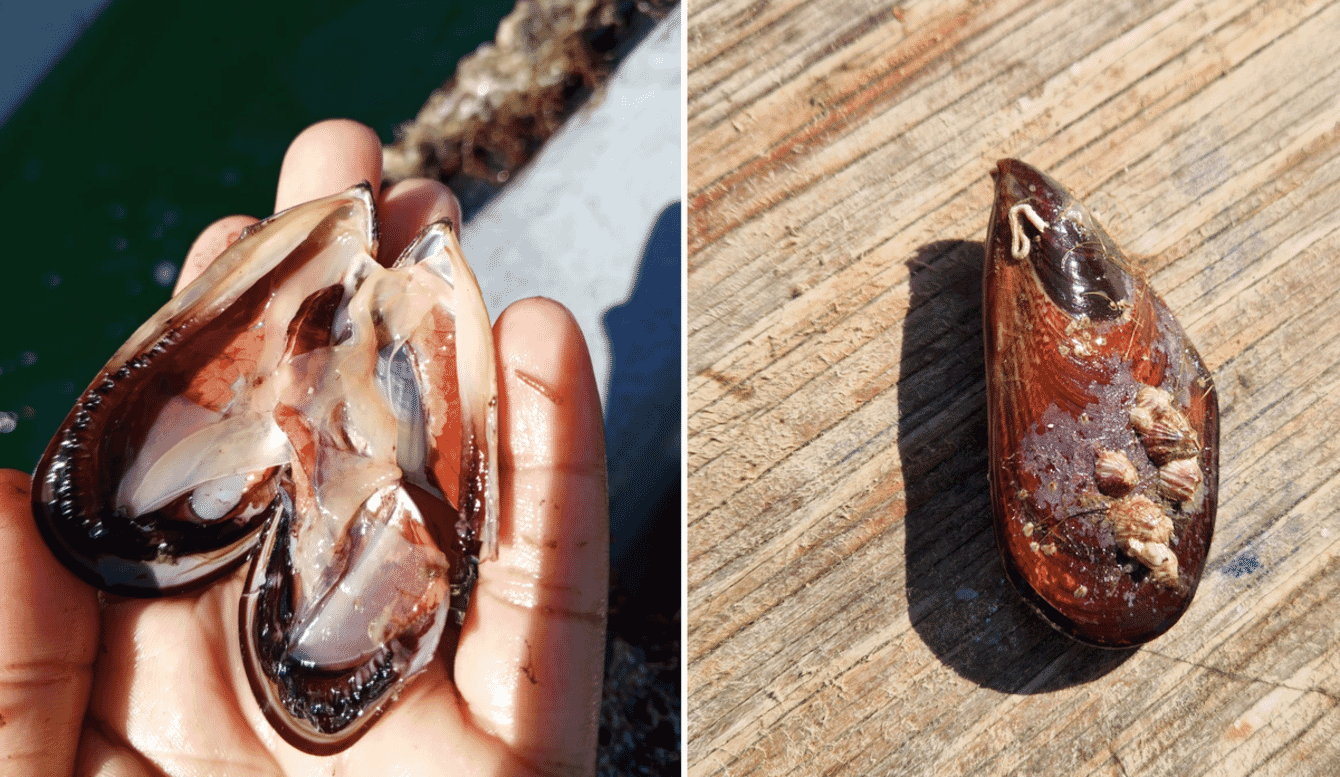
On Inhaca Island, east of the capital Maputo, several experimental facilities for cultivating seaweed and green mussels are located. Green mussel (Perna perna) is a mussel species commonly found in tropical regions. These low-trophic species are of particular interest because they have the potential to contribute to more sustainable production of food and feed resources.
“Green mussels and seaweed do not require feed, and farming can be developed using relatively simple technology. In this project, we explore whether such production could become a new opportunity for local coastal communities in Mozambique,” said marine scientist project lead Øivind Strand, in a press release.
Strand is one of several Institute of Marine Research (IMR) researchers working with the cultivation facilities on Inhaca through collaboration with institutions in Maputo. The aim is to exchange knowledge and experience with local scientific communities. The researchers examined the opportunities and challenges linked to farming green mussels and seaweed.
During the visit, IMR researchers also held training sessions on how to assess whether seafood is safe to eat.
“We looked at how to detect Salmonella, parasites and illegal veterinary drugs in fish,” said marine scientist Lucilla Giulietti.
IMR is the national reference laboratory for several areas, including analyses of bacteria, parasites and veterinary drug residues in seafood.
“That’s why it is important for us to share our knowledge, while also learning from local experience. It gives us a stronger foundation for continued collaboration,” adds marine scientist Julia Storesund.
The collaborative project is part of the Ocean for Development programme, funded by Norad. Its goal is to contribute to sustainable social and economic development, improved food security, nutrition and livelihoods.
IMR collaborates with the Norwegian Environment Agency and the Norwegian Coastal Administration, and in Mozambique with partners at Instituto Nacional de Investigação Pesqueira (INIP), Mozambique Oceanographic Institute (InOM), National Institute for Fisheries and Aquaculture Development (IDEPA) and Eduardo Mondlane University.