
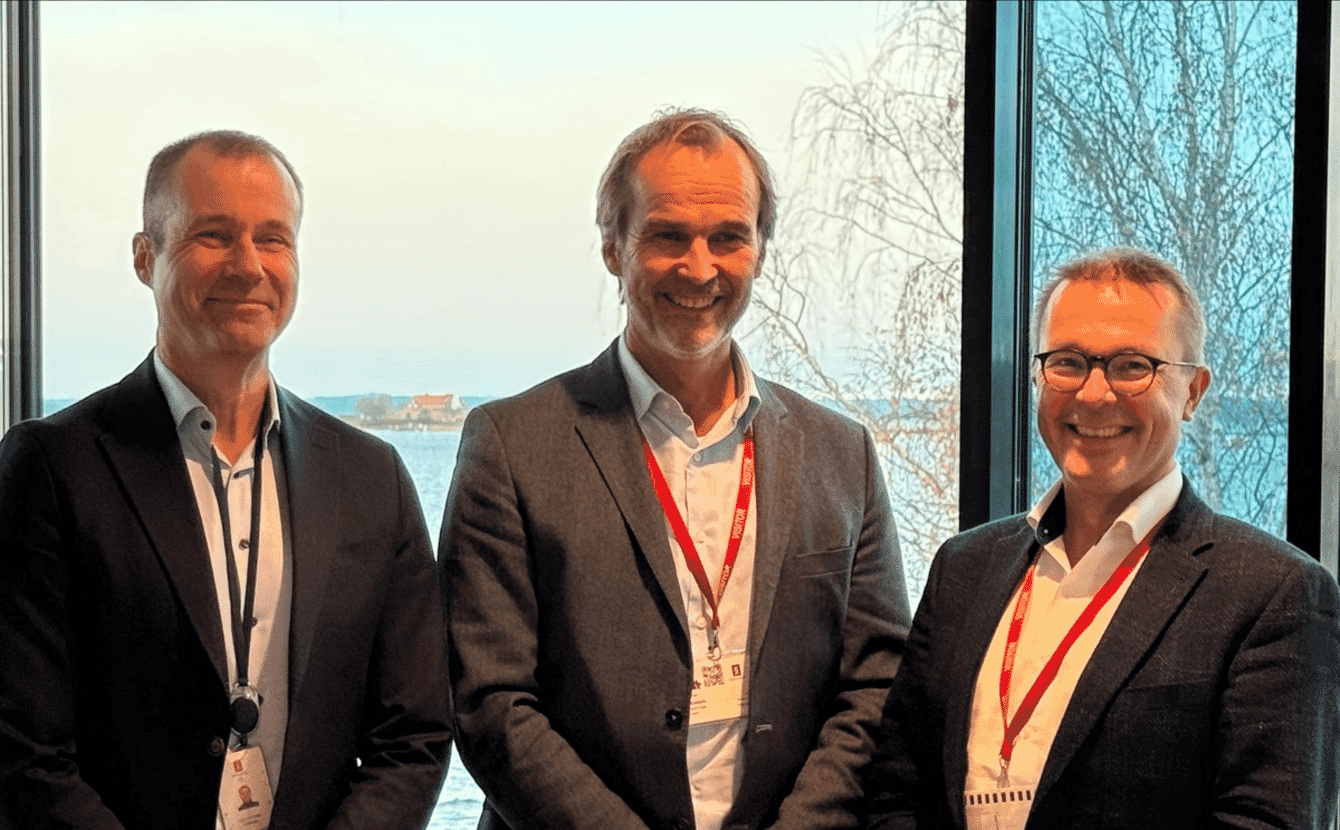
Lars Nonboe Andersen, vice president ocean science at Kongsberg Discovery; Pål Bakken, founder and CEO at SeaForester; and Børre Pedersen, sales director earth observation at KSAT © SeaForester
Over the past five decades, approximately 50 percent of global kelp forests have been lost. This decline significantly impacted fish populations, exacerbated ocean acidification, diminished carbon sequestration capacity and reduced the effectiveness of nutrient removal from land runoff and aquaculture. The new partnership aims to deliver advanced technological solutions to support effective monitoring and sustainable management of sea forests.
“Seaweed is the largest marine vegetated ecosystem on the planet - over 20 times larger than the coral reefs. We need more information about the status of this important habitat, and we need to speed up restoration actions. This collaboration is a direct response to that need and represents a major step toward enabling monitoring and restoration at a meaningful, industrial scale,” said Pål Bakken, founder and CEO of SeaForester, in a press release.
From outer space to the deep ocean
SeaForester’s pioneering restoration work has demonstrated that large-scale recovery is both technically and economically feasible, but requires improved monitoring tools to guide, verify and scale interventions.
Space data, which includes information on sea surface temperature, height, and colour collected by satellites, is already used to monitor climate and predict weather. This data will now be essential for monitoring kelp forests.
“This data helps track currents, sea level rise, and the effects of climate change, as well as monitor phenomena like harmful algal blooms and ocean pollution. We are looking forward to contributing to these important issues for marine habitat restoration, and we believe that combining satellite data with measurements from the ocean is the key to providing deeper insights,” said Børre Pedersen from KSAT.
Digital solutions for preserving life in the Ocean
Kongsberg Discovery has spent recent years developing a digital solution combining hydroacoustic sensors for ecosystem monitoring and seafloor mapping with relevant ocean measurements and metadata. The aim is to create a single solution for the sustainable use of ocean space.
“The SeaForester use case allows us to combine fractions of information into one holistic real-time information system for efficient monitoring and documentation of kelp forests' biomass and corresponding ecosystems,” said Tonny Algrøy, dales director for Ocean Science in Kongsberg Discovery.
Kongsberg has delivered a range of acoustic instruments and solutions for ocean monitoring for decades.
“By combining this with other relevant measurements, we can provide a full picture of the current situation. Then we can provide the right insight for decision-making for how to restore the marine habitat,” said Algrøy.
SeaForester is one of Europe’s pioneering large-scale kelp forest restoration actors, holding the largest permit for seaweed forest restoration.
“This unique position enables SeaForester to bridge scientific innovation with commercial-scale ecosystem recovery,” added Bakken.
The value of the world's biggest forest
The United Nations has set a target to restore 1 million hectares and conserve 3 million hectares of kelp forests worldwide by 2040. Current investments in nature-based solutions total around $133 billion per year, with projections indicating a likely increase in ocean-based initiatives. Increasing global food security, such as boosting harvestable fish stocks, is cited as a key factor for these anticipated investments by companies and governments. SeaForester is positioned to contribute significant verified data and practical experience toward achieving these global targets.
“To assess the impact of restoration efforts, accurate quantification and documentation are necessary. At present, there are limited industrial solutions available for mapping and measuring kelp forests and related marine ecosystems, highlighting a gap in the market across various sensing methods. I have great hopes for the positive effects of this partnership,” said Bakken.

