© Cybergerac, Openverse
Although nutrient starvation reduced photosynthetic efficiency, toxin levels continued to rise, revealing a hidden risk phase of harmful algal blooms (HABs). For shellfish farmers and regulators, this means that toxin risk can remain high – or even increase – when visible bloom growth has levelled off.
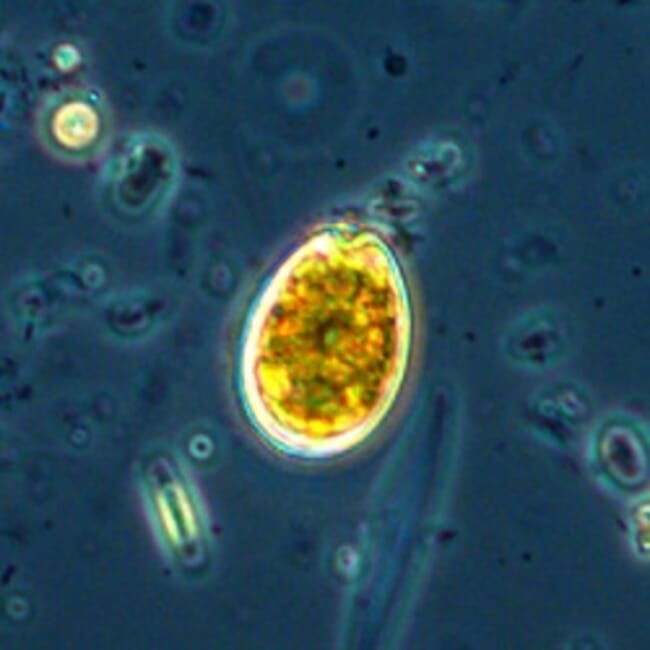
Harmful algal blooms continue to threaten coastal ecosystems and seafood safety worldwide. Among the organisms involved, the benthic dinoflagellate Prorocentrum lima is a known producer of diarrhetic shellfish poisoning toxins such as okadaic acid and dinophysistoxin 1. While earlier studies have linked low nutrient availability to increased toxin production, most have examined short-term stress responses. The effects of prolonged nutrient depletion on algal physiology and toxin accumulation remain less clearly understood.
Researchers from Incheon National University in South Korea, led by Professor Jang K. Kim, have shown that extended nutrient deprivation can significantly increase toxin content per cell in P. lima, even when cell numbers remain relatively stable. Their findings suggest that toxin risk may increase quietly under nutrient-poor conditions without obvious bloom expansion. This paper was made available online on 21 July 2025 and was published in Volume 149 of the Harmful Algae journal on 1 November 2025.
“We aim to observe changes in growth, photosynthetic efficiency, and toxin production in P. lima during the nutrient depletion period,” said Prof. Kim in a press release.
A surge in toxicity
The experiment revealed that despite a lack of external nutrients, the algae sustained growth using internal reserves. However, the internal chemistry of the cells changed dramatically:
- Okadaic acid levels per cell increased more than three-fold
- Dinophysistoxin 1 concentrations more than doubled
- Photosynthetic efficiency declined significantly over the 30-day period
Within just three hours of the final nutrient dose, the algae consumed more than 90 percent of available nitrate and nitrite. According to the researchers, the accumulation of toxins may be linked to reduced cell division during the stationary phase. As growth slows, toxins may continue to be synthesised and retained within cells rather than being diluted through cell division.
The findings highlight an important disconnect between algal abundance and toxicity. Even when population growth appears limited, prolonged nutrient depletion can enhance the toxic potential of harmful algae. For shellfish aquaculture, the results challenge monitoring strategies based solely on bloom size. “This work provides a foundation for improving the prediction and risk assessment of DSP-related harmful algal blooms (HABs),” concluded Prof. Kim.