© Peter Changtoek
During the Covid-19 pandemic, many folks were compelled to stay at home in various countries worldwide. Many people lost their jobs, and others were forced to shut down their businesses completely. However, for some others like Pastor Charles Kariuki, the disruption created an unexpected opportunity. With more time at home, he decided to try fish farming and established Njuki-ini Fish Farm in Sagana, central Kenya.
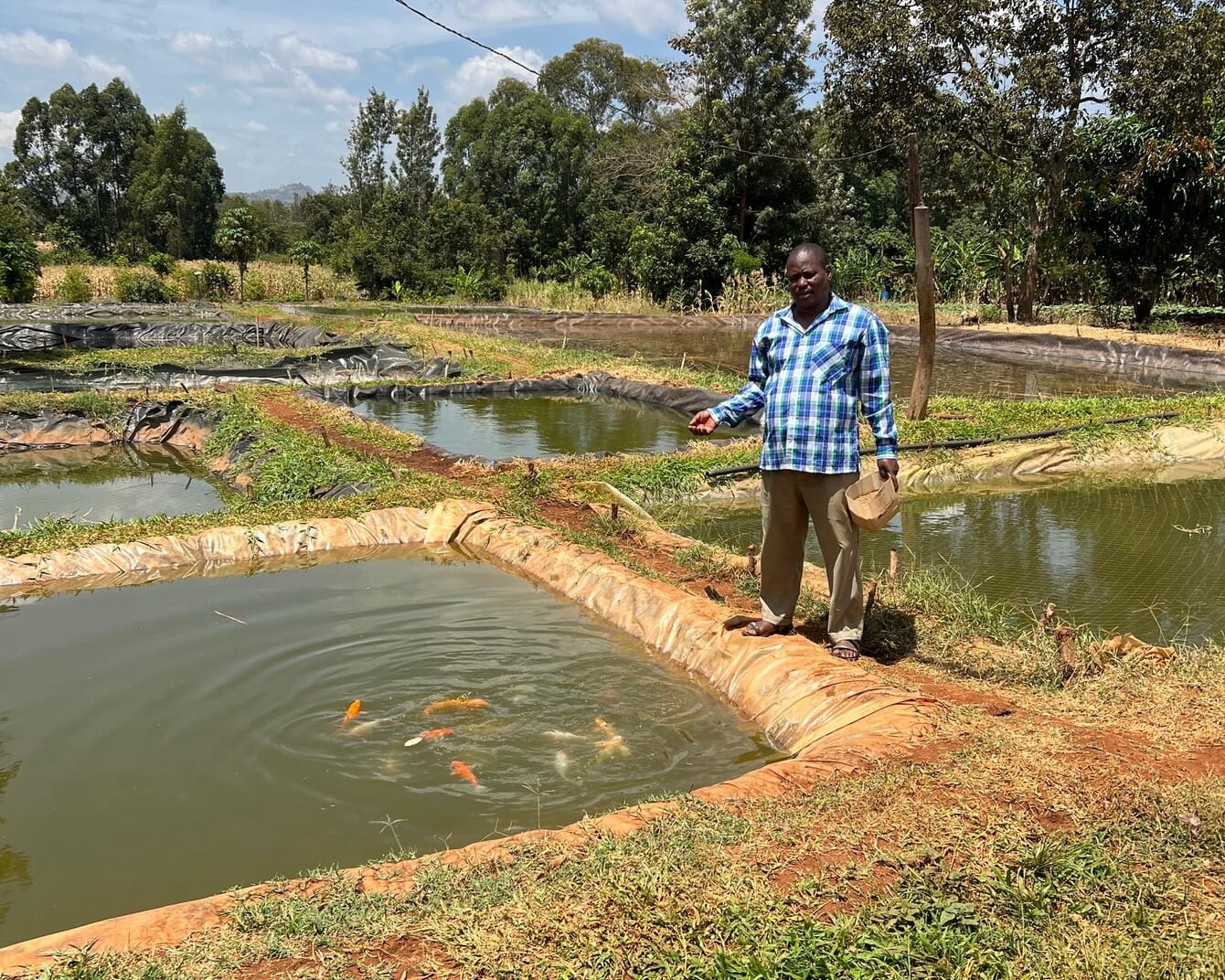
Kariuki runs the farm with his son Kelvin, the farm manager, alongside other family members and employees. The farm has 15 ponds and produces about 100,000 fish a year: approximately 50,000 tilapia, 20,000 catfish and 30,000 ornamental fish, including koi carp, goldfish, Black Moor and red carp. It also supplies tilapia and catfish fingerlings to other farmers.
What inspired you to venture into aquaculture?
The pandemic played a major role in pushing me into fish farming. At the time, opportunities were very limited, and we had to find something productive to do. Beyond that, I have always had a strong passion for fish farming. Watching fish swim is very therapeutic for me, and that passion made it easy to stay committed even when things were challenging.
Where do you source your feed and fingerlings?
We source our feeds locally from agro-vet shops, mainly Unga Feeds, which we use for all stages of growth from fingerlings to mature fish. We also breed most of our ornamental fish within the farm.
Do you do any processing of fish?
At the moment, we do not process fish. However, this is something we are planning to introduce in the future as part of expanding the business.
What species of fish do you rear, and why?
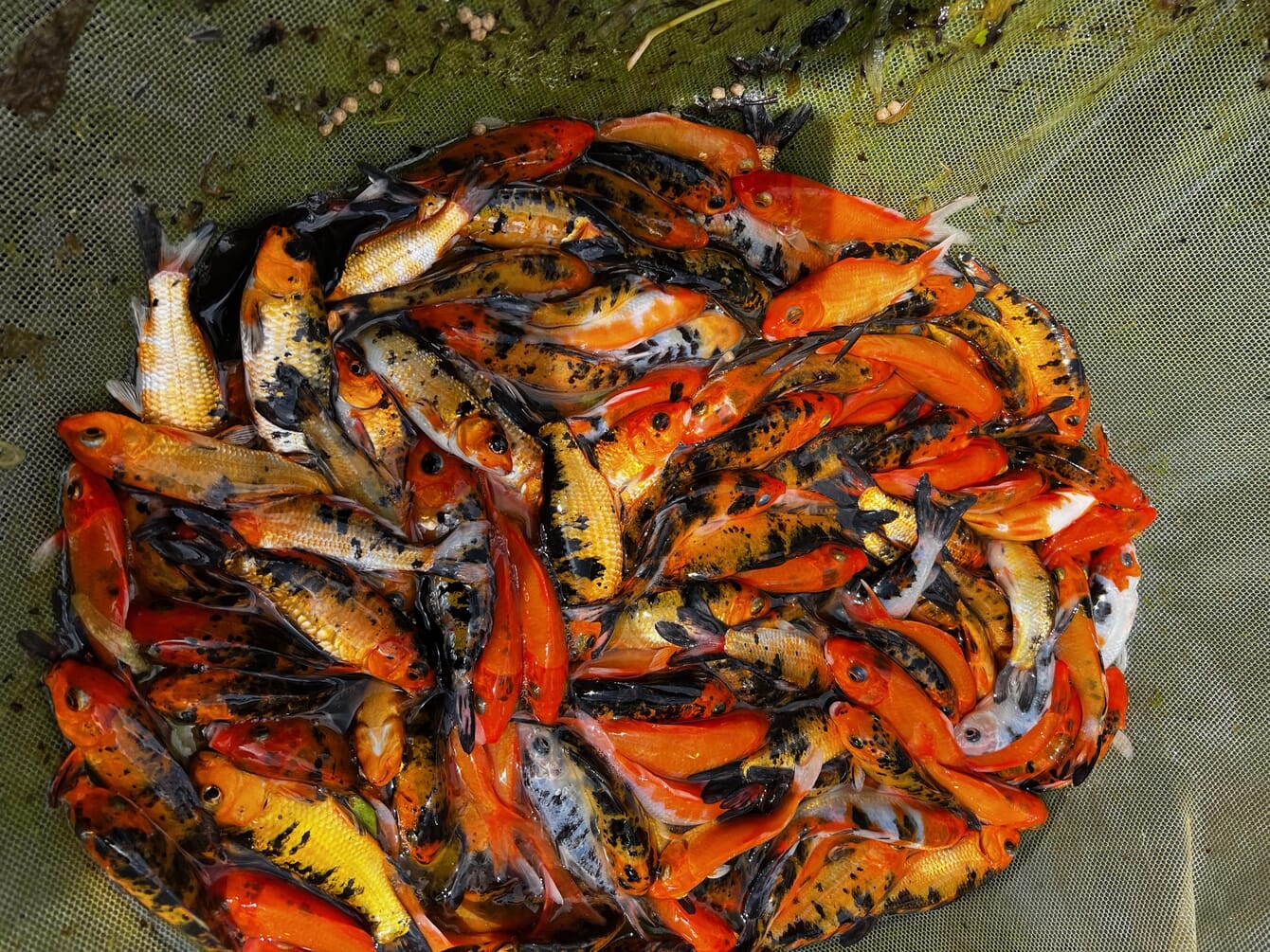
We mainly rear ornamental fish such as koi carps, goldfish, Black Moor, red carps and other varieties. The reason is that, the market for ornamental fish is wide, and demand is always high. They also mature faster, within three to five months, compared to tilapia and catfish, which take seven to eight months. We do keep tilapia and catfish, but commercially, ornamental fish form the core of our business.
© Peter Changtoek
Where do you sell your fish, and at what price?
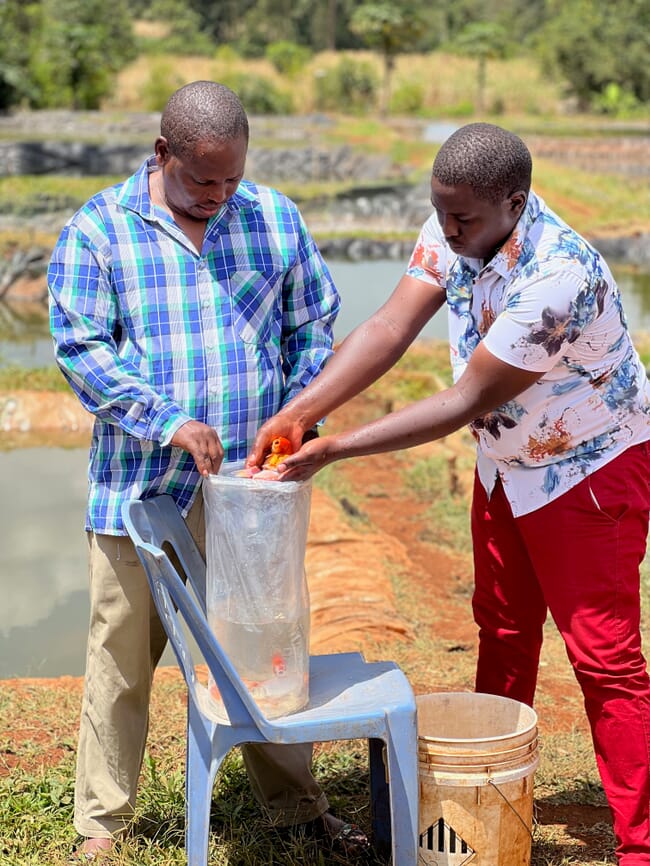
We supply customers across Kenya, including Nairobi, Mombasa, Kisumu, Nakuru and Eldoret, and arrange transportation and packaging where needed. Ornamental fish are mainly bought by aquarists, aquarium owners and pet shops, while tilapia and catfish are mainly sold to farmers and institutions. Prices range from KSh100 ($0.77) to KSh1,000 ($7.75), depending on the species, size and type of fish. We also sell fingerlings to other farmers.
What have been your key milestones so far?
We have successfully constructed several ponds, expanded production, and supported other farmers by helping them sell fish and access feeds more easily and affordably. We have also managed to breed new varieties of ornamental fish, which is a major achievement for us.
We have been experimenting with selective breeding to improve and develop attractive ornamental fish varieties. Some of the varieties we have been working with include different koi colour patterns and strains of ornamental fish. We are still developing these lines, so our focus is on improving colour, growth, body shape and adaptability to Kenyan conditions.
What are the main challenges that you still need to overcome?
The biggest challenge is securing reliable and profitable markets for tilapia and catfish. There is strong demand for fish in Kenya, but farmers can sometimes struggle to find buyers at good prices, especially when many harvest at the same time. Production costs, transportation, middlemen and limited market access can also affect profitability.
We are working to address this by creating more direct links between farmers and consumers, restaurants and institutions, rather than relying only on middlemen. Additionally, exporting and importing ornamental fish remains difficult because of regulations and logistics.
© Peter Changtoek
With the shortage of fish from Lake Victoria, do you think aquaculture can help bridge the gap?
Yes, aquaculture can play a very big role. If well supported, fish farming can significantly increase fish production and help replace the declining supply from Lake Victoria. It is a big opportunity. What farmers need is basic training and guaranteed markets. With that in place, many can benefit from aquaculture.
How do you compare your fish with those from L. Victoria in terms of taste and size?
Our main focus is ornamental fish, which grow very fast and mature within three to five months. For tilapia, the pond-raised fish are generally smaller than those from Lake Victoria. In terms of taste, opinions vary – some customers say our fish are sweeter, while others prefer lake fish. It mostly comes down to personal preference.
How did you finance your farm, and what could improve fish production in Kenya?
I have mainly financed the farm through my own investment, starting small and reinvesting income to expand the ponds, fish stocks and equipment. To improve fish production in Kenya, the government should empower more people to start fish farming and help farmers access reliable markets, especially for tilapia and catfish. Support in training, financing, and market linkage would make a huge difference.
What advice would you give to anyone who would like to venture into aquaculture?
The most important thing is to identify your market before you start. Many farmers keeping tilapia and catfish struggle because they have fish, but no ready market. Ornamental fish have a better and more reliable market, but even then, proper planning is key.
Where would you like the farm to be in future?
Our goal is to become the largest ornamental fish farm in Kenya and East Africa, while creating employment opportunities for young people. For tilapia and catfish, customers already buy fresh fish directly from the farm, but we plan to open an eatery where they can select fish and have it prepared and served on-site. This would create another market for our fish and additional employment opportunities.