

© Greenwave Aotearoa
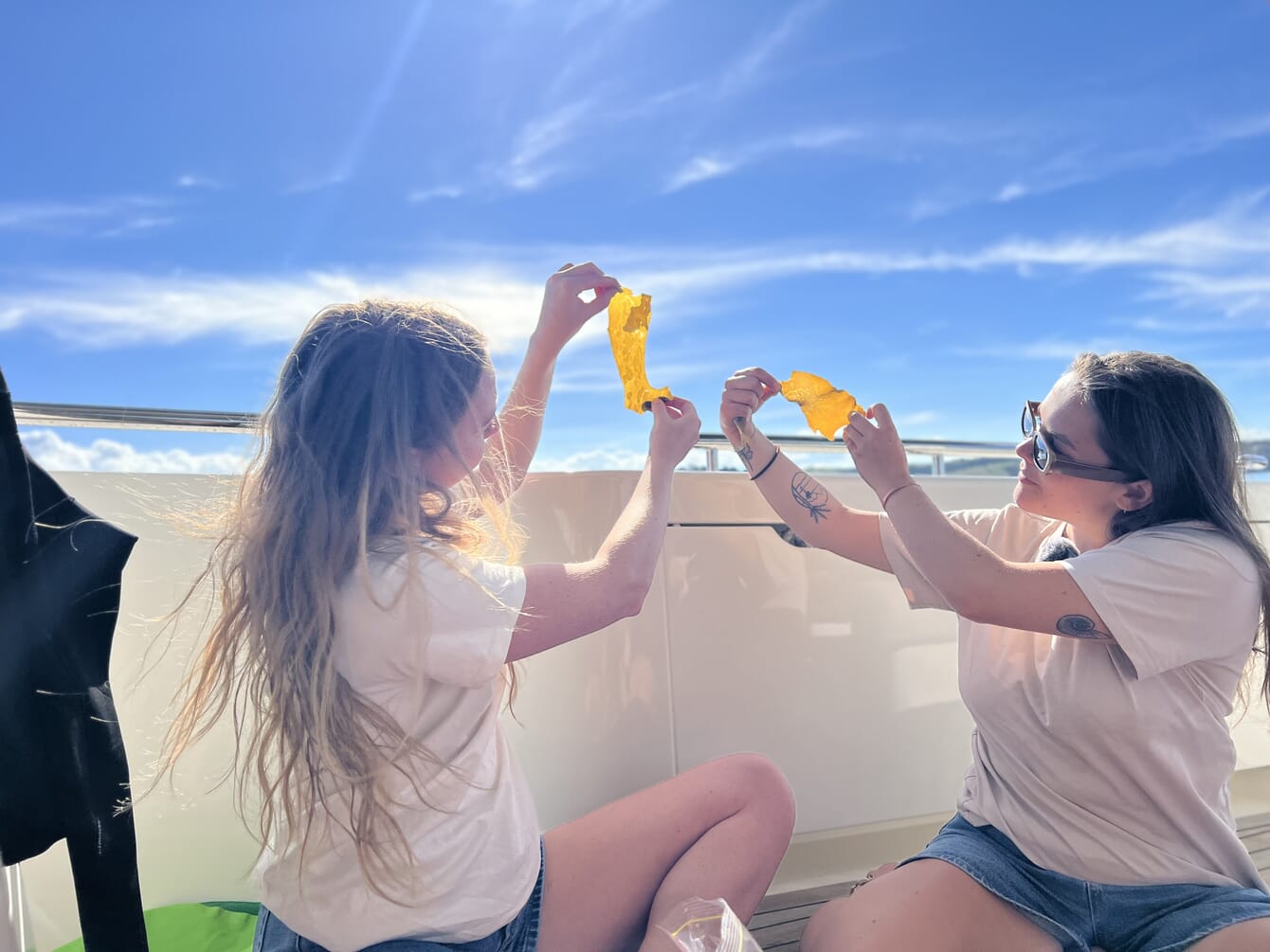
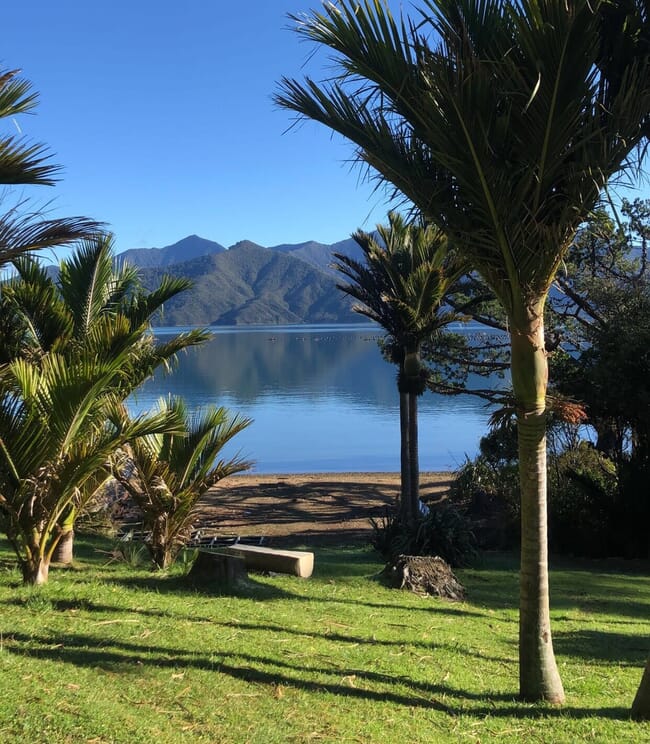
There was a brief time when Huna Hough thought growing up without Wi-Fi in a boat-access-only South Island bay was lamentable. Her family live in the Marlborough Sounds in a historic homestead where guests can arrive only by boat and are introduced to the animals, including those that live under the sea.
“It's a very special place – especially in the Sounds itself. It's very peaceful, surrounded by native bush and with a beach, and we have lots of animals and horses so I spent a lot of time outside. Sometimes you were like – ‘Oh, I just miss the internet.’ But I now realise just how special that was,” says Hough.
Hough and her siblings dived from a young age, using kayaks and little boats, and she developed a strong interest for stingrays through snorkelling there. She also developed a deep appreciation for seaweed.
From the Malborough Sounds to the hatchery
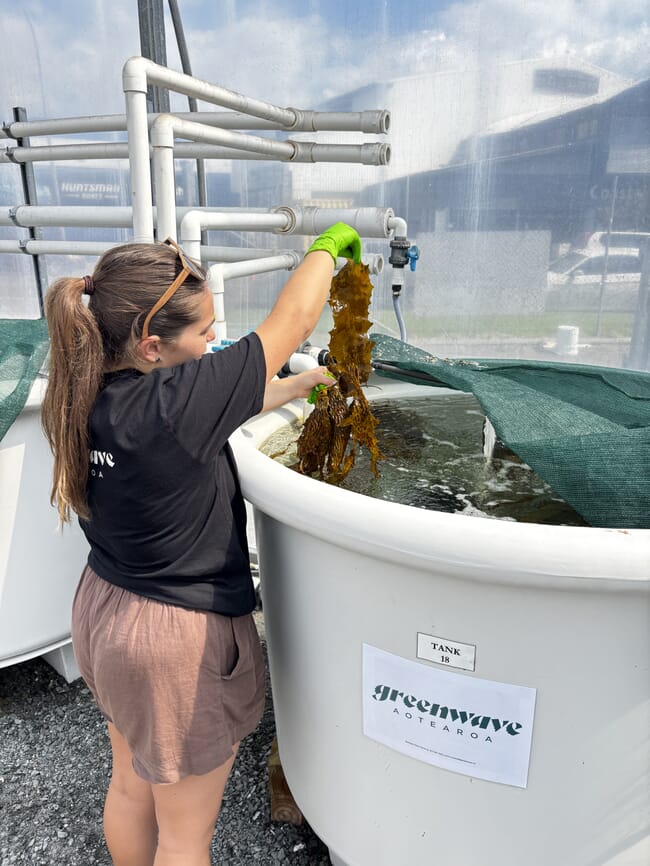
Hough is now part of a small team including colleague Georgia Wilson, 23, dedicated to growing native seaweed with Greenwave Aotearoa, a venture of Ocean Regeneration Aotearoa (ORA). The team has a seaweed hatchery operation at the University of Waikato Coastal Marine Field Station in Tauranga and at SEA LIFE Kelly Tarlton’s aquarium in Auckland, exploring the potential for native seaweed commercially, as well as for restoration by ORA.
Greenwave Aotearoa is now exploring partnerships with cosmetic companies, product developers, impact investors and research organisations interested in helping scale native seaweed cultivation and ingredient development in Aotearoa. For the company, the opportunity sits at the intersection of regenerative aquaculture, biotechnology and premium natural products – with the potential to create both environmental and economic value from healthier marine ecosystems.
© Smith
Restoring kelp forests
Hough and Wilson are helping to build a growing body of scientific research aimed at restoring one of Aotearoa New Zealand’s most important marine habitats: kelp forests dominated by Ecklonia radiata. The species underpins reef biodiversity in many regions, but pressures such as sedimentation, warming waters and grazing imbalances have reduced recruitment success, particularly in areas like the Hauraki Gulf and parts of the Marlborough Sounds.
At the centre of the challenge is the kelp life cycle itself. Kelp alternates between a large, visible sporophyte stage and a microscopic gametophyte stage. It is this early, microscopic phase – where eggs and sperm are produced – that represents a critical vulnerability.
While gametophytes can persist vegetatively under some stressful conditions, key processes such as gametogenesis and early sporophyte development are more sensitive to environmental stressors. If conditions such as light and temperature are not suitable, gametophytes may not be triggered to reproduce.
“I’ve always loved seaweed,” says Hough, “but working with it at this level makes you realise how delicate those early stages are and how easy it is for things to go wrong.”
Understanding and overcoming this bottleneck is now a primary focus of restoration science. One of the most promising approaches being trialled is “green gravel” – a method developed internationally and adapted locally for New Zealand species and conditions.
The concept is relatively simple: small stones are seeded with kelp gametophytes in a controlled environment, allowing early development to occur before deployment. These “living substrates” are then distributed across degraded reefs, where they can establish into juvenile kelp and, eventually, mature forests.
Testing green gravel
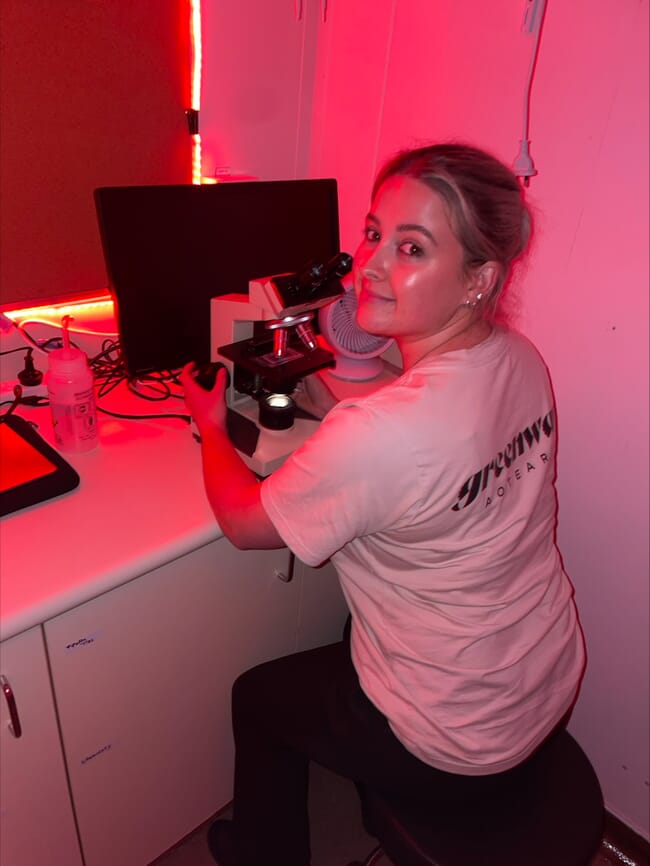
At Greenwave Aotearoa’s Tauranga hatchery, Hough and University of Waikato (UoW) researchers Rebecca Lawton along with Beth Ross have been culturing Ecklonia radiata gametophytes sourced from Hauraki Gulf broodstock. Trials have focused on optimising the conditions required for successful settlement and growth on gravel substrates.
A key insight from this work has been the role of light. Early-stage gametophytes perform best under low-light conditions, which appear to reduce stress and improve attachment success. Once established, increasing light intensity accelerates the transition into the sporophyte stage.
© Smith
This dynamic approach to light management reflects a broader shift toward fine-tuning environmental variables to improve restoration outcomes. While traditional green gravel methods rely on a hatchery-based nursery phase, ongoing research led by UoW marine ecologist Lawton is pushing the boundaries further through direct seeding techniques.
Instead of holding seeded substrates in tanks for extended periods, gametophytes are sprayed directly onto gravel or other materials and deployed into the ocean within hours.
The feasibility of this approach lies in the biology of kelp itself. Gametophytes are capable of rapid attachment, using both physical anchoring structures and biochemical adhesives. Under some conditions, adhesion may occur in as little as 30 minutes.
“Traditionally, you’d keep seeded substrates in still water for 24 hours or more to ensure they attach,” explains Lawton. “What we’re testing is whether we can shorten that window and deploy them almost immediately into real-world conditions.”
If successful, this approach could significantly reduce the infrastructure required for restoration. Hatchery space, time, and labour are major cost drivers in conventional methods, particularly when dealing with thousands of individual substrates that must be carefully managed to avoid stacking and shading.
By bypassing or minimising the nursery phase, direct seeding could make kelp restoration more accessible, not only to researchers, but to community groups, indigenous iwi (tribal groups), and coastal stakeholders.
Alongside seeding methods, Hough, Ross and Lawton have been investigating how different substrates and deployment timings influence outcomes. Rather than focusing solely on gravel size, current trials are exploring material types to assess how different surfaces affect attachment success, durability, and ecological integration.
Timing is equally critical. Determining how long gametophytes need to remain undisturbed before deployment will help define practical protocols for field application. These variables may seem incremental, but they are essential for translating laboratory success into scalable, real-world restoration.
From restoration to products
Alongside the work in restoration, the team is building momentum for value-added products from New Zealand seaweed. Greenwave Aotearoa is interested in entering the cosmetics space with ingredients derived from New Zealand native seaweed. This is where research assistant Georgia Wilson’s seaweed work is making an important contribution.
Wilson recently graduated with a Bachelor of Science majoring in marine biology and quickly started thinking about how marine resources like seaweed can be used in cosmetics and sustainable products. Wilson is currently based in the SEA LIFE Kelly Tarlton’s aquarium in Auckland, where a small hatchery allows her to explore her passion for using marine ingredients in cosmeceuticals.
“It feels like such a full circle moment that I’m actively contributing to that space – learning how these ingredients are developed, sharing ideas, and watching my two interests, marine biology and cosmetics, come together,” explains Wilson. “Seaweed has so much potential - environmentally and commercially. And I think New Zealand is waking up to the reality of our ecosystems and the need for recovery.
Returning to the Marlborough Sounds, Hough sees firsthand the changes in her home environment. Increased sedimentation from surrounding land use, combined with rising water temperatures, has altered conditions for marine life, including kelp.
“Pelorus Sound is really battling,” she says. “There’s a lot of sediment, and it’s getting warmer. It’s hard for seaweed to grow in those conditions.”
Such observations align with broader research highlighting the cumulative impacts of land-based activities and climate change on coastal ecosystems. In many cases, natural recovery may no longer be sufficient, requiring active intervention to re-establish ecological function. This work aims to move beyond research-scale trials toward models that can be adopted more widely.
“If the materials and techniques are available,” says Lawton, “people could potentially seed substrates themselves and deploy them as part of local restoration efforts.”
By reducing technical and financial barriers, approaches like direct seeding and simplified green gravel systems could help restoration move beyond small trials, although field performance will depend on local conditions and further testing.
Researchers are clear, however, that no single tool will solve the problem. For those working in the field, there is a sense that while the challenges are significant, progress is quietly building.
“It can feel overwhelming,” says Hough. “But when you start meeting people working in this space, you realise how much is actually happening, how many people care and are putting in the effort.”
As research progresses, Greenwave Aotearoa hopes the combination of ecological restoration and high-value applications such as cosmetics, nutraceuticals and biomaterials will encourage greater collaboration with businesses, researchers and investors ready to support the next stage of New Zealand’s blue economy.
© Greenwave Aotearoa


