

© Peter Changtoek
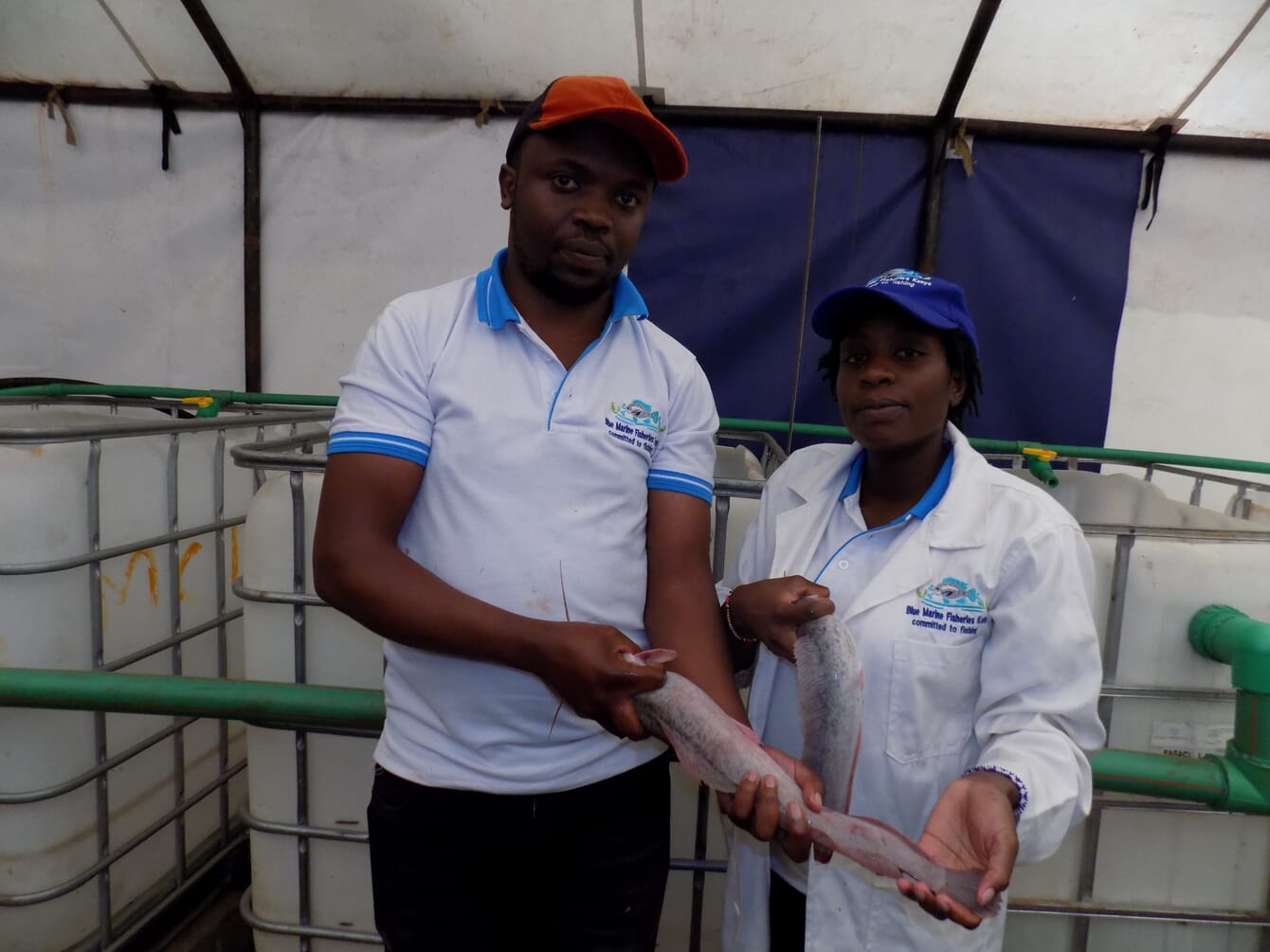
Peter Njoroge Ngugi, 30, who studied for a diploma in 3D animation and graphics design, used to operate a business in Kenya, but when it ran into difficulties, he was forced to shut it down, finding himself jobless. He decided to try aquaculture, and the venture he built is now his source of livelihood. He is the founder and chief executive of Blue Marine Investments, a company focused on aquaculture production. He runs several fish farms with his wife Lynne Wambui Mungai, 25, who holds a BSc in biochemistry from Kenyatta University and serves as the company’s COO.
Tell me about your journey in aquaculture.
It all began one morning when I found myself jobless, having just closed down my previous business. I used to collect and sell glass bottles to recycling companies that specialised in producing glass packaging for beverages. Unfortunately, when these companies significantly reduced their buying prices, the business was no longer sustainable, and I was forced to shut it down. While wondering what to do next, I started scrolling through Facebook to see what opportunities were out there. That’s when I came across a post from a mzungu (foreign national) living in Nanyuki, who was looking to buy tilapia fingerlings. Without hesitation, I commented that I had them available. He quickly responded, saying he needed 10,000 fingerlings.
Immediately I contacted a few local suppliers I found online, and by good luck, I came across one selling fingerlings for Ksh5 ($0.038) each. I called back the buyer and quoted a price of Ksh15 ($0.116) per piece, requesting a deposit to secure the order. He promptly sent a deposit of Ksh50,000 ($387), which I used to purchase the stock. Within two days, I delivered the fingerlings to him and made a profit of Ksh100,000 ($775). Encouraged by the success, I started posting about fingerlings on local online marketplaces. In my second week, I received another order and made a profit of Ksh35,000 ($271). That’s when I realised there was a serious gap in the market and a growing demand for quality fingerlings. I decided to officially register my business under the name Blue Marine Investments.
Over the years, we have leased several fish farms across different regions, all operating under the name Blue Marine Fisheries Kenya. In the five years since, the business has grown to cover three areas: fingerling production, farmer training and grow-out. To create a ready market for the farmers we supply, we opened a fish outlet in Ruaka called Blue Marine’s Kitchen, and we plan to open similar outlets in other major towns. We’ve also introduced a buyback programme, where we purchase mature fish from farmers who initially bought fingerlings from us. We then supply the harvested fish to local restaurants and provide home deliveries.
What inspired you to venture into aquaculture?
We were inspired to venture into aquaculture by the growing demand for fish in Kenya and the need to provide a sustainable, affordable source of protein. As more people embrace healthy eating, the demand for fish keeps rising, yet supply remains low, especially in Central Kenya. Seeing this gap, we aim to make quality fish more accessible while supporting the government’s food security agenda. Beyond business, our goal is to promote nutrition, create jobs, and empower local communities.
What is the scale/capacity of your farm?
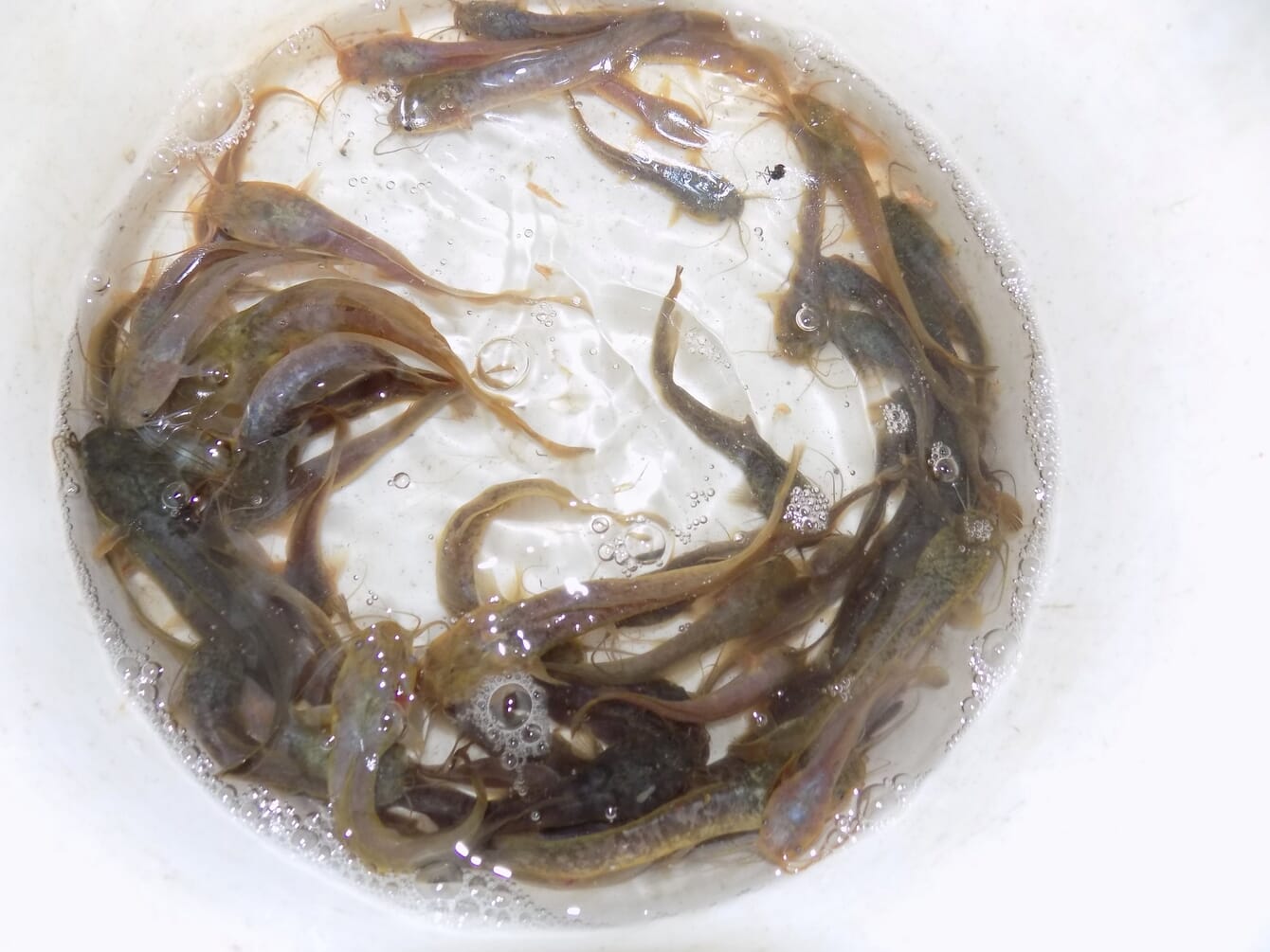
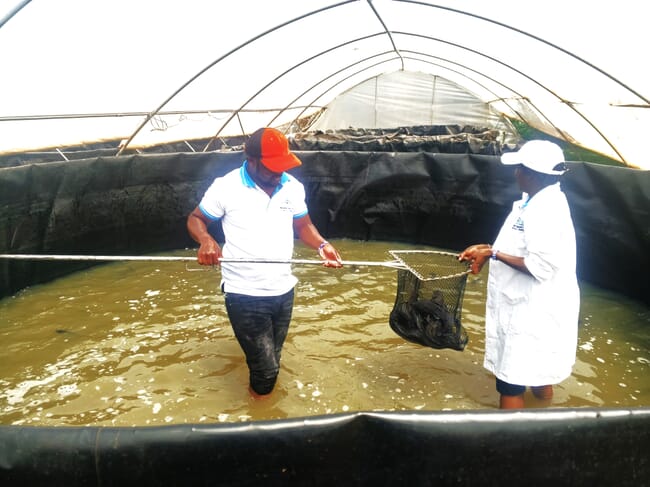
Our hatchery has a production capacity of over 150,000 fingerlings per month. We have 20 specialised tanks dedicated to breeding, incubation, larval rearing and fingerling production. In addition, our eight lined grow-out ponds which measure 10 x 15 metres can handle approximately seven tonnes of fish annually.
© Peter Changtoek
What are the key equipment and technology that you use on the farm?
We use aeration systems, water quality testing kits, automatic feeders, net grading tools, and a recirculating aquaculture system (RAS) to enhance water efficiency and maintain stable growing conditions. In addition, we utilise bio-filtration and backup pumping systems to ensure clean, oxygen-rich water and continuous circulation. We also monitor parameters such as pH, temperature, dissolved oxygen and ammonia levels to keep fish healthy and growing well.
Where do you source your inputs?
We source our feeds from certified local suppliers and occasionally from reputable regional manufacturers who produce high-protein feeds. Most of our equipment and accessories come from aquaculture suppliers within and outside Kenya, ensuring easy access to spare parts and support.
Who are the people who you work with, and how many employees do you have?
We have a dedicated team consisting of pond attendants, technical assistants, hospitality workers, farm supervisors and security, totalling about 25 employees. We also collaborate with aquaculture extension officers – fisheries specialists from government and research institutions who provide technical and advisory support to fish farmers – to ensure smooth farm operations and efficient handling of harvested fish for our customers.
How much capital did you start with?
We started modestly, with Ksh150,000 ($1,162) which covered pond construction, stocking, feeds and basic equipment. Over time, we reinvested our profits to expand.
Do you do any processing of fish?
Yes, we offer basic processing services such as gutting and filleting for clients who want ready-to-cook fish, though our main focus remains on supplying live and fresh fish.
What species of fish do you rear?
We rear African catfish (Clarias gariepinus) and Nile tilapia (Oreochromis niloticus). These species are highly adaptable, fast-growing and in high demand both locally and regionally. They also thrive in pond culture systems.
Where do you sell your fingerlings and mature fish?
We supply fingerlings to farmers across Kenya, and sell mature fish to restaurants, retailers, and households under our Blue Marine’s Kitchen brand. Our prices vary with size and species. Catfish and tilapia fingerlings go for around Ksh10-15 ($0.038-$0.116) each, depending on quantity. Mature fish sells between Ksh350-450 ($2.71-$3.48) per kg, depending on market conditions.
© Blue Marine Fisheries
What are some of the challenges that you have encountered in this venture?
Key challenges include fluctuating water availability in some regions, rising feed costs, competition from lake-sourced and imported cheap fish, and the need for continuous farmer training to reduce post-stocking losses. Other challenges include maintaining optimal water quality, disease prevention, and the effects of changing weather patterns on fish production – with feed prices and disease prevention being the hardest to manage. We respond by implementing strict biosecurity measures, continuously monitoring water quality, investing in modern hatchery technologies, and providing regular staff training.
How many tonnes and number of fingerlings do you sell per month?
We sell between 30,000 and 70,000 fingerlings per month, and about 0.8 tonnes to one tonne of market-size fish monthly, depending on demand and season. Catfish fingerlings are in the highest demand due to their resilience, quick growth rate and ability to thrive in less controlled pond environments, making them ideal for beginners.
Fingerlings are reared for about six to eight weeks before sale, depending on water temperature and feeding programme. We sell our fingerlings to individual farmers, youth and women’s groups, schools with aquaculture projects, and NGOs that support fish farmers.
What advice would you give to those who are intending to venture into aquaculture?
Start small, learn from experienced farmers, and always use quality fingerlings and feeds. Proper pond management, aeration, and record-keeping are key. Be patient – aquaculture rewards consistency and care. Treat it as a business, seek technical guidance, and keep learning as you grow.
What are your future plans?
Our goal is to expand production, add value through processing and train more farmers. We also plan to expand Blue Marine’s Kitchen by strengthening the existing outlet and opening additional branches in strategic locations across Kenya. Lastly, we’d like to build an online platform that directly connects buyers and sellers, eliminating middlemen and promoting fair, transparent trade within the aquaculture value chain.


