

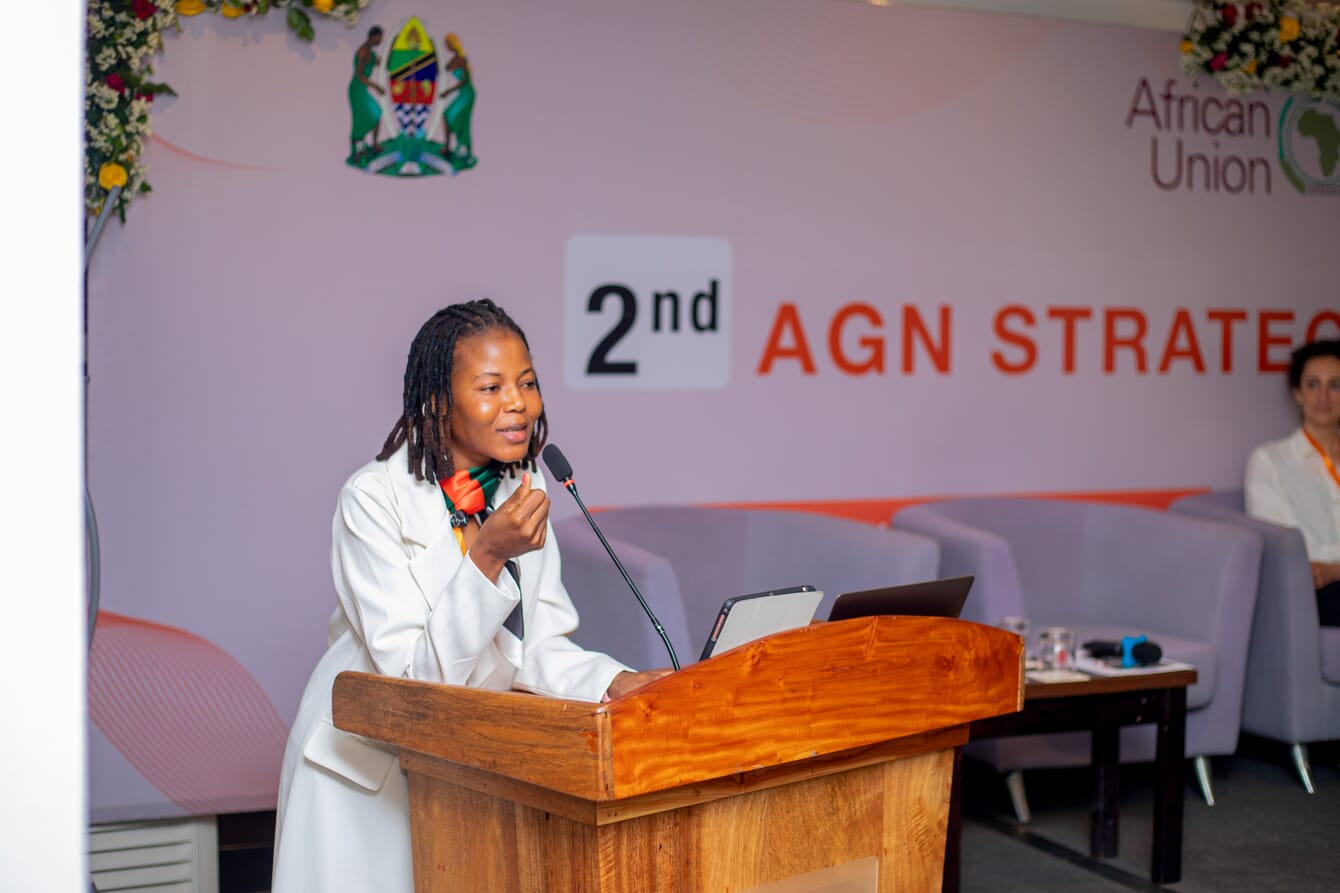
Following a joint degree in social sciences and education, Nyanda ventured into activism, with a focus on climate, but soon realised that something was missing.
“When you’re talking about climate change, the oceans weren’t really being addressed," she recalls.
However she found a glimmer of optimism while attending COP27 in Egypt.
“I was super excited when they first launched the Ocean Pavilion,” she explains.
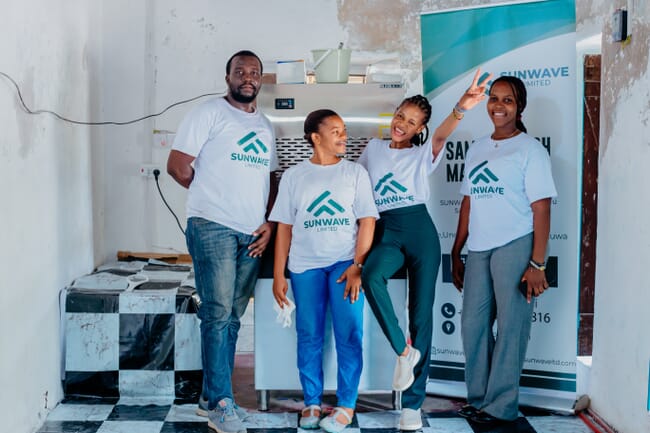
This helped inspire Nyanda to co-found Sunwave, a social enterprise that provides ice for seafood businesses from solar-powered freezers.
“The company makes ice and sells it to small-scale fishers and sellers across Tanzania. Working with small-scale fishers wasn’t easy — it was super hard getting to understand their daily life — but it inspired me,” she explains.
That experience led her to create the Tanzania Ocean Climate Innovation Hub, which was later endorsed by the UN as part of its Ocean Decade.
"All this has taught me one thing: entrepreneurship doesn’t look like champagne and laptops on the beach. It’s holding back tears in investor meetings where they question your competence instead of your concept. It looks like pitching with your voice shaking because you’re the only woman in the room - again. It looks like balancing unpaid labour, unpaid invoices and unpaid rest all in the same week. What gives me confidence now is the fact that I am in a position to support women to navigate all of this as WIOF Africa community manager," Nyanda notes.
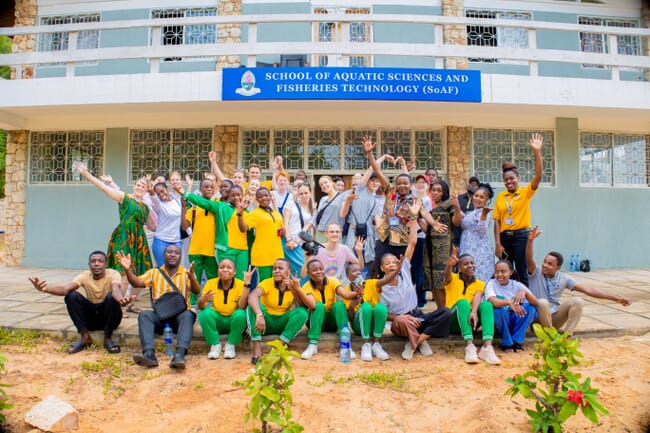
Women in Ocean Food
Nyanda’s new role involves running the latest of Hatch Blue’s global innovation studios, following the success of similar women-focused initiatives in Asia and Latin America.
The year-long programme aims to connect 12 women-led teams that are working in Africa’s blue economy with investors, experts and mentors – something that Nyanda understands the need for only too well.
“I’m a young woman and from Africa,” Nyanda reflects. “It’s always been a struggle for women. When I was building my own startup, I experienced it firsthand – you get into rooms and men question you.
“For many of us, it’s not financial freedom. It’s fighting to get paid on time. It’s building with borrowed WI-FI, with systems that don’t favor us, in economies that still underestimate us. But one thing is for sure, women entrepreneurs in this industry that I have interacted with are not sipping champagne, they are breaking ceilings and leading teams, raising families, chasing grants and still showing up every single day.”
That experience has helped to motivate her.
“It’s all about building confidence for women,” she explains. “They can raise money for their solutions, they can tell people about their initiatives, they can have that stakeholder stage.”
Programme details
Nyanda explains that 292 applications for the programme were successfully completed, with 45 companies shortlisted for the first round of interviews. 26 advanced to the second round, and 12 were finally selected to join the first cohort.
"From December 2025 to March 2026, participants will attend virtual learning sessions focused on storytelling, pitching, leadership, ocean literacy and networking with alumni and industry experts. These sessions aim to help strengthen business narratives, refine impact strategies and foster collaboration among African female founders," she explains.
"The programme will include an in-person innovation studio, which will take place in Dar es Salaam, from 7 to 17 April, featuring site visits, one-on-one mentorship, peer learning workshops, impact modelling, market validation, and investor readiness sessions. The programme will culminate with a Demo Day , where founders will pitch to investors, donors, partners and media," she adds.
The 12 companies are:
Ufarmy Ecobioponics3D (Nigeria): A tech-driven aquaculture enterprise using smart solutions to improve fish farming productivity, traceability, and market access for small-scale farmers.
Agro Fish Farm (Sierra Leone): A catfish and tilapia farming venture empowering women and youth through aquaculture training, food production, and local market systems.
NINTAI Aquaculture Limited (Kenya): An ambitious shrimp farming company working to boost Africa’s shrimp value chain, sustainability, and regional trade potential.
GIO (The Gambia): An oyster farming and mangrove restoration enterprise led by coastal women, combining aquaculture, climate adaptation, and ecosystem health.
Sulha Afrika (Kenya): A community venture promoting mangrove conservation, blue tourism, and women-led climate resilience models in coastal Kenya.
OceansMall Company Limited (Ghana): Focused on fisheries value chains and processing, OceansMall supports women seafood traders while improving quality, sustainability, and access to regional markets.
Yarsi Aquacycle (Kenya): Working on fisheries systems through training, processing, and inclusive distribution models to empower coastal fishing families.
WAVU (Kenya): A tilapia aquaculture company building regenerative farming models and youth engagement in sustainable protein supply.
Care Cove Company Ltd (Tanzania): A seaweed-focused enterprise supporting coastal women with seaweed farming, processing, and value-added ocean products.
Yireo (Comoros): A fisheries enterprise strengthening traditional fishing communities through processing, logistics and local supply system improvements.
NovFeed (Tanzania) A biotechnology company developing alternative protein fish feed using microbes, offering sustainable solutions.
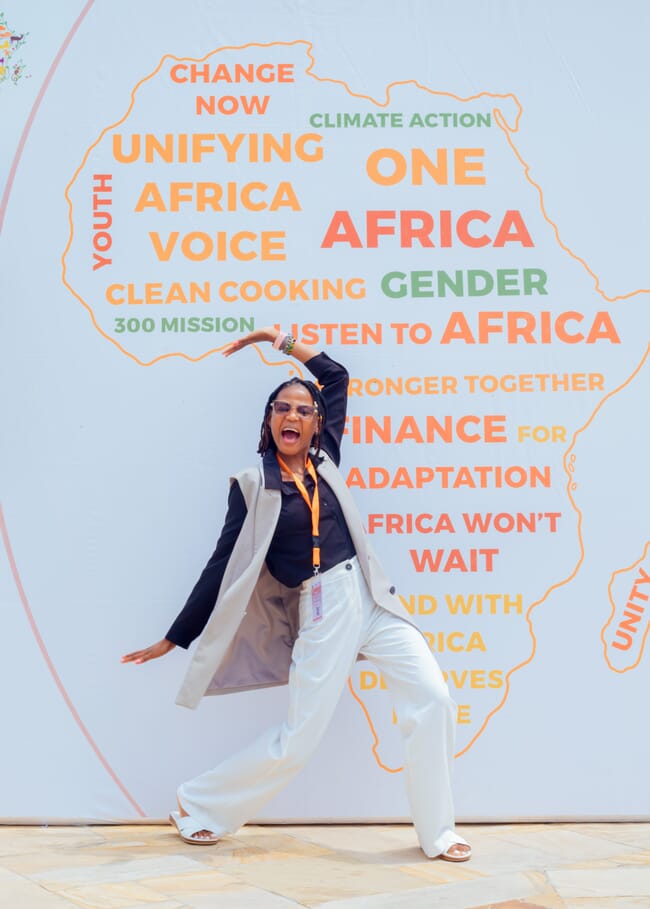
Nyanda's ultimate goal is to close the gender gap in the blue food sector.
“Women in the sector are not valued. They’re not in roles where they can make decisions. This role gives me power to continue working with these women from Africa and tell them that they can succeed,” Nyanda explains.
“To me, this is a revolutionary programme. There might be other initiatives out there, but I have never seen one specifically focused on women in this industry,” she adds.
She is also inspired by an emerging generation of female leaders in Africa.
“I come from a country that is led by a female president,” she says. “Sometimes I look at her and think, if she made it, I can do it — and another woman somewhere in Africa can do it too.”
Since the call for applications, the response to the programme has been impressive.
“When I joined the Hatch team, I knew what I exactly wanted, we had only around 60 applicants,” she recalls. “Now we’ve received more than 300 applications from across Sub-Saharan Africa. My team and I worked tirelessly to communicate and share this opportunity with women across the continent and it’s exciting to see what they are building. It truly shows the power of visibility, storytelling, and unlocking spaces where women can lead,” she reflects.
“In Tanzania, we have women doing seaweed farming, sardine farming, crab fattening. These are women who haven’t gone to school but are doing it to sustain their families and livelihoods. It’s so inspiring,” she adds.
Meanwhile, when it comes to species with high potential, Nyanda points to tilapia and cites Kivu Choice, the Rwandan sister company of Kenya’s Victory Farms, as an inspiring example of how even landlocked countries have huge potential to produce blue food.
Challenges in Africa’s blue economy
Despite some encouraging encounters, Nyanda is aware that the blue economy is unlikely to be top of too many political agendas.
“Every country has competing priorities – poverty, hunger, water issues. There’s also limited infrastructure. We are a young and growing continent, and that means industrial investment and infrastructure investments – but fishers are still struggling with storage, markets, and access to finance,” she reflects.
Fragmented markets remain another key obstacle. “We don’t have that go-to market as a continent,” she explains. “It leaves producers in limbo – who do they go to when they have a lot of fish?”
Nyanda also underscores the need for smarter innovation and stronger policy. “We need to look at how we innovate in a climate-smart way that addresses problems now and for 2050 and beyond,” she says. “Even if we have investment and infrastructure, without policies that align with what we’re doing, they just die away.”
Ultimately, Nyanda’s mission is to support female ocean/blue food entrepreneurs navigate the industry, by connecting them to experts, and by mentoring a new generation.
“As a Gen Z woman, I want to shift perceptions about aquaculture and fisheries. These sectors are often viewed as something our fathers and elders do, but there is space and urgency for youth to lead. I hope that when young Africans see my journey, they are encouraged to say: ‘If she can do it, I can too'. Then I’m doing my job," she reflects.
And her long-term vision is for Women in Ocean Food Africa to become an annual programme, continuing momentum and support for women across the continent. Ongoing editions would deepen capacity, expand networks, and consistently empower African women to lead and scale solutions in the blue foods.
“I want to see these women on global stages pitching, meeting funders and showcasing their ideas with confidence. When we invest in their leadership, we unlock transformative impact,” she concludes.


