© Lizbeth Ramírez
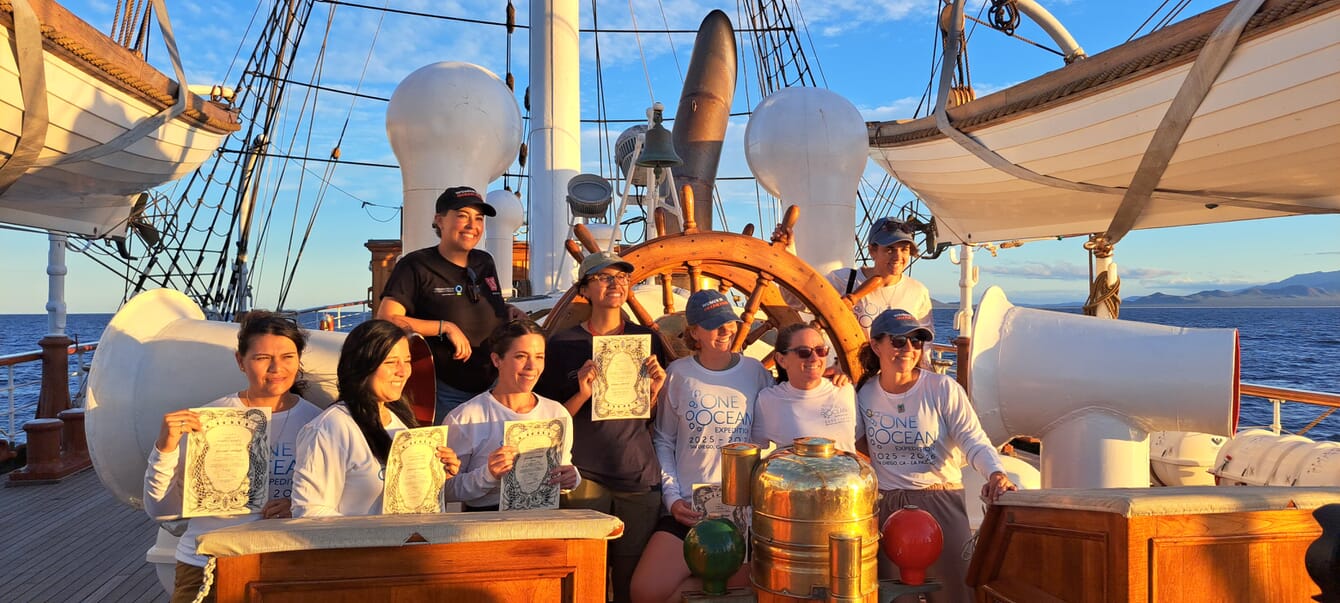
The voyage took place aboard Norway’s storied tall ship Statsraad Lehmkuhl in the Gulf of California from 16 to 24 November, and the crew included mentors and alumni of the Women in Ocean Food (WIOF) LATAM programme, alongside more than 70 participants from 12 organisations working across the region. Scientists, academics, entrepreneurs, students, coastal community members, storytellers and artists shared the same decks and the same watch rotations, and returned to a single, practical question: what does a “better ocean” look like in practice?
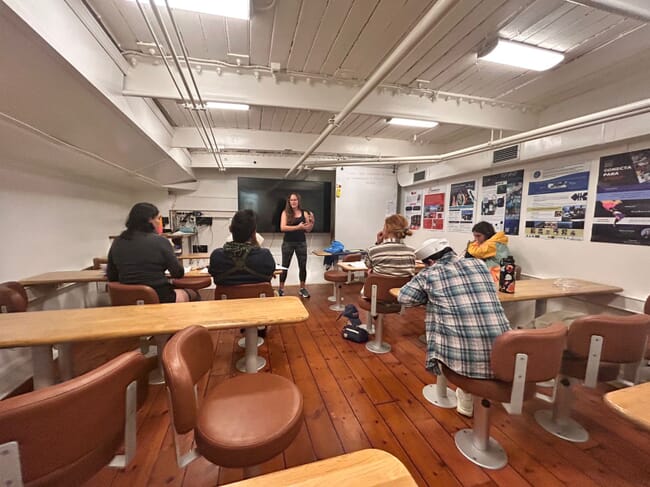
The WIOF cohort – a select group of women founders from across Latin America, supported by mentors from Hatch Blue and Conservation International – joined and became crew, keeping the ship moving around the clock. When free time arose, workshops and group discussions were part of the programme and turned the voyage into a floating forum for collaboration. Funded by Alumbra Innovations Foundation – which also supports the annual WIOF programme held in La Paz each January (2024–2027) – this leg of the One Ocean Expedition offered a rare opportunity to connect ocean-enthusiasts from the region in a unique environment.
A unique form of networking
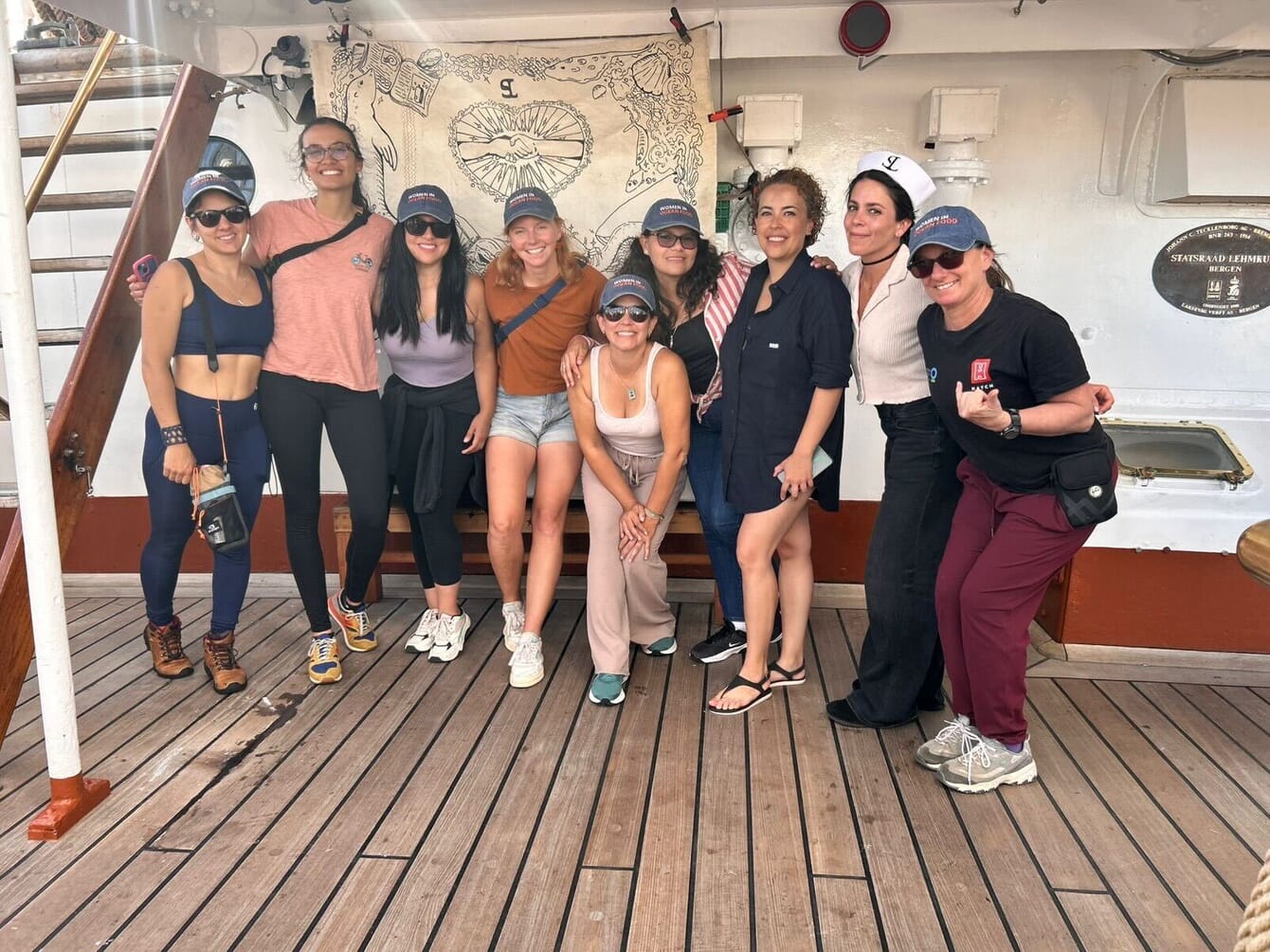
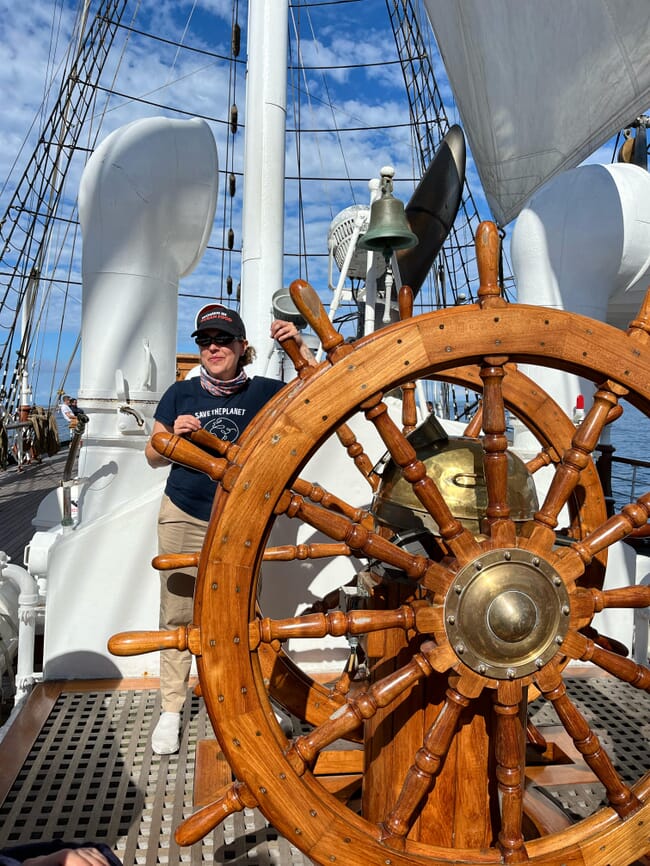
Karlotta Rieve, a Hatch Blue mentor, was joined on board by fellow mentors Belén Pastor, Maria Elvira López alongside participants Stephanie Rousso and Carolina Carrera. Rieve said that being away from home, without phones and on watch schedules, eased the constant pressure many founders and investors feel on land to “use time well”, and changed how people connected. Most participants were from north-west Mexico, with others joining from Chile, Ecuador and the United States.
© Carolina Carrera
For Rieve, it also created space to think about place-based innovation.
“In a world where everything is moving so quickly and we always think about these global and scalable solutions, I do think there's also really strong need to look at place-based communities, networks and innovation. It was really one of the bigger aims for Alumbra as well, which is very much focused on the regional ecosystem,” she explains.
Pastor said people first got to know each other personally, through demanding work shifts, shared bouts of sea-sickness in the first couple of days and the difficulty of being away from home. Only later did conversations turn to ocean-related collaboration, including in aquaculture.
“I think it was more of an open-heart connection from the stories and the troubles around the sea,” recalls Pastor. “We connected as people first, and only later started talking about opportunities and networking. It came in a second instance.”
López, a mentor from Conservation International, said the lack of virtual connection made that levelling effect even stronger.
“We were disconnected from the world for those eight days. Like zero Internet connection, no news, no chatting with anyone, no emails,” she says. “You really had no option but to be present… truly getting the most out of that very specific amount of space.”
She described the group as an “ecosystem rainbow” of perspectives all looking at ocean sustainability through different lenses, and sometimes encountering aquaculture for the first time.
© Pastor
What all this means for aquaculture
For some participants, aquaculture entered the conversation through seaweed. One entrepreneur gave a demonstration and tasting, showcasing their product range, while the University of Maine shared research into seaweed production methods designed to increase output.
“I found seaweed incredible and it was something completely new for me. I had never tasted it. I think there is a big opportunity, and it’s a market that is growing,” says Pastor.
Carrera, the CEO and co-founder of Laks Food, had travelled from Chile to join the programme. Laks Food is a company that transforms discards from farmed salmon, shrimp and oysters into snacks. On board, she discovered seaweed and its potential to open up new lines of business. After spending time with the experts, she is now planning to integrate seaweed into her products.
“I learned a lot about seaweed: classification, properties, preparations… and we’re now fully developing that,” explains Carrera.
The voyage also connected stakeholders in a practical way, helping early conversations continue on land. After arriving in La Paz, the founder of Regenerative Ocean Project stayed on to explore what an early seaweed initiative in Baja could look like in reality. Rousso, from Pesca Blue, who has built trust with local fishing communities, helped identify an early contact and arrange a spur-of-the-moment visit to a site north of La Paz.
“Paulina Zanela from Regenerative Ocean Project and her investors visited a fishing community with me where they met with a brother and sister over 70 years old who are wanting alternatives to their traditional fishing lives,” says Rousso, who made the introduction. “I have been trying to help them for a decade with little impact so the idea that they could potentially be a part of a regenerative seaweed and bivalve aquaculture project that I connected warms my heart.”
Pastor said the long-term value may only become clear once people are back on land and the relationships are tested in real conditions.
“I am from Ecuador, so I am like looking this ecosystem a little bit from the outside,” she says. “But it will be very interesting to see what happened in Baja California Sur because there was a beautiful ecosystem of people that is connected and now they have this experience that will last forever.” She added that it will be worth tracking what Alumbra does with what emerged during the voyage, and whether the connections translate into action.
For Rieve, the next step is simply follow-through. “So basically there's no excuse now to follow up with people coming from that boat,” she says. “Which I think just makes sense – and I'm pretty excited about it.”