© Roel Melman
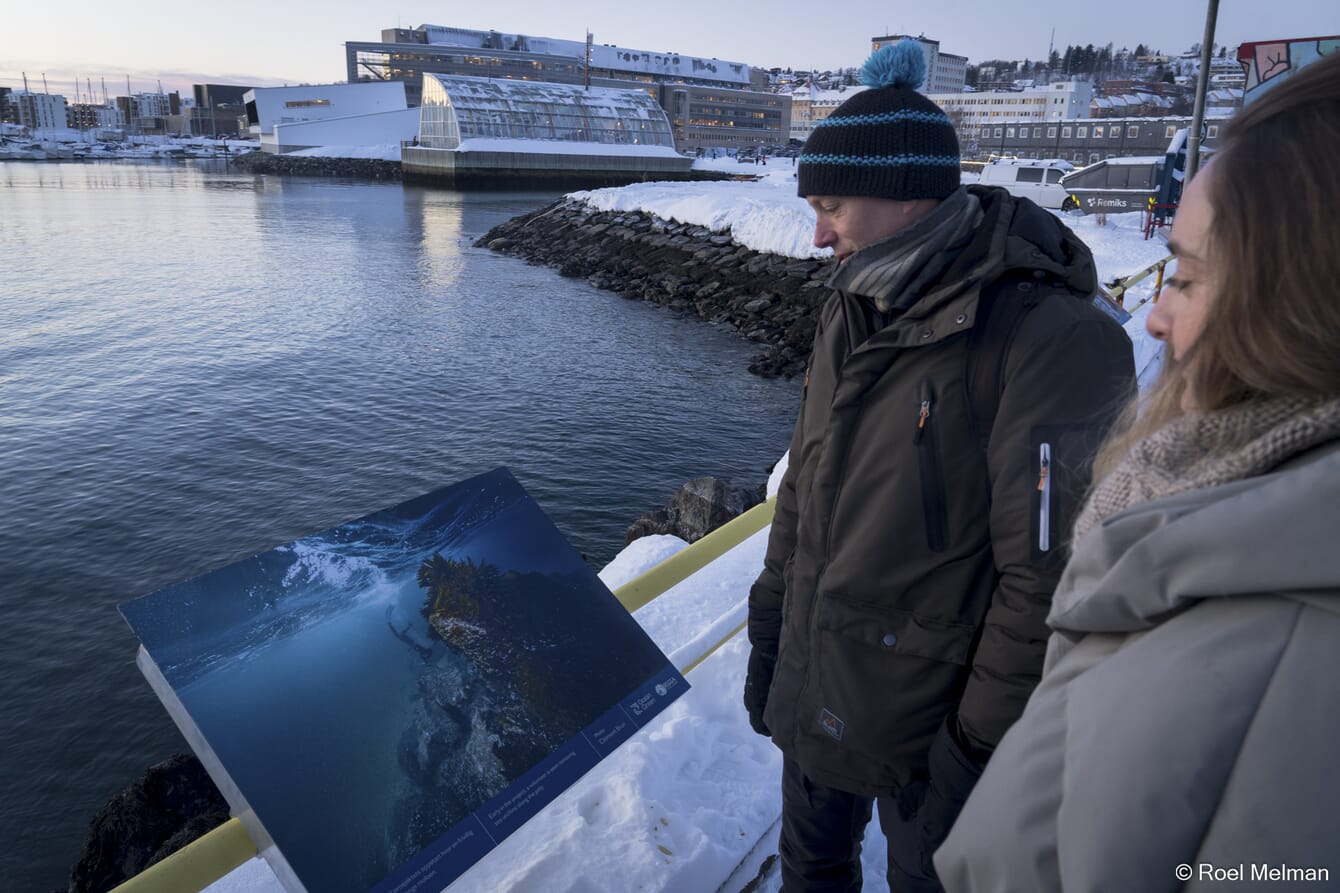
A new outdoor exhibition has opened at the Sørsjetéen jetty in Tromsø, documenting the successful restoration of local kelp forests and the subsequent return of marine biodiversity.
Opening on 9 January 2026, the installation showcases the ecological transformation achieved through the Ocean Green project, a consortium combining scientific research with local volunteer action. Norway’s kelp forests deliver a multitude of ecosystem services, acting as breeding grounds for biodiversity, providing carbon sequestration and supporting essential fish stocks such as cod.
“Kelp loss is a global problem,” explained Dagny-Elise Anastassiou, chief impact officer at Ava Ocean and Ocean Green project lead, in a press release. “And around northern Norway, as much as 80 percent of our region’s kelp has been lost over the last 50 years – largely replaced by urchin barrens as overfishing reduced urchin predators.”
Ocean Green has been working on a large-scale, sustainable solution to this problem, while also researching new products that can be made from the urchins they harvest. The ultimate goal is to have zero-waste kelp restoration that is sustainable for the long term.
The exhibition showcases the work of volunteers who have been going into the water to remove urchins by hand – an activity spearheaded by Rissa Citizen Science, Ocean Green’s citizen science partner. With one side of the jetty left untouched and the other side restored to life, their work points to just how quickly and effectively kelp – with all the additional ecosystem services it brings – can bounce back.
“This exhibition is a thank you to the volunteers who have gone into the water and supported this work from the shore,” said Delphin Ruché, founder and director of Rissa Citizen Science. “The return of this wonderful ecosystem would not have been possible without their participation. By reducing the density of these native sea urchins, space has been made for kelp to come back, bringing with it the abundance of sea life you see in the exhibition.”
Ruché highlights that their work is about biodiversity, but it is also about community engagement and capacity building that goes far beyond the issue of kelp restoration.
“We look forward to welcoming more volunteers into our community of ‘Kelpers’. If you want to learn about these underwater environments and be part of the solution to this problem, come along to one of our events,” added Ruché.