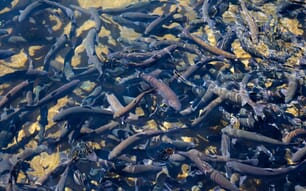
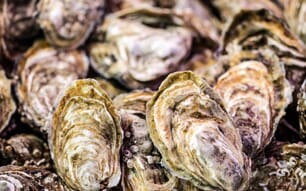
By the Economic Research Service - The wild harvest of seafood, mans last major hunting and gathering activity, is at a critical point. Technology has enabled harvesting to outpace the speed at which species can reproduce.
As the global average temperature increases and CO2 within the ocean begins to reach saturation the ability of the ocean to absorb carbon will alter significantly, writes J. P. Hickey, School of Natural and Built Environs, University of South Australia.
By USDA Foreign Agricultural Service - This article provides the fisheries industry data from the USDA FAS Fishery Products Annual 2004 report for Chile. A link to the full report is also provided. The full report include all the tabular data which we have omi…
By U.S.D.A., Economic Research Service - This article is an extract from the October 2004: Aquaculture Outlook Report, highlighting Global Aquaculture Industry data.
By Jeff Chatterton - The Impact of Activists on Media and Public Opinion about the Aquaculture Industry. This is an extract from Paper #3 of the 'How to Farm the Seas' series, edited by Brian Lee Crowley and Gerry Johnson.
By Otto E. Langer R.P. Bio, Director of Marine Conservation, David Suzuki Foundation - Despite early attempts to farm salmon in British Columbias marine environment, the industry did not take hold until some 20 years ago. Many looked upon this new industry as …
By Bruce A. Babcock and Quinn Weninger, Center for Agricultural and Rural Development, Iowa State University - Declining salmon prices, due primarily to expansion of farmed salmon production, have reduced revenues for Alaskas wild salmon fisheries by roughly 6…
By U.S.D.A., Economic Research Service - This article is an extract from the March 2004: Aquaculture Outlook Report, highlighting Global Aquaculture Industry data.